How to Load a Gun Safe in 7 Easy Steps
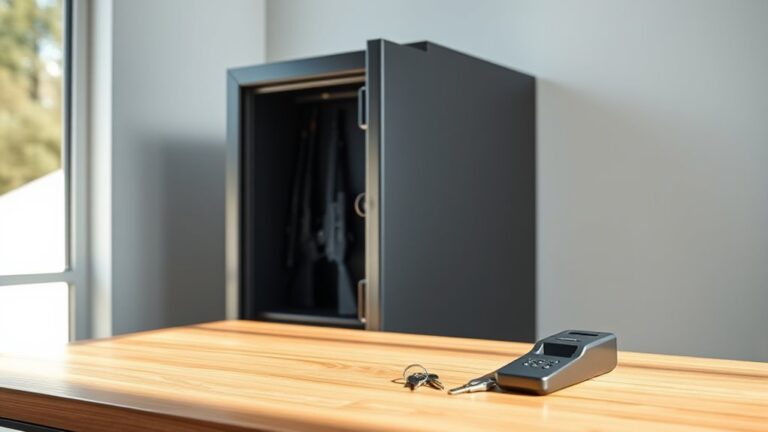
To load your gun safe in 7 easy steps, start by selecting a gun safe that fits your firearms and available space while offering strong security features. A reliable gun safe ensures the protection of your valuable firearms from unauthorized access and environmental damage. Proper loading and organization are essential to maximize safety and accessibility.
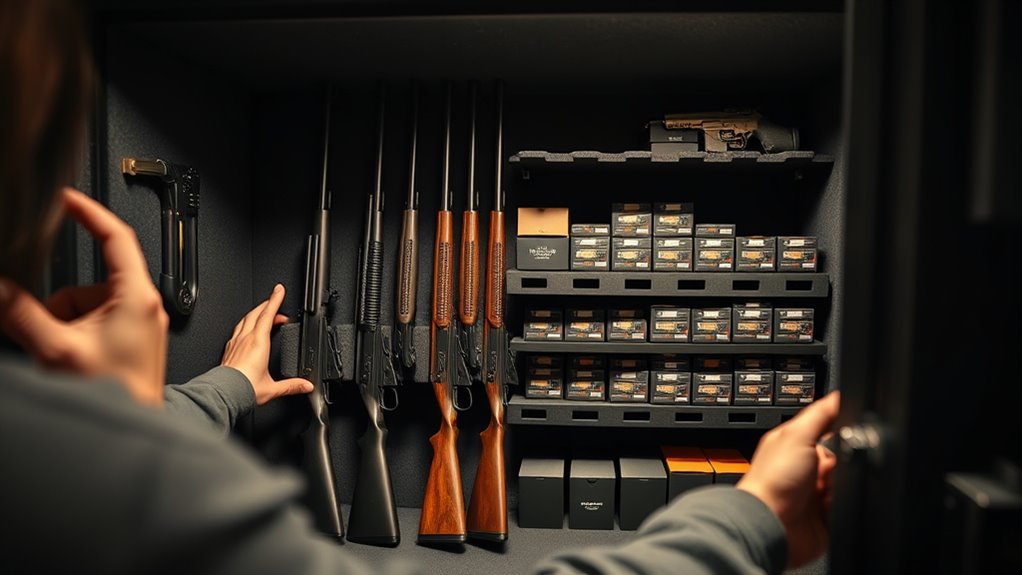
First, clear and clean each unloaded gun to prevent damage and ensure safe handling. Organize your firearms by size and type for quick and easy access when needed. Choose appropriate racks or holders to keep your guns secure and undamaged.
Store ammunition separately in locked containers to enhance overall safety. Finally, lock your safe securely and maintain its locks and alarms consistently. Following these basics will help you get started safely and efficiently.
Key Takeaways
- Confirm all firearms are unloaded and safety engaged before placing them inside the safe.
- Organize firearms by type and size, storing long guns vertically and handguns in stackable holders.
- Use padded racks or foam inserts to prevent damage and keep firearms secure and organized.
- Store ammunition separately in labeled, locked containers within the safe to enhance safety.
- Double-check the safe’s locking mechanism engages fully and test any alarm systems for reliability.
How to Load Your Gun Safe Safely and Efficiently
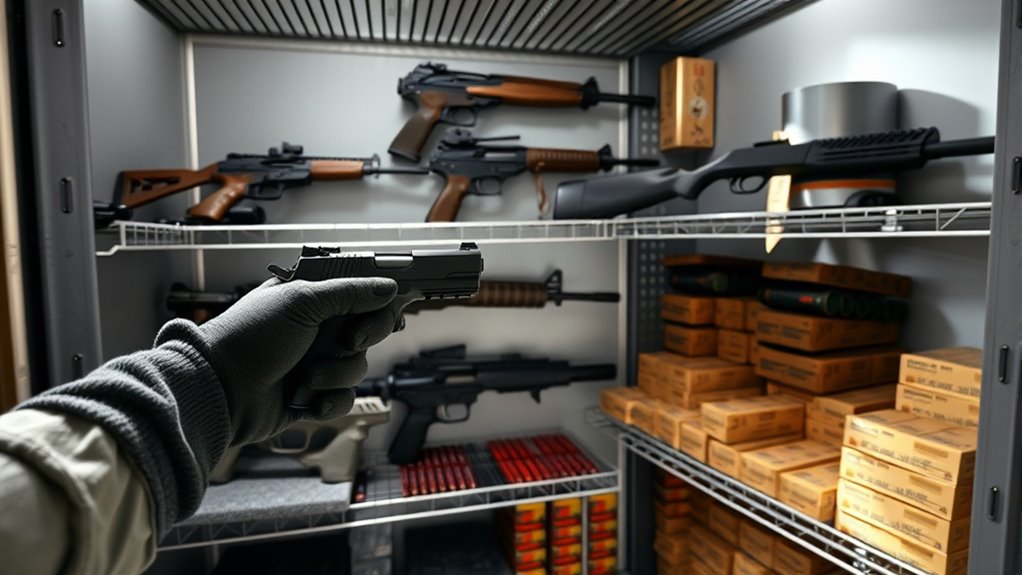
Before you start loading your gun safe, make sure the area is clear and well-lit so you can organize your firearms without distractions. Begin by ensuring every firearm is unloaded and the safety is engaged. Check each gun carefully to avoid any accidents.
Next, clean your firearms before placing them in the safe to prevent rust and damage. Organize your guns based on type, size, or frequency of use, so you can access them quickly when needed. Use padded racks or holders to avoid scratches and keep firearms secure.
Store ammunition separately within the safe in labeled containers to maintain safety and organization. Remember, avoid overcrowding the safe to prevent damage and allow proper ventilation. Finally, double-check that the safe’s locking mechanism is functioning correctly after loading.
Choose the Right Gun Safe for Your Firearms and Space
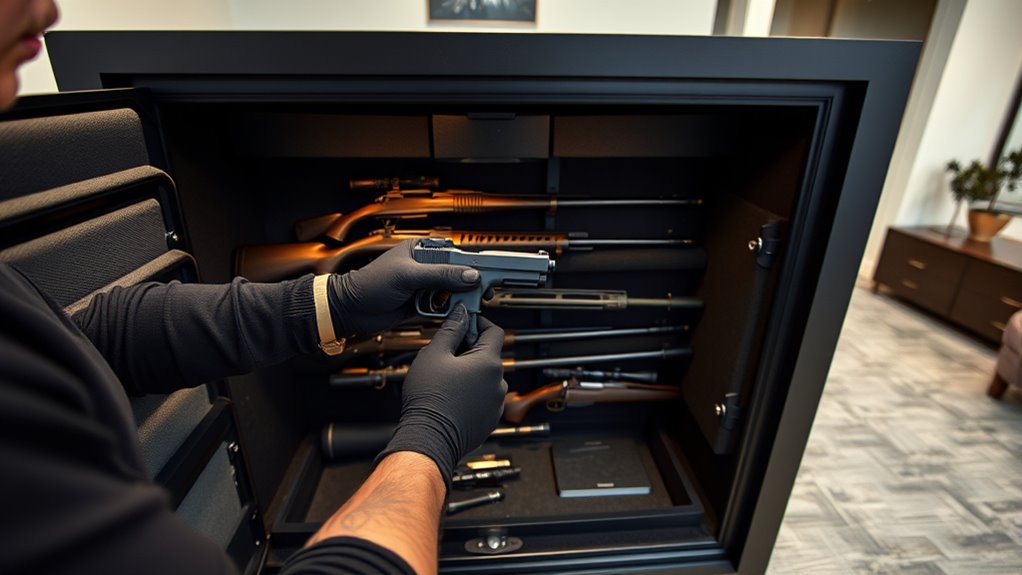
Before loading your gun safe, you’ll want to pick one that fits your firearms and available space perfectly. Consider the types and sizes of your guns, along with the safe’s dimensions and weight to guarantee proper placement.
Don’t forget to check its security features and ratings to keep your collection protected.
Firearm Types And Sizes
Choosing the right gun safe starts with understanding the types and sizes of firearms you own. Whether you have handguns, rifles, shotguns, or a mix, each requires specific storage considerations. Handguns are compact and usually need individual slots or shelves, while rifles and shotguns are longer and need vertical space or racks.
Don’t forget about accessories like scopes or magazines, which also take up room. Knowing the exact dimensions of your firearms helps you pick a safe that holds everything securely without wasting space. If you have unusually sized or collectible firearms, you might need specialized compartments.
Safe Dimensions And Weight
A gun safe’s dimensions and weight play an essential role in fitting your firearms securely while accommodating the space you have available. You’ll want to measure the area where the safe will sit to verify it fits comfortably without restricting access. Consider both the height and width, especially if you have long rifles or shotguns.
Internal dimensions matter too—make sure the safe’s interior shelving or racks can hold your guns properly without crowding. Weight is another factor; heavier safes are harder to move and often more secure, but you need to be sure your floor can support it. If you plan to relocate the safe later, think about the weight in relation to your ability to handle it.
Choose a safe that balances size, capacity, and weight for your specific needs and space.
Security Features And Ratings
While size and weight are important, the security features and ratings of your gun safe ultimately determine how well it protects your firearms. You’ll want to look for safes with solid steel construction, reliable locking mechanisms, and pry-resistant doors.
Consider safes with UL (Underwriters Laboratories) ratings, which indicate tested resistance against burglary and fire. A safe with a TL-15 or TL-30 rating means it can withstand 15 or 30 minutes of professional attack. Additionally, fire ratings show how long your safe can protect contents from heat.
Don’t overlook electronic locks with backup keys or biometric options for quick access. Choosing the right security features based on your environment and threat level guarantees your firearms stay secure and accessible when you need them.
Prepare and Clean Your Firearms Before Storing
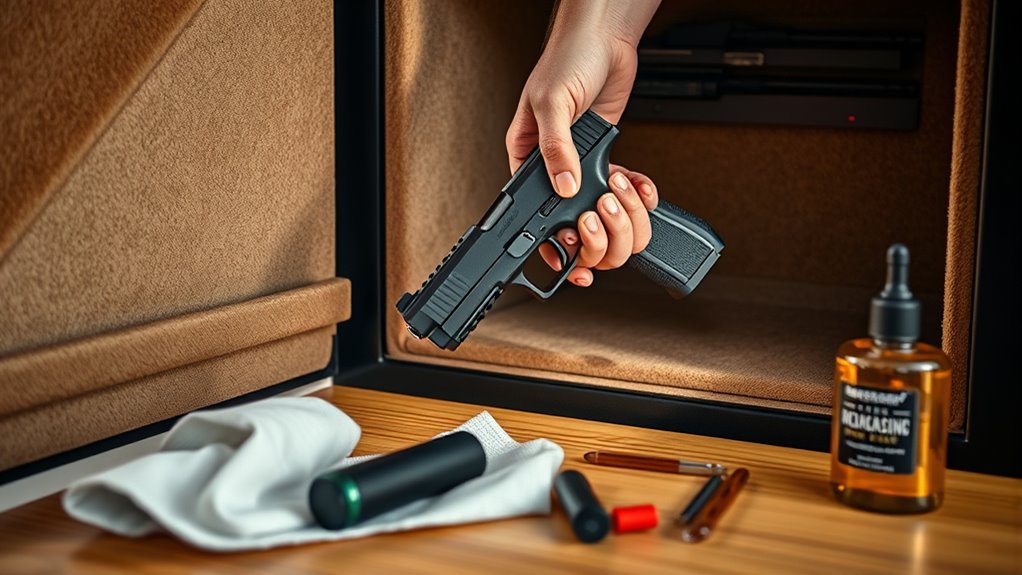
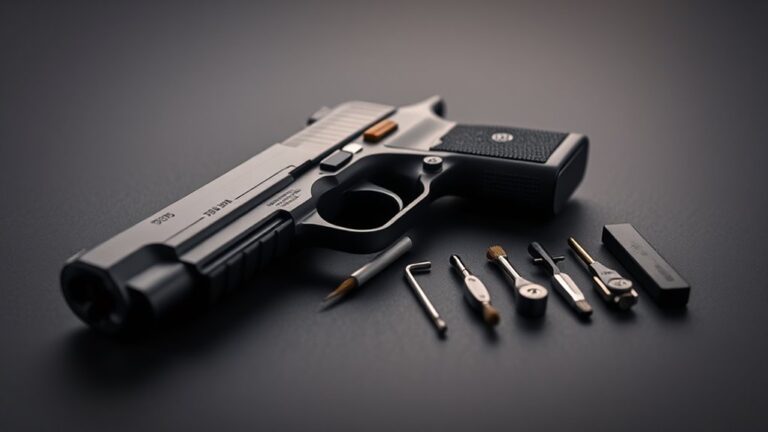
Before storing your firearms, you’ll want to inspect them carefully for any signs of wear or damage. Cleaning the barrel and action thoroughly helps prevent rust and buildup.
Finally, apply a protective coating to keep your guns in top condition while they’re in the safe.
Inspect Firearms Thoroughly
Since you want your firearms to stay in good condition and function properly, you should inspect each one thoroughly before storing it in your gun safe. Begin by checking for any visible damage, rust, or corrosion on the metal parts. Look closely at the stock and grips for cracks or warping.
Confirm that all screws and pins are tight, as loose parts can cause problems later. Verify that all safety mechanisms and moving parts operate smoothly without sticking. Also, make certain that the firearm is completely unloaded—double-check the chamber and magazine.
Taking these steps helps prevent malfunctions and preserves your firearm’s longevity. A detailed inspection now saves you from costly repairs or safety issues down the line, ensuring your firearms remain reliable and ready when you need them.
Clean Barrel And Action
Because residue and moisture can cause corrosion and affect performance, you’ll want to clean the barrel and action thoroughly before storing your firearms. Start by ensuring the gun is unloaded and remove any ammunition. Use a bore brush with solvent to scrub the barrel’s interior, loosening powder and fouling.
Then, run clean patches through the barrel until they come out spotless. Next, clean the action—pay attention to the bolt, chamber, and any moving parts—using a nylon brush and solvent to remove dirt and grime. Wipe everything dry with a clean cloth, making sure no moisture remains.
Proper cleaning prevents rust and buildup that could damage your firearm or impair its function when you need it most. Taking these steps helps keep your guns safe and reliable while in storage.
Apply Protective Coating
After thoroughly cleaning the barrel and action, the next step is to apply a protective layer to your firearms. This coating prevents rust and corrosion during storage. Use a high-quality gun oil or silicone-based spray, applying a thin, even layer on all metal surfaces.
Avoid over-applying, as excess oil can attract dust and dirt. Don’t forget to wipe down wooden or synthetic stocks with appropriate conditioners to maintain their finish.
Here’s a quick reference to help you choose the right protective layer:
| Type | Best For | Application Tips |
|---|---|---|
| Gun Oil | General use | Thin, even layer; avoid excess |
| Silicone Spray | Quick, easy coverage | Spray lightly; wipe off excess |
| Wax-Based Coating | Long-term storage | Apply sparingly; buff surface |
Applying the right coating ensures your guns stay in top condition inside the safe.
Organize Guns by Size and Type for Easy Access
When you organize your guns by size and type, you’ll find it much easier to access the one you need quickly. Start by grouping long guns separately from handguns. This way, you won’t have to dig around or move multiple firearms to reach what you want.
Within those groups, arrange guns by size—from shortest to longest or by barrel length—so they fit snugly and won’t tip over or scratch each other. Next, sort by type, such as shotguns, rifles, and pistols, to streamline your search. This method also helps you keep track of your collection better.
Label sections if needed, so you remember where each category goes, especially if you have a large safe. By organizing this way, you minimize handling and reduce wear, keeping your firearms in better shape and your safe clutter-free. This setup ensures you’re always ready to retrieve your gun promptly and safely.
Pick the Best Gun Racks and Holders for Your Safe
Where should you start when picking the best gun racks and holders for your safe? Begin by evaluating the size and capacity of your safe, then consider the types of firearms you own. You want racks that maximize space while keeping guns stable and accessible.
Look for materials like foam or rubber padding to prevent damage. Adjustable or modular racks offer flexibility as your collection grows. Also, consider vertical racks for long guns and stackable holders for handguns.
Here’s a quick comparison to help you decide:
| Rack Type | Best For |
|---|---|
| Vertical Racks | Long guns, rifles, shotguns |
| Stackable Holders | Handguns, compact firearms |
| Modular Systems | Mixed collections, flexibility |
Choosing the right racks keeps your firearms organized, protected, and ready for quick access without wasting space.
Store Ammunition Separately and Securely
Organizing your firearms with the right racks is just one part of keeping your gun safe in order. You should always store ammunition separately from your guns to reduce the risk of accidental discharge or damage. Use a dedicated, locked container or compartment inside the safe designed specifically for ammo storage.
This helps prevent moisture exposure and keeps rounds secure from unauthorized access. Make sure the container is clearly labeled and arranged so you can quickly identify different calibers. Avoid storing loose ammo directly in the safe without proper packaging, as it can cause corrosion or create clutter.
Additionally, keep your ammunition in a cool, dry place within the safe to maintain its reliability. By separating and securing your ammo thoughtfully, you not only protect your investment but also enhance overall safety for yourself and others who may access the safe.
Lock, Alarm, and Maintain Your Gun Safe Regularly
Although having a sturdy gun safe is vital, locking it properly and setting up an alarm system are just as important to keep your firearms secure. Always double-check that your safe’s locking mechanism engages fully every time you close it. If your safe uses a digital keypad, change the code periodically and avoid obvious combinations.
Installing an alarm system adds an extra layer of protection by alerting you to any unauthorized access attempts. Choose an alarm compatible with your safe and test it regularly to verify it functions correctly.
In addition to securing your safe, maintain it regularly. Lubricate the locking bolts and hinges to keep them operating smoothly, and inspect the safe for any signs of wear or damage. Regular maintenance not only prolongs your safe’s lifespan but also guarantees your firearms remain protected.
Frequently Asked Questions
Can I Store Non-Firearm Valuables in My Gun Safe?
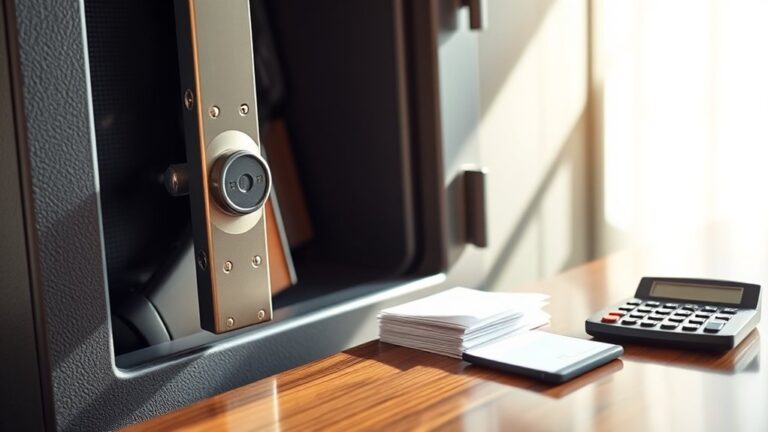
Yes, you can store non-firearm valuables in your gun safe. It’s designed to protect valuables from theft and fire, so feel free to keep important documents, jewelry, or other valuables securely inside.
How Do Temperature and Humidity Affect Gun Safe Storage?
Temperature and humidity can cause rust and damage your firearms inside the safe. You’ll want to keep the environment cool and dry, using a dehumidifier or desiccant packs to protect your guns from moisture and corrosion.
Are Biometric Locks More Secure Than Traditional Locks?
Imagine you’re in a rush; biometric locks are generally more secure than traditional ones because they use unique fingerprints, making unauthorized access harder.
However, they can fail with dirty sensors, so keep backups handy just in case.
What Legal Requirements Apply to Gun Safe Ownership?
You’ll need to follow federal, state, and local laws, which often include safe storage requirements to prevent unauthorized access. Make sure you know specific regulations about gun ownership, storage, and child safety in your area.
Can I Insure the Contents of My Gun Safe?
You can absolutely insure the contents of your gun safe—it’s like adding a safety net beneath tightrope walking.
Check with your insurance provider about coverage options and appraisals to protect your firearms against theft, damage, or loss.
Conclusion
Now that you’ve got your gun safe loaded just right, remember it’s more than metal and bolts—it’s your peace of mind wrapped in steel. Treat it like a trusted vault, keeping your firearms clean, organized, and secure.
With the right setup and regular upkeep, you’ll have quick access when needed and safety always on guard. So, lock it down tight and let your safe be the silent guardian of your collection.
Proper gun safe loading and maintenance ensure that your firearms remain protected from damage and unauthorized access. Follow these steps to maximize the security and longevity of your gun safe. Your safety and peace of mind depend on it.