What Makes Gun Safes Bulletproof?
What makes gun safes bulletproof involves a combination of advanced materials, innovative design, and strict certification standards. High-grade materials like hardened steel, ceramics, and composites are integrated in multi-layered constructions to absorb and disperse bullet impact energy effectively. This blend of materials ensures the safe can withstand various types of ammunition without compromising security.
Their construction features reinforced doors and robust locking mechanisms that prevent forced entry attempts. These safes are rigorously tested to meet industry standards such as UL 752, guaranteeing reliable resistance against ballistic threats.
Understanding how design, materials, and certification work together reveals the full picture of bulletproof gun safes and their critical role in firearm security.
Key Takeaways
- Bulletproof gun safes use hardened steel and layered materials like ceramics and composites to resist bullet penetration effectively. Multiple stacked layers in construction dissipate and absorb bullet impact energy, preventing penetration and safeguarding contents. Safes are tested against specific ammunition calibers under standards like UL 752 or NIJ 0108 to certify ballistic resistance.
- Reinforced doors with multiple locking bolts and secure locking mechanisms enhance protection against forced entry and shooting attacks. Certification and use of high-grade materials ensure the safe meets industry benchmarks for reliable bulletproof performance.
What Does “Bulletproof” Mean for Gun Safes?
While you might assume “bulletproof” means a gun safe can stop any bullet, the term is more specific and regulated. In the context of gun safes, “bulletproof” refers to the safe’s ability to resist penetration from certain types of bullets under defined conditions. It’s not a blanket guarantee.
Manufacturers often test safes against particular calibers and velocities, and only safes passing these tests earn the “bulletproof” label. You should know that not all safes labeled “bulletproof” meet the same standards, so understanding the testing criteria is crucial. The term implies enhanced protection, but it doesn’t mean invincibility.
Instead, it signals that the safe provides a higher level of defense against forced entry involving firearms. When choosing a gun safe, you’ll want to look for certification or test results to confirm the extent of its bullet resistance, ensuring it meets your security needs.
Which Materials Make Gun Safes Bulletproof
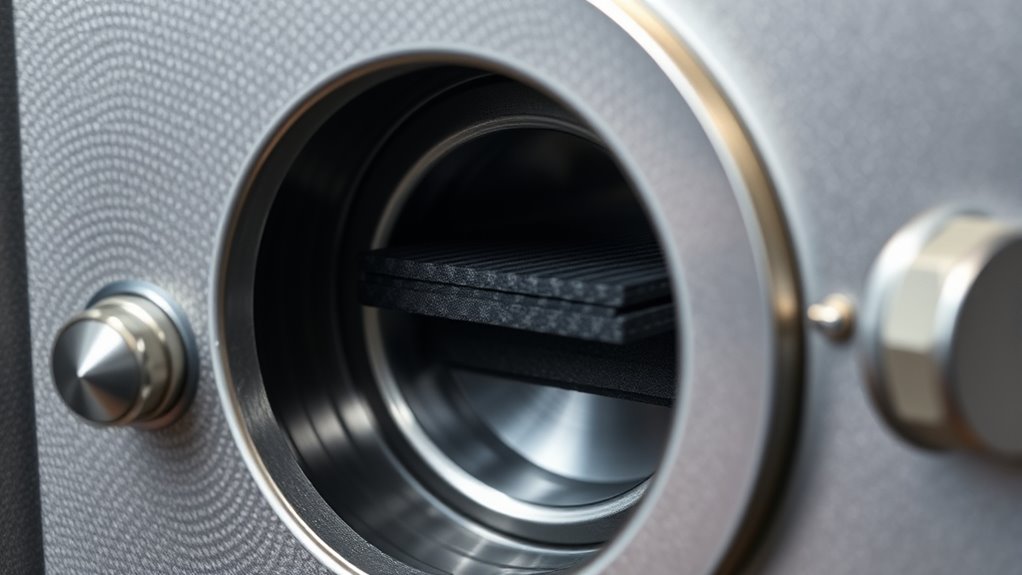
Understanding what “bulletproof” means for gun safes sets the stage for looking at the materials that actually provide this level of protection. You’ll find that particular metals and composites are key to stopping bullets. Steel, for example, is the most common choice because of its hardness and density.
Some gun safes use hardened or ballistic-grade steel to increase resistance. Other materials like concrete or composite layers improve bullet resistance by dissipating energy and preventing penetration.
Here’s a quick look at common bulletproof materials in gun safes:
| Material | Strengths | Common Use |
|---|---|---|
| Ballistic Steel | High hardness, durable | Safe walls, doors |
| Concrete | Energy absorption | Reinforced safe cores |
| Composite Layers | Lightweight, energy dissipation | Layered safe barriers |
| Aluminum | Corrosion-resistant | Supplemental panels |
| Ceramic Plates | High hardness, brittle | Added bullet deflection |
When choosing a safe, knowing these materials helps you understand its bullet resistance level.
How Gun Safe Construction Boosts Bullet Resistance
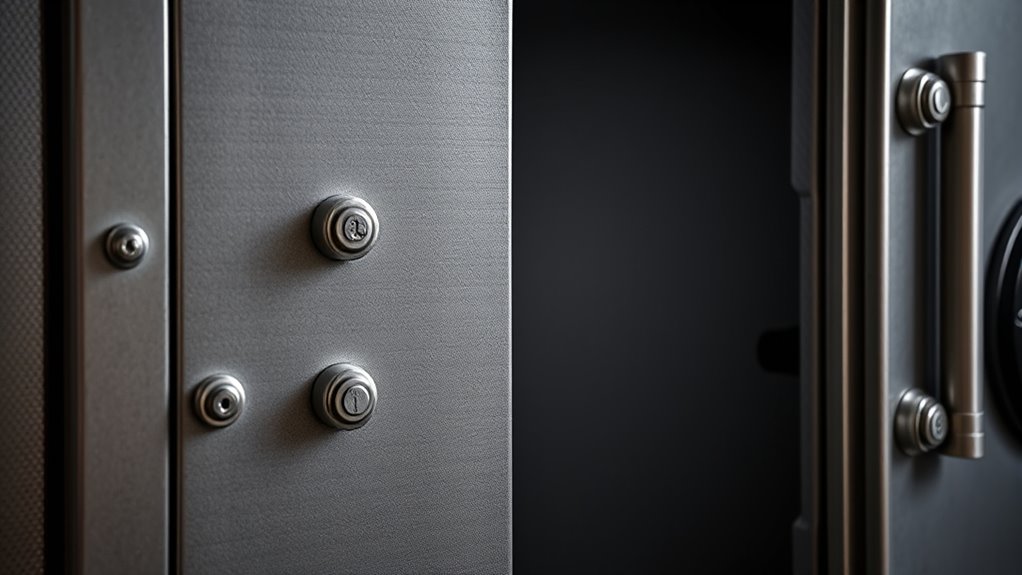
Because the materials alone don’t guarantee bullet resistance, the way a gun safe is constructed plays a essential role in stopping bullets. When you look at a safe, it’s not just about thick steel; it’s how the steel plates are joined and arranged. Welded seams, for example, provide stronger bonds than bolts or screws, preventing bullets from exploiting weak points.
The design also matters—you’ll find that safes with minimal gaps and reinforced corners better deflect bullets by distributing the impact force across the structure.
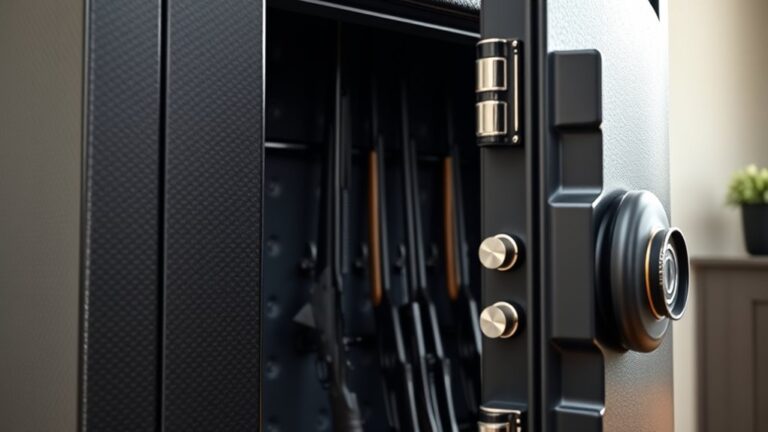
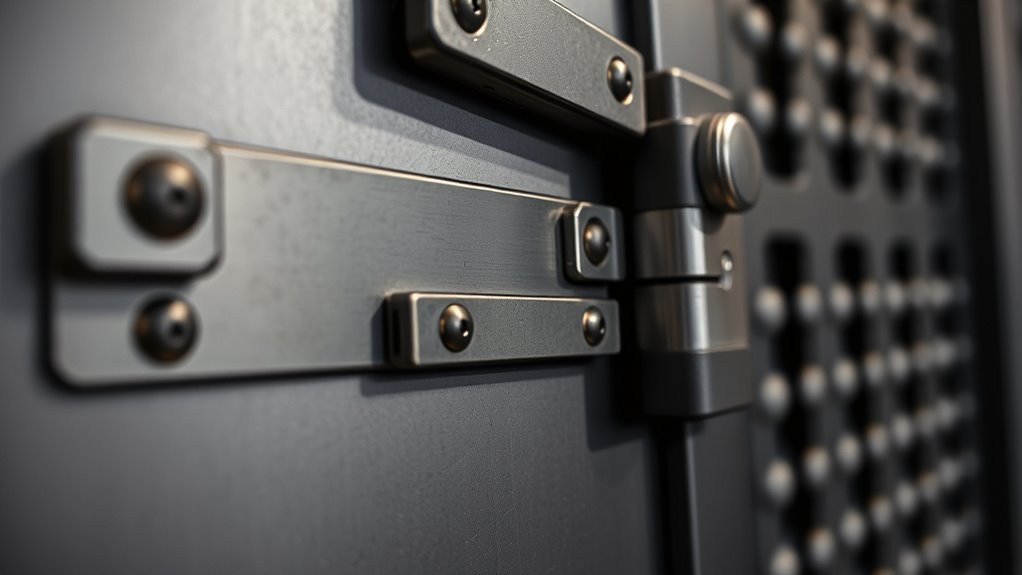
You’ll notice that door construction is fundamental as well. A well-built door with multiple locking bolts and a tightly fitted frame reduces the chances of bullets penetrating through vulnerable spots. Plus, internal reinforcements help absorb and dissipate energy from shots.
Why Multi-Layered Designs Improve Bulletproof Protection
You’ll find that multi-layered designs use different materials stacked together to boost strength and stop bullets more effectively. Each layer absorbs and disperses energy, reducing the impact on the safe’s core.
This combination makes it much harder for a bullet to penetrate compared to a single solid layer.
Layered Material Strength
When a bullet strikes a gun safe, a single layer of material often isn’t enough to stop it. You need multiple layers, each with different strengths, to slow and ultimately stop the bullet. These layers work together, distributing the impact across various materials that resist penetration differently.
This layering boosts overall durability without making the safe excessively heavy.
Here’s a quick look at typical materials and their roles in layered design:
| Material | Role | Benefit |
|---|---|---|
| Hardened Steel | Initial bullet impact | Stops common calibers |
| Ceramics | Shatter and disperse | Breaks bullet’s core |
| Composite Fibers | Absorb residual energy | Prevents bullet penetration |
| Aluminum Alloy | Structural support | Reduces safe’s weight |
This combination ensures your gun safe stays bulletproof against multiple threats.
Energy Absorption Mechanics
The strength of layered materials isn’t just in their individual toughness but in how they manage the energy from a bullet’s impact. When a bullet strikes a multi-layered gun safe, each layer plays a role in absorbing and dispersing that intense force. Instead of letting all the energy focus on one spot, the layers spread it out, reducing the chance of penetration.
You’ll find materials like hardened steel, ceramics, and composites stacked strategically; ceramics crack and shatter the bullet’s tip, while steel and composites absorb and slow the remaining energy. This combination means the bullet loses momentum with every layer it hits. So, by the time it reaches the innermost section, there’s little energy left to cause damage, making your gun safe truly bulletproof.
How Locking Mechanisms Complement Bulletproof Protection
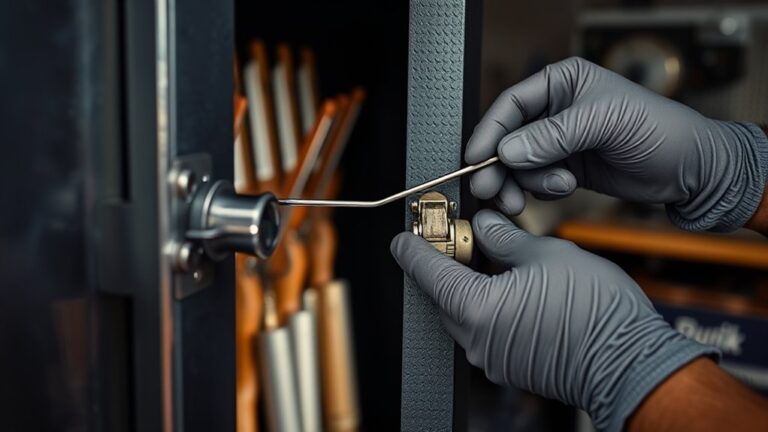
Although bulletproof materials form the core defense of gun safes, locking mechanisms play an equally essential role in keeping your firearms secure. Even the strongest safe can be compromised if the lock is weak or outdated. You want a locking system that resists tampering while providing quick, reliable access for you.
Modern safes often combine mechanical and electronic locks for enhanced security and convenience. For example, biometric locks use fingerprint recognition to prevent unauthorized entry, while traditional combination locks offer proven reliability without power needs.
Here’s a quick comparison of common locking mechanisms and how they complement bulletproof protection:
| Lock Type | Security Feature | Benefit to Bulletproof Safe |
|---|---|---|
| Mechanical Dial | Resistant to electronic hacking | Reliable under power loss |
| Electronic Keypad | Quick access + audit trails | Convenient & tracks usage |
| Biometric | Unique to authorized users | Prevents unauthorized handling |
Choosing the right lock ensures your bulletproof safe is truly secure.
How Testing Standards Ensure Gun Safes Are Bulletproof
You’ll want to understand how certified ballistic resistance levels guarantee a safe’s ability to stop bullets. Testing follows standardized procedures to make certain consistent results across different products.
Plus, the type of ammunition used during tests plays a big role in proving a safe’s true bulletproof strength.
Certified Ballistic Resistance Levels
Since protecting your firearms from bullets is essential, understanding certified ballistic resistance levels helps you know exactly how tough a gun safe really is. These levels are set by official standards like UL 752 or NIJ, which classify safes based on the type and number of rounds they can withstand. For example, a Level 1 rating means it can stop small-caliber handgun rounds, while higher levels protect against more powerful ammunition, including rifles.
When you choose a gun safe with a certified ballistic rating, you’re relying on proven benchmarks rather than marketing claims. This guarantees that the safe has undergone rigorous evaluation and can genuinely resist specific ballistic threats, giving you confidence that your firearms are secure from unauthorized access and potential gunfire attacks.
Standardized Testing Procedures
How do manufacturers guarantee that a gun safe can truly withstand ballistic attacks? They rely on standardized testing procedures designed to simulate real-world conditions. You’ll find that safes undergo rigorous assessments based on industry standards like UL 752 or NIJ 0108.
These tests involve firing specific calibers and quantities of bullets at designated points on the safe to measure resistance. The safe must prevent penetration and maintain structural integrity to pass. By following these strict protocols, manufacturers assure consistent quality and bulletproof performance.
When you choose a certified gun safe, you’re trusting that it has met these objective benchmarks, giving you confidence in its ability to protect your firearms from ballistic threats under controlled, repeatable conditions.
Impact of Ammunition Types
Testing procedures don’t just measure a safe’s overall strength—they also account for the variety of ammunition types it might face. You’ll find that gun safes are tested against different calibers, from handgun rounds like 9mm to high-velocity rifle bullets. Each type of ammunition behaves differently upon impact, so testing guarantees the safe can withstand varying forces.
For example, armor-piercing rounds require tougher materials and construction. By simulating real-world threats, testing standards verify that the safe’s walls, locking mechanisms, and internal components can resist penetration regardless of the bullet type. When you choose a bulletproof safe, you can trust it’s been rigorously evaluated to protect your firearms from a range of ammunition, giving you peace of mind against diverse attacks.
Common Myths About Bulletproof Gun Safes Debunked
Though bulletproof gun safes sound like the ultimate protection, there are several myths that might make you question their true capabilities. One common misconception is that bulletproof means completely impenetrable. In reality, “bulletproof” often refers to resistance against specific calibers and types of ammunition, not every possible threat.
You might also hear that all bulletproof safes are heavy and bulky, but advances in materials now allow for more manageable options without sacrificing protection.
Another myth is that bulletproof safes don’t need additional security features. While bullet resistance is essential, you still need reliable locks, fire protection, and tamper-proof designs. Some believe bulletproof safes eliminate the need to secure your firearms properly inside, but they’re designed as a layer of defense—not a guarantee against theft or misuse.
Understanding these points helps you set realistic expectations and choose the right safe for your needs.
How to Choose the Right Bulletproof Gun Safe for Your Needs
Knowing what bulletproof gun safes can and can’t do puts you in a better position to pick one that fits your specific needs. When choosing the right safe, consider your environment, the level of protection you want, and your budget.
Here’s how to narrow it down:
- Assess Threat Level: Decide if you need protection against handguns, rifles, or both. Different safes offer varying resistance levels.
- Size and Capacity: Think about the number and size of firearms and valuables you want to store. Don’t forget room for future additions.
- Material and Construction: Look for high-grade steel and reinforced plates that provide verified bullet resistance.
- Locking Mechanism: Choose between electronic keypads, biometric locks, or traditional combinations based on convenience and security.
Frequently Asked Questions
Can Bulletproof Gun Safes Protect Against Fire Damage?
Yes, bulletproof gun safes can protect against fire damage if they’re specifically designed with fire-resistant materials and insulation.
You’ll want to check the safe’s fire rating to make certain it meets your protection needs during a fire.
How Heavy Are Bulletproof Gun Safes Typically?
Typically, bulletproof gun safes tip the scales between 200 to 1,000 pounds. You’ll find their formidable frame and fortified features add weight, ensuring sturdy security while making them tough to move or breach.
Do Bulletproof Gun Safes Require Special Installation?
Yes, bulletproof gun safes often need special installation to guarantee maximum protection and stability. You’ll want professional help to secure them properly, especially if they’re heavy or need bolting to floors or walls for ideal safety.
Can Bulletproof Gun Safes Be Moved Easily?
You can move bulletproof gun safes, but they’re usually heavy due to thick steel and protective materials. You’ll likely need help or special equipment to relocate them safely and avoid damaging floors or the safe itself.
Because of their weight and size, moving them alone can be risky and difficult. Proper planning and the right tools are essential for a smooth move. Always consider the safest method to protect both the safe and your surroundings.
Are Bulletproof Gun Safes More Expensive Than Regular Safes?
You might think bulletproof gun safes are outrageously pricey, but they’re only a bit more expensive than regular safes. The added cost reflects tougher materials and protection, which gives you much better security for your investment.
Conclusion
So, you want a bulletproof gun safe? Just pick the toughest steel, stack on layers like a bulletproof lasagna, and don’t forget the fancy locks that say, “Not today, bullets!”
Remember, it’s not magic—just science and testing. And sure, some myths say you can shoot your safe open, but unless you’re auditioning for an action movie, your safe’s got your back.
Choose wisely, and your guns stay snug—bulletproof style! When it comes to gun safes, bulletproof protection relies on strong materials, layered construction, and secure locking mechanisms to keep your firearms safe from harm.