How to Mount a Sight on a Shotgun in 7 Easy Steps
To mount a sight on your shotgun effectively, start by choosing the right sight for your shooting needs, such as a bead sight, red dot, or fiber optic. Having the proper tools on hand, like screwdrivers and cleaning cloths, is essential for a smooth installation.
Ensuring your shotgun is unloaded is the first safety step before you begin.
Clean the mounting area thoroughly to provide a secure base for the sight. Next, mark the spot where the sight will align with your eye to ensure proper aim. Carefully attach the sight using the correct screws, tightening them securely to prevent movement.
After mounting, adjust the sight for accuracy by testing shots and fine-tuning both windage and elevation settings.
Following these straightforward steps will help you improve your aim with ease. There’s more to mastering the process, but this guide covers the essential basics.
Key Takeaways
- Choose a sight type suitable for your shotgun’s purpose and ensure it’s compatible with your model.
- Gather necessary tools, clean the mounting surface, and ensure the shotgun is unloaded before starting.
- Mark the mounting spot aligned with your natural eye position and attach the sight securely using proper screws.
- Roughly align the sight, then test fire at a range to observe pellet impacts and adjust windage and elevation.
- Tighten all screws to specification, confirm stability, and perform final test shots to verify accurate sight alignment.
Choose the Best Sight for Your Shotgun
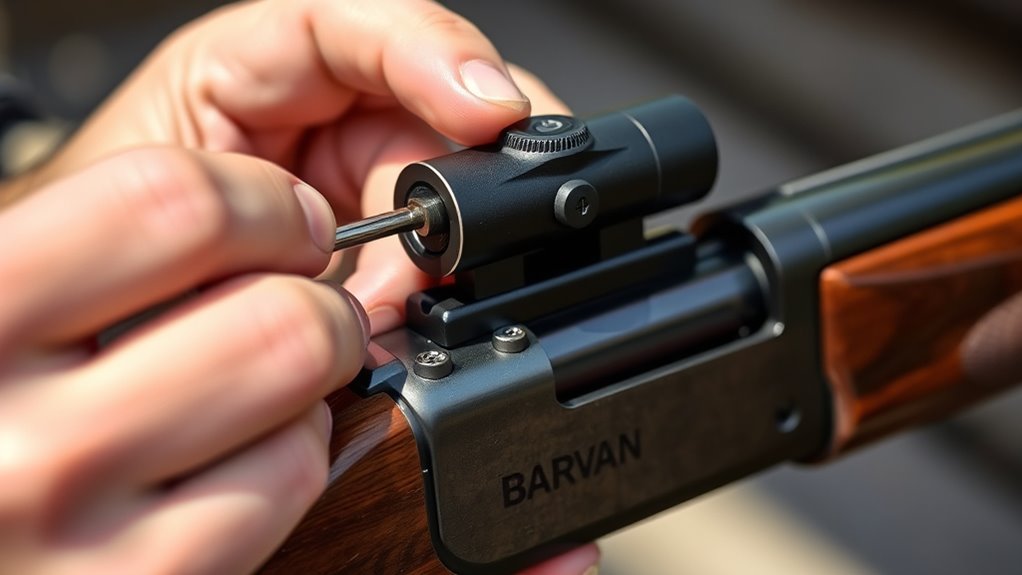
How do you know which sight suits your shotgun best? Start by considering what you’ll use the shotgun for—hunting, sport shooting, or home defense. Each activity benefits from different sight types.
For example, bead sights are simple and durable, perfect for quick target acquisition in bird hunting. If you want more precision, fiber optic sights enhance visibility in various lighting conditions. Red dot sights offer fast target acquisition and work well for close to mid-range shooting, but they need batteries.
Ghost ring sights provide a balance of speed and accuracy, ideal for tactical use. Think about your shotgun’s barrel length and the mounting options available to avoid compatibility issues. Also, consider your budget and maintenance preferences.
Choosing the right sight means balancing functionality, ease of use, and durability. By matching the sight to your needs, you’ll improve your shooting experience and accuracy notably.
Gather Your Tools and Materials
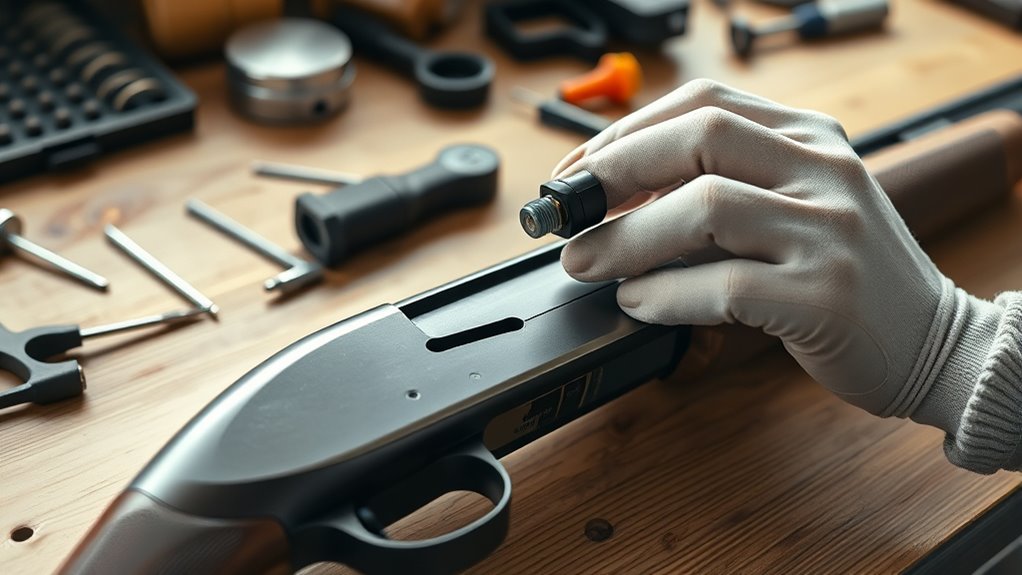
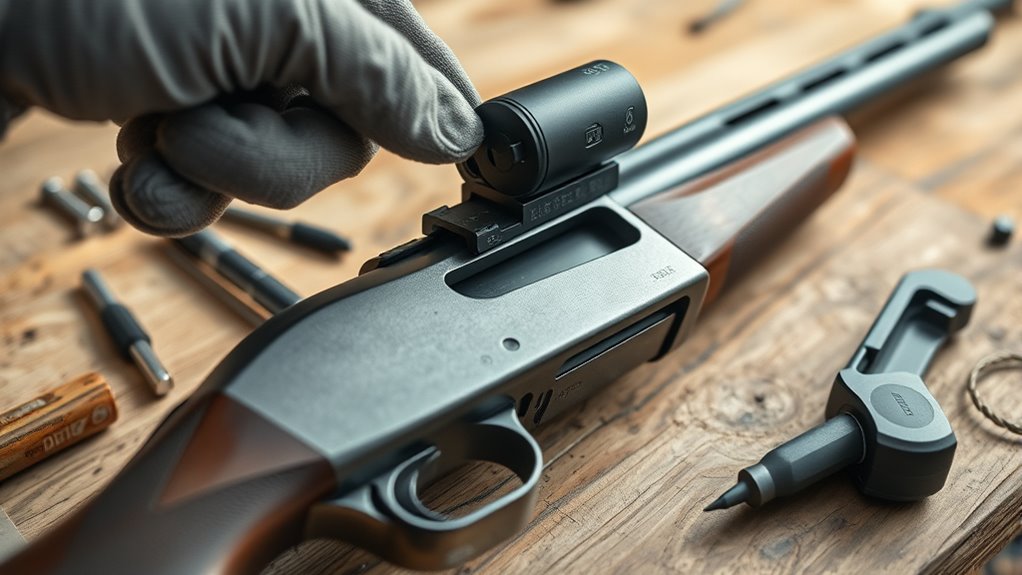
Before you start mounting your sight, you’ll need to gather the right tools and materials to guarantee the process goes smoothly. Having everything ready prevents interruptions and helps you work efficiently. You’ll typically need a screwdriver or Allen wrench, a mounting base or rail (if not already on your shotgun), and the sight itself.
Additionally, thread locker can secure screws, while a cloth will help keep your shotgun clean.
Here’s a quick table to visualize essential items:
| Tools | Materials | Accessories |
|---|---|---|
| Screwdriver/Allen wrench | Mounting base/rail | Thread locker |
| Cleaning cloth | Sight | Loctite or similar |
| Torque wrench | Screws | Protective gloves |
Make sure your tools fit your shotgun’s specifications. Having these ready ensures you can mount your sight safely and accurately without scrambling mid-process.
Prepare Your Shotgun Before Mounting
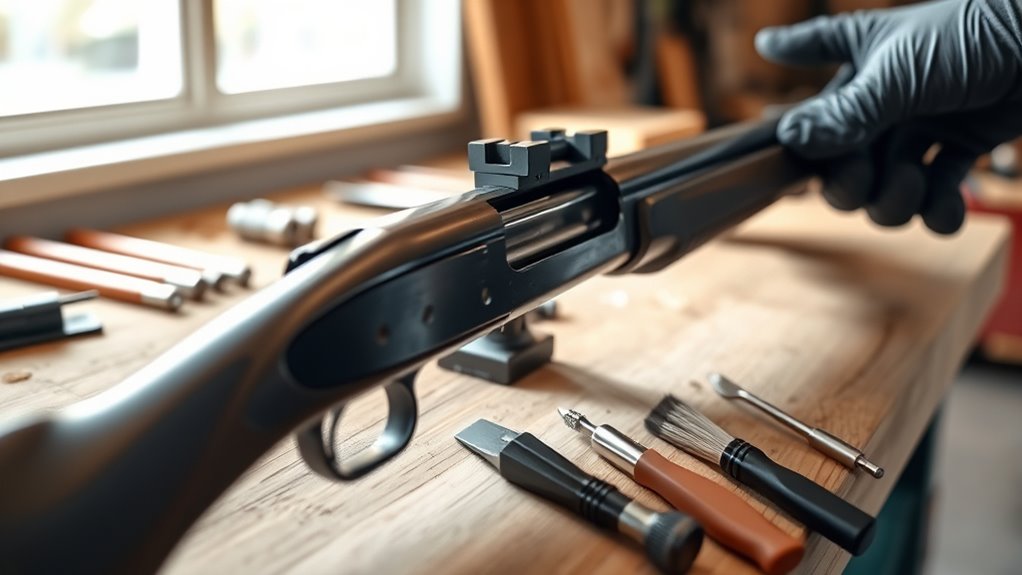
Before you start mounting, make sure your shotgun is completely unloaded for safety.
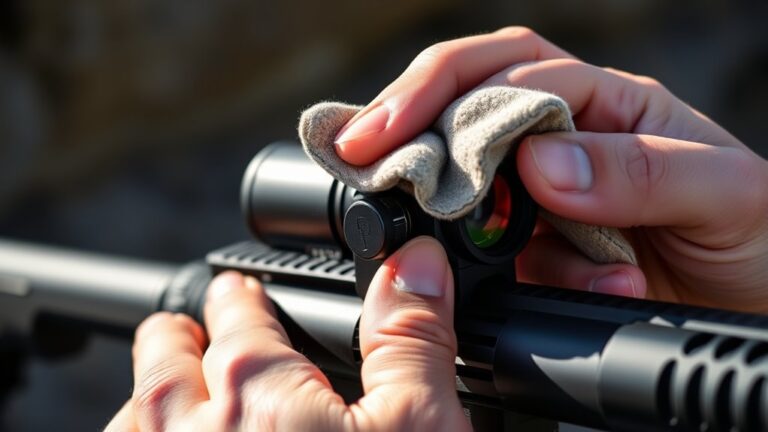
Next, clean the mounting surface thoroughly to guarantee a secure fit.
Finally, have all your mounting tools ready to streamline the process.
Ensure Shotgun Is Unloaded
Why is it crucial to make certain your shotgun is unloaded before mounting a sight? Safety is the top priority. Handling a loaded firearm increases the risk of accidental discharge, which can cause serious injury or worse.
Before you start, open the action and visually inspect the chamber and magazine tube to confirm they’re empty. Physically check by feeling inside if necessary. Don’t rely solely on memory or assumptions.
Even if you’ve just used the shotgun, always repeat this step. Removing all ammunition ensures you can focus on mounting the sight without distractions or hazards. Once you’re sure the shotgun is unloaded, you can proceed confidently and safely with the installation process, knowing you’ve eliminated a major risk.
Clean Mounting Surface Thoroughly
Although it might seem like a small step, cleaning the mounting surface thoroughly is essential to guarantee your sight attaches securely and functions properly. Dirt, oil, or residue can prevent a tight fit, causing misalignment or loosening over time. Before you start, make sure the shotgun is unloaded and safely positioned.
To clean the surface effectively, you’ll want to:
- Wipe down the area with a lint-free cloth to remove loose debris
- Use a solvent like isopropyl alcohol to cut through oils and grease
- Gently scrub with a soft brush if there’s stubborn dirt or residue
- Dry the surface completely before proceeding to mount the sight
Taking these steps ensures a solid base for your sight, helping it stay put and perform accurately.
Gather Necessary Mounting Tools
Since mounting a sight requires precision, you’ll need to gather all the necessary tools beforehand to guarantee a smooth and accurate installation. Start with a quality screwdriver set—both flathead and Phillips—since screws vary by sight type. A torque wrench is essential to apply the right amount of pressure without damaging parts.
You’ll also want a set of hex wrenches or Allen keys, as many mounts use these. Have a clean cloth or microfiber towel ready to keep surfaces free from oils and dirt. Thread locker can help secure screws and prevent loosening.
Ultimately, a small level or bubble gauge ensures your sight sits perfectly straight. Having these tools organized and within reach will save time and reduce frustration during the mounting process.
Mark Where to Mount Your Sight
You’ll want to choose the best spot on your shotgun to mount the sight for easy visibility and accuracy. Take time to think about how the sight aligns with your natural eye position.
Marking this spot clearly guarantees proper placement before you start attaching the sight.
Choose Optimal Mounting Spot
Where exactly should you mount your sight for the best performance? Choosing the right spot is vital to guarantee accuracy and ease of use. Typically, you want the sight where your eye naturally aligns when you shoulder the shotgun.
Consider these key points:
- On the rib: The top rib near the muzzle offers a clear view and minimal obstruction.
- Just in front of the receiver: Keeps the sight within your natural line of sight.
- Avoid too close to the chamber: It can be uncomfortable and disrupt your aim.
- Check for barrel heat: Mount away from areas that get too hot during firing.
Consider Sight Alignment
Although choosing the right spot is important, you also need to carefully align your sight to guarantee quick target acquisition and accuracy. Proper alignment ensures your eye naturally lines up with the sight when you shoulder the shotgun.
Mark the position where the sight sits perfectly in your natural sight picture.
Use this alignment table to help:
| Alignment Aspect | What to Check |
|---|---|
| Height | Sight should be at eye level |
| Horizontal Center | Sight centered with barrel |
| Eye Relief | Comfortable distance from eye |
| Natural Point of Aim | Ensure no awkward head positioning |
Mark the spot where these alignments meet your comfort and shooting style.
This precision will make mounting the sight easier and your shots more accurate.
Attach Your Sight Securely
How tightly should you fasten your sight to guarantee it stays put without damaging your shotgun? You want it snug enough to prevent any movement during recoil, but not so tight that you risk stripping screws or warping the mounting surface. Start by aligning the sight correctly, then use a torque wrench or follow the manufacturer’s torque specs for tightening.
Over-tightening can cause permanent damage, while loose screws might lead to shifting and poor accuracy.
Here’s what to keep in mind:
- Use thread locker sparingly to prevent screws from loosening over time.
- Tighten screws incrementally in a crisscross pattern if multiple screws are involved.
- Double-check that the sight base sits flush against the shotgun to avoid gaps.
- Avoid using power tools; hand-tightening ensures better control and prevents overtightening.
Following these steps ensures your sight is secure, reliable, and ready for consistent performance.
Adjust Your Sight for Accurate Aim
Once your sight is securely mounted, you’ll need to adjust it to guarantee your shots hit their mark. Start by aligning the sight with your shotgun’s barrel. Use the elevation and windage screws on your sight to make precise adjustments.
Elevation controls the vertical alignment, while windage adjusts the horizontal point of impact. Make small turns and check your alignment regularly.
Here’s a quick guide to adjustment directions:
| Adjustment Type | Direction | Effect on Point of Impact |
|---|---|---|
| Elevation | Up | Raises shot impact higher |
| Elevation | Down | Lowers shot impact |
| Windage | Right | Moves shot impact right |
| Windage | Left | Moves shot impact left |
Test and Fine-Tune Your Sight
Before you head to the range, make sure your sight is firmly mounted and roughly aligned. Testing and fine-tuning are essential to guarantee your sight delivers accurate aiming. Start by firing a few shots at a stationary target to see where your pellets land compared to your point of aim.
Observe the pattern and adjust your sight accordingly.
Here’s a quick checklist to guide you through the process:
- Fire a controlled group of shots from a consistent stance and distance.
- Note pellet impact location relative to your sight’s reticle or bead.
- Make small adjustments to windage and elevation screws on your sight.
- Repeat test shots after each adjustment until your shots consistently hit the desired point.
Patience is key—fine-tuning may take several rounds to perfect, but it’s worth it to achieve precise accuracy on your next outing.
Frequently Asked Questions
Can I Mount a Sight on Any Shotgun Brand?
You can’t mount a sight on every shotgun brand since some lack proper bases or rails. You’ll need to check compatibility, and sometimes you might have to add adapters or opt for specific sight types designed for your model.
Are There Legal Restrictions for Mounting Sights on Shotguns?
Yes, you might face legal restrictions depending on your location. Always check federal, state, and local laws before mounting sights on your shotgun, as some places regulate firearm modifications or specific sight types.
Be sure to understand the rules that apply in your area to avoid any legal issues.
How Does Mounting a Sight Affect Shotgun Resale Value?
You want value, you want appeal, and you want ease of sale. Mounting a sight can boost appeal for some buyers but might limit others. It depends on taste, condition, and how professionally it’s installed.
Can Mounting a Sight Damage My Shotgun’s Finish?
Yes, mounting a sight can damage your shotgun’s finish if you’re not careful. Using improper tools or techniques might scratch or chip the surface, so you’ll want to use protective pads and follow instructions closely to avoid harm.
What Types of Sights Are Best for Different Shotgun Uses?
You’ll want bead sights for quick target acquisition in bird hunting, red dot sights for fast moving targets in tactical or home defense, and ghost ring sights for improved accuracy in upland game or slug shooting.
Conclusion
So, now that you’ve mastered the art of mounting a sight on your shotgun in just seven easy steps, you’re basically a gunsmith—right? Who knew it could be this simple? Just remember, while it might feel like rocket science, it’s really just about patience and a steady hand.
Mounting a sight on a shotgun enhances your accuracy and shooting experience. So go ahead, take your perfectly mounted sight out for a spin, and prove that even the most complex tasks can be conquered with a little know-how! With these shotgun sight mounting tips, you’re ready to hit your target every time.