Tie a Peep Sight in 7 Easy Steps
To tie a peep sight, you need a few essential tools like strong string, scissors, a needle, and pliers. The peep sight is a crucial component for archers aiming to improve their accuracy and consistency.
By properly installing a peep sight, you can achieve better sight alignment and ultimately shoot more precisely.
First, find and mark the perfect spot on your bowstring that aligns with your anchor point. Next, thread the peep onto the string, adjusting it carefully to ensure a clear sight picture.
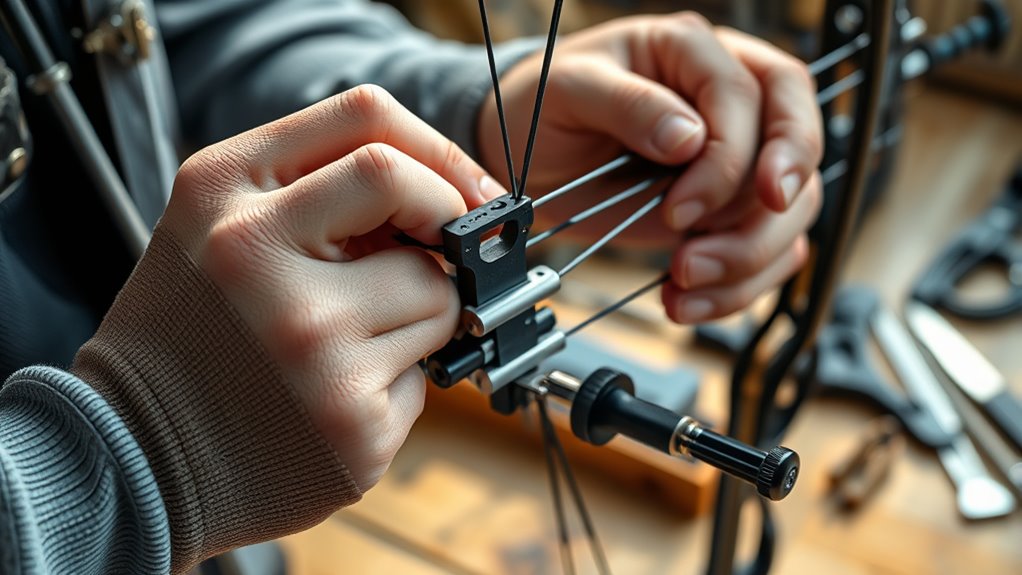
Use a serving tool to wrap tight, even knots above and below the peep to secure it firmly.
After securing the peep sight, test and adjust it for accuracy. Regular cleaning and inspection will help maintain its effectiveness over time.
If you want to shoot more precisely, you’ll find helpful tips ahead.
Key Takeaways
- Use strong, thin string and prepare tools like scissors, lighter, and serving tool before starting the peep sight installation.
- Mark the ideal peep sight position on the bowstring by aligning it with your eye at full draw and anchor point.
- Thread the peep sight onto the bowstring at the marked spot, ensuring proper height, alignment, and circular aperture.
- Secure the peep sight with tight, even serving wraps using a serving tool, tying knots to lock it in place.
- Test alignment by drawing the bow and looking through the peep, adjusting or reinforcing serving for optimal sight positioning.
Gather the Tools You’ll Need
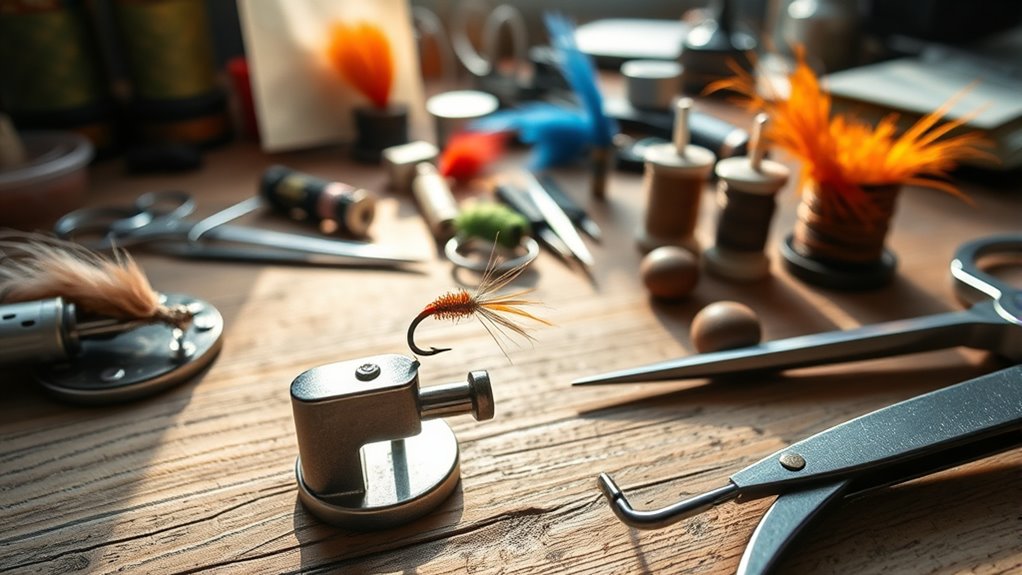
Before you begin tying a Peep Sight, you’ll need to gather a few essential tools to make the process smooth and accurate. First, you’ll want some strong, thin string—usually Dacron or a specialized Peep Sight cord works best. Avoid anything too thick, as it can interfere with your shot.
Next, grab a pair of scissors or a sharp knife to cut the string cleanly. You’ll also need a lighter or matches to carefully melt the string ends and prevent fraying. A small needle or pick can help you position the string tightly on the bowstring.
Finally, have a pair of pliers or a small clamp ready to hold the knot securely while you tighten it. Having these tools on hand before you start will save you time and frustration, ensuring the Peep Sight is tied properly and holds firm during use. With everything ready, you’re set for the next step.
Find the Best Spot on Your Bowstring
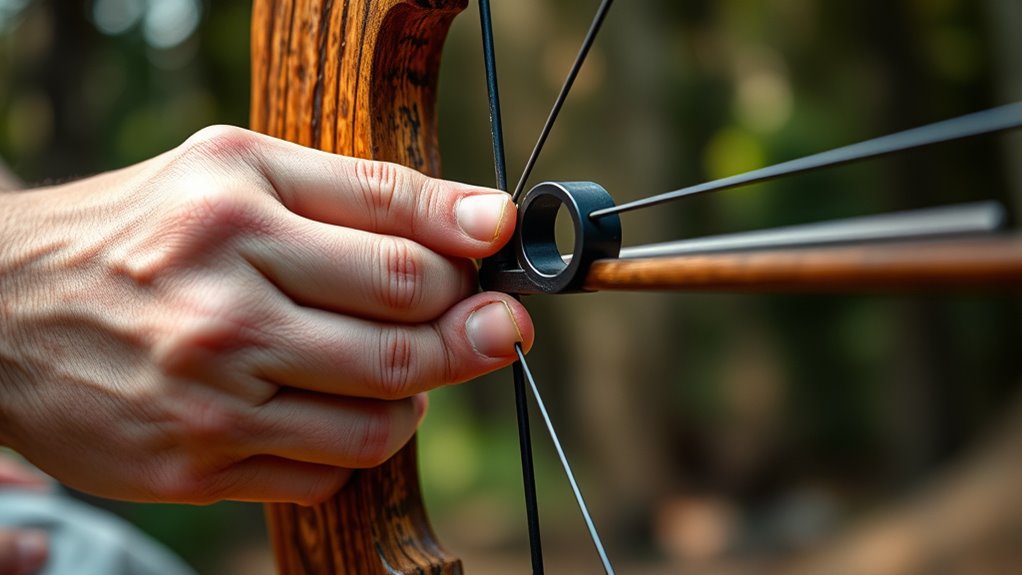
You’ll want to find the ideal spot on your bowstring for the peep sight to guarantee accuracy and comfort. Marking this spot carefully helps you tie the sight in the right place without guesswork.
Let’s go over some simple techniques to identify and mark that perfect position.
Optimal Peep Sight Placement
Where exactly should you place your peep sight on the bowstring to guarantee accurate aiming? The key is to align the peep sight so that it sits perfectly in line with your eye when you draw the bow. Position it where you naturally anchor your draw hand, typically near your cheek or jawline.
This secures a consistent sight picture every time. Make sure the peep sight is centered vertically on the string to avoid parallax errors. Also, it shouldn’t interfere with the arrow rest or any other components.
Adjust its height so that when you look through it, your target is clearly framed without needing to move your head. Taking the time to find this sweet spot will dramatically improve your accuracy and shooting confidence.
Bowstring Marking Techniques
Although finding the perfect spot for your peep sight starts with proper placement, marking your bowstring correctly is essential to guarantee consistent alignment every time you shoot. To do this, first nock an arrow and draw your bow to full draw, ensuring your anchor point is steady.
Have a friend carefully mark the bowstring where your peep sight should sit, or use a non-permanent marker to make a visible spot yourself. This mark acts as a precise reference point, helping you tie the peep sight in exactly the same place each time. Be sure to check the mark regularly, as string twists or movement can shift it.
With a well-marked bowstring, you’ll maintain accuracy and confidence every shot.
Thread the Peep Sight Onto the Bowstring
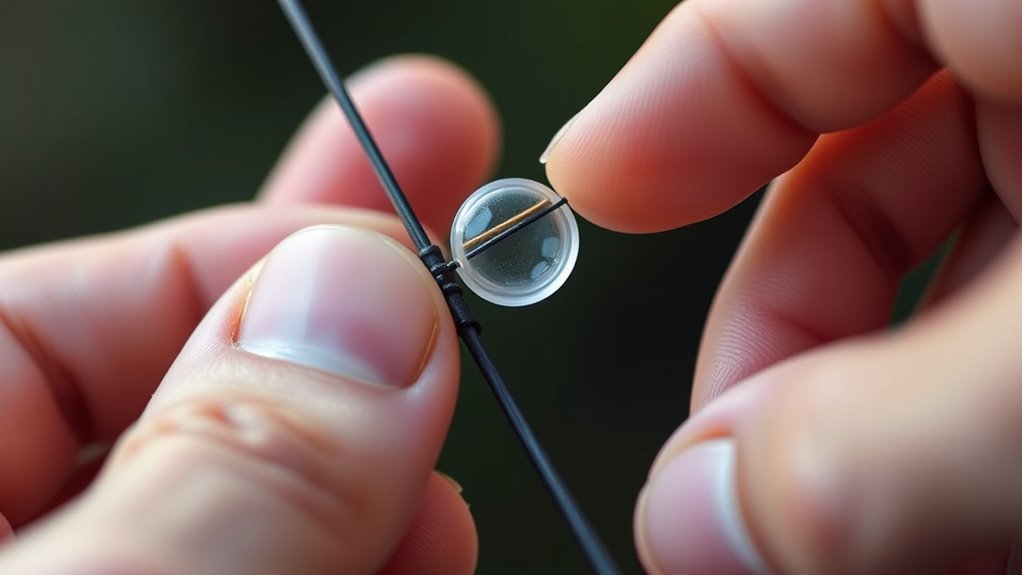
Now that you’ve found the best spot on your bowstring, it’s time to thread the peep sight onto it. Make sure to align the peep sight properly so it sits evenly and faces your eye when you draw the bow.
Once in position, secure it firmly to prevent any movement during shooting.
Aligning The Peep Sight
Before you can properly use your peep sight, you’ll need to thread it onto the bowstring and position it at the right height. Aligning the peep sight guarantees that when you draw your bow, your eye naturally lines up through the aperture with your front sight or arrow tip. Here’s what you should focus on:
- Adjust the peep sight vertically to match your anchor point for consistent aiming.
- Rotate the peep sight until the aperture is perfectly circular and not tilted.
- Check alignment from your shooting stance to confirm a clear, unobstructed view through the peep.
Take your time with these steps—proper alignment makes a huge difference in accuracy and comfort when shooting.
Securing Position On String
How do you guarantee your peep sight stays firmly in place on the bowstring? Start by threading it carefully onto the string, making sure it’s snug but not damaging. Position it exactly where you aligned it earlier.
Then, wrap serving thread tightly around the bowstring, both above and below the peep sight to lock it in place. Secure the thread with a strong knot, trimming any excess. This guarantees your sight won’t shift during use.
Use a Serving Tool to Tie Peep Sight Knots
Although tying peep sight knots by hand is possible, using a serving tool makes the process much easier and guarantees a tight, even wrap around your bowstring. This tool helps maintain consistent tension, preventing loose or uneven wraps that could affect your shot accuracy.
To get started, secure the serving tool onto your bowstring near the peep sight location, then carefully wind the serving thread around the string.
Using a serving tool offers key advantages:
- Uniform Wraps: Ensures each loop is tight and evenly spaced.
- Time Efficiency: Accelerates the knot-tying process substantially.
- Reduced Hand Fatigue: Minimizes strain compared to hand wrapping.
Test, Adjust, and Troubleshoot Your Peep Sight
Once you’ve secured your peep sight with a serving tool, the next step is to test its alignment and make necessary adjustments. First, draw your bow and look through the peep sight, focusing on the front sight pin or target. If the peep isn’t perfectly centered or feels off, it’s time to tweak it.
Loosen the serving slightly, then rotate the peep sight until it aligns with your front sight and eye naturally. If you notice any fogging, obstruction, or difficulty seeing through, check the knot tension and serving tightness. Confirm the peep isn’t twisted or damaged.
In case the peep sight keeps slipping, reinforce the serving or consider adding a second serving layer for extra grip. Regularly test your setup under different lighting and shooting conditions to confirm consistent alignment. With careful adjustments, your peep sight will provide a clear, reliable aiming point every time.
Choose the Right Peep Sight for Your Bow (If You Haven’t Yet)
Before you tie on a peep sight, you’ll want to pick one that matches your bow and shooting style. Choosing the right peep sight guarantees better accuracy and comfort while shooting. Consider these factors when making your choice:
- Size of the Aperture: Smaller apertures offer a clearer pin sight but limit light, while larger ones allow more light but reduce precision.
- Material and Durability: Look for high-quality materials like aluminum or composite that withstand weather and wear.
- Compatibility with Your Bow: Make sure the peep sight fits your bow’s string type and thickness for secure installation.
Choosing correctly upfront saves time and frustration down the line. If you’re unsure, consult your bow’s manual or a pro at your local archery shop. This way, you’ll have a reliable peep sight that complements your shooting style before moving forward with tying it on.
Maintain Your Peep Sight: Cleaning and Inspection Tips
Since your peep sight plays a crucial role in your accuracy, keeping it clean and well-inspected is necessary for consistent performance. Start by regularly wiping the peep with a soft, lint-free cloth to remove dirt, dust, and oils. Avoid harsh chemicals; instead, use mild soap and water if necessary, drying thoroughly afterward.
Next, inspect the peep sight for any signs of damage, such as cracks or warping, which can affect your aim. Check the string for fraying or looseness and ensure the peep is properly aligned on the bowstring.
If you notice any issues, replace the peep sight or restring your bow as needed. Maintaining your peep sight not only preserves your accuracy but also extends the lifespan of your equipment. By routinely cleaning and inspecting your peep sight, you’ll keep your shots consistent and your archery experience enjoyable.
Frequently Asked Questions
Can I Tie a Peep Sight Without Professional Help?
Yes, you can tie a peep sight without professional help. Just follow clear instructions carefully, take your time, and practice patience.
With some effort, you’ll get the hang of it and improve your archery setup confidently.
How Does a Peep Sight Improve Shooting Accuracy?
Imagine looking through a tiny window that sharpens your focus—that’s how a peep sight improves your shooting accuracy. It aligns your eye perfectly with the target, reducing guesswork and helping you hit your mark consistently.
Are Peep Sights Compatible With All Bow Types?
Peep sights aren’t compatible with all bow types. You’ll mostly find them on compound bows, as they fit well with cables and cams.
Traditional or recurve bows usually don’t support peep sights without special modifications.
What Materials Are Peep Sights Typically Made From?
Peep sights are primarily made from durable, dependable materials like aluminum, plastic, and sometimes steel. You’ll find these materials maintain strength, withstand weather, and guarantee smooth sighting, so you can shoot sharply and stay steady in every situation.
Can Weather Conditions Affect Peep Sight Performance?
Yes, weather conditions can affect your peep sight’s performance. Moisture, dirt, and extreme temperatures might fog or warp it, making your aiming less accurate.
Regular cleaning and maintenance help keep it reliable regardless of weather.
Conclusion
Now that you’ve gracefully danced through the steps of tying your peep sight, your bowstring is ready to whisper precision with every shot.
Remember, a well-tied peep sight is like a trusted friend—quietly guiding your aim through the haze. Keep it clean and checked, so it never loses its gentle touch.
With care and patience, your bow will sing its true song, leading you to brighter targets and clearer horizons. Proper maintenance and regular inspections ensure your peep sight performs at its best, helping you achieve consistent accuracy in every shot.