7 Reasons Why 25-20 Ammo Is Hard to Find
You’ll find 25-20 ammo hard to come by because demand is low and mainly limited to collectors and vintage shooters. This niche cartridge struggles to compete with modern rounds like .223 and 9mm, which dominate production and retail shelves. As a result, 25-20 ammo remains a rare find in most markets.
Manufacturing 25-20 ammo is challenging due to the need for specialized parts and ongoing component shortages. These factors push prices up while reducing supply, making it difficult for manufacturers to prioritize this round.
Collectors often hold onto their ammo for preservation, further tightening availability.
If you want to understand all the reasons behind its scarcity, there’s plenty to explore. From low demand and modern competition to production hurdles and collector habits, several factors contribute to why 25-20 ammo is so hard to find.
Key Takeaways
- The 25-20 cartridge’s declining use in older rifles has significantly reduced demand and production by manufacturers.
- Market focus on popular calibers like .223 Remington and 9mm limits retail availability of niche 25-20 ammo.
- Specialized manufacturing challenges and scarce components, like brass and bullets, restrict 25-20 ammo production.
- Collector interest prioritizes preservation, removing ammo from circulation and contributing to supply shortages.
- Small batch production and bulk buying by enthusiasts quickly deplete limited 25-20 ammo stocks.
Why 25-20 Ammo Is Becoming Harder to Find
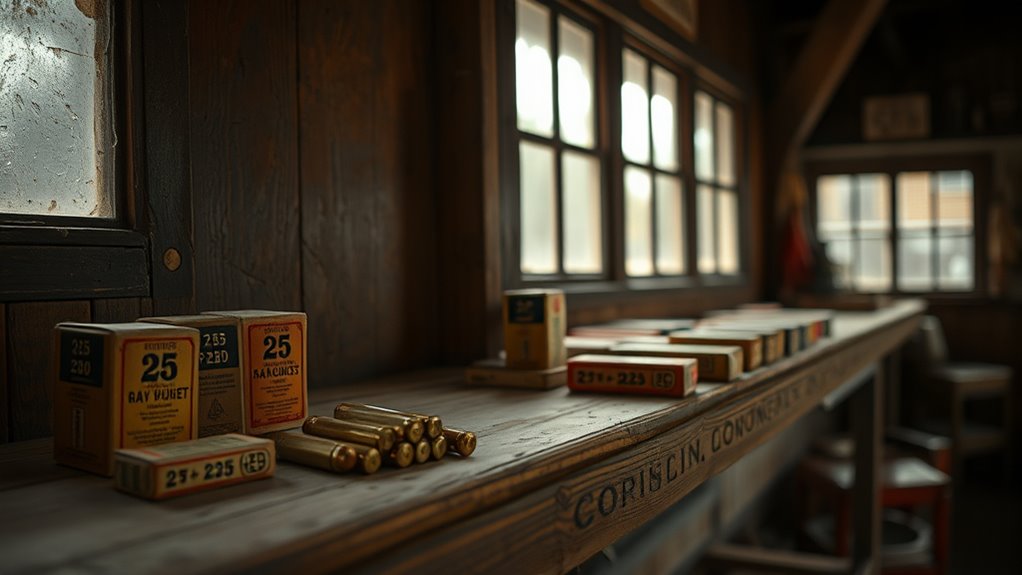
Although 25-20 ammo once enjoyed steady demand, you’ll notice it’s becoming increasingly rare on store shelves. This rarity isn’t just by chance. The cartridge was originally designed for older rifles, so the number of shooters using these firearms has declined over time.
When fewer people need this specific ammo, manufacturers naturally reduce production, making it harder for you to find. Additionally, the components for 25-20 rounds aren’t as widely produced as those for more popular calibers, which limits availability. You might also find that the ammo you do come across can be pricier due to its scarcity.
Since it isn’t manufactured in large quantities, you won’t see it stocked like common rounds. So, if you own a firearm chambered for 25-20, you’ll have to look harder or consider handloading to keep shooting.
How Modern Cartridge Popularity Reduces 25-20 Supply
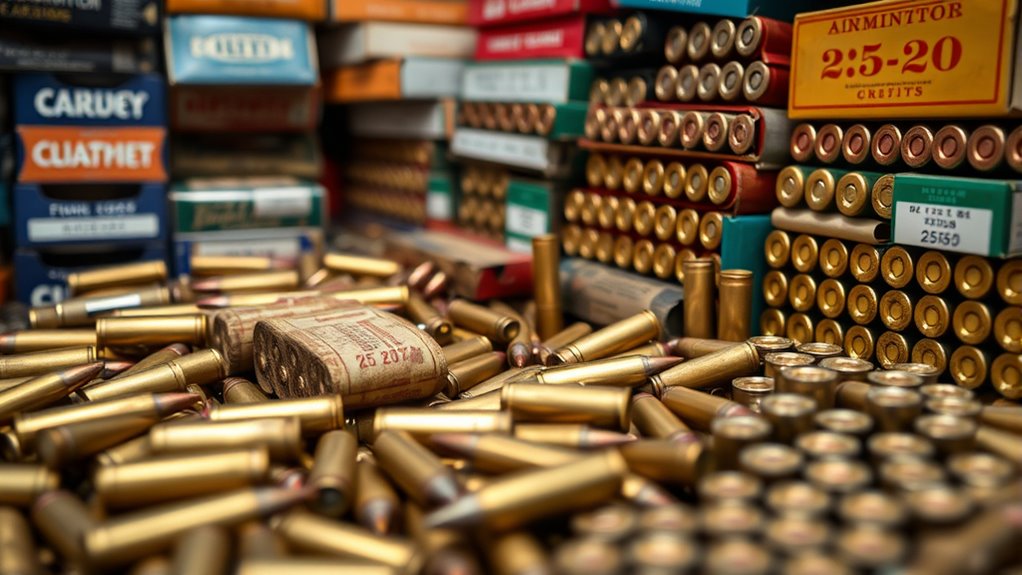
You’ve probably noticed that modern cartridges like the 5.56 NATO and .223 Remington dominate the market. Because demand shifts toward these popular rounds, manufacturers focus their production there, leaving less room for niche calibers like the 25-20.
This shift directly cuts into the availability of 25-20 ammo on store shelves.
Rise of Popular Cartridges
Three modern cartridges have surged in popularity, making it harder for you to find 25-20 ammo on store shelves. Cartridges like the .223 Remington, 9mm Luger, and .308 Winchester dominate both hunting and sport shooting markets. Manufacturers prioritize these rounds because they sell in massive quantities, ensuring steady profits and streamlined production.
As a result, older cartridges like the 25-20 get pushed to the sidelines. You’ll notice fewer manufacturers producing 25-20 ammo, and those that do often limit their runs to specialty or custom orders. Retailers, responding to customer demand, stock more popular calibers, leaving the 25-20 with limited shelf space.
This rise in popular cartridges directly impacts the availability of 25-20 ammo, making it increasingly rare and expensive for you to track down.
Shift in Ammunition Demand
Since modern cartridges like the .223 Remington and 9mm Luger dominate the market, the demand for 25-20 ammo has sharply declined. You’ll notice that manufacturers focus their production on these popular rounds because they sell quickly and meet the needs of most shooters.
As a result, less attention and fewer resources are allocated to producing 25-20 cartridges. When you try to find 25-20 ammo, you’re competing with limited stock that’s often reserved for collectors or vintage firearm enthusiasts.
This shift means retailers don’t stock much 25-20 ammo, making it even harder for you to get your hands on it. Unless demand increases markedly, the supply of 25-20 rounds will likely stay scarce for the foreseeable future.
Limited Production and Its Effect on 25-20 Ammo Availability
Although the 25-20 cartridge holds a special place among vintage shooters, its limited production means you won’t find it on store shelves as easily as more common calibers. Manufacturers focus on popular cartridges that guarantee higher sales, so 25-20 ammo is produced in much smaller batches. This scarcity directly affects availability and pricing, making it tougher to stock up or find when you need it.
When production is limited, you face:
- Fewer manufacturers willing to produce 25-20 rounds
- Limited runs that sell out quickly, creating sporadic supply
- Higher manufacturing costs passed on to you due to low volume
You’ll notice that even when 25-20 ammo does appear, it’s often pricier and in short supply. So, if you rely on this vintage cartridge, you’ll need to plan ahead and keep an eye out for restocks before your supply runs low.
Niche Demand’s Role in 25-20 Ammo Scarcity
You might notice that 25-20 ammo appeals mainly to a small group of shooters and collectors, which limits demand. Since it’s often used for specialized hunting or kept as a collectible, production stays low.
This niche interest plays a big part in why it’s so hard to find.
Limited Shooter Community
Because the 25-20 cartridge appeals mainly to collectors and vintage rifle enthusiasts, the shooter community for this round is quite limited. If you’re looking to find 25-20 ammo, you’ll notice fewer people use it regularly, which lowers demand and production incentives.
Unlike popular calibers, this niche group doesn’t drive market availability.
You’ll often find that:
- Most shooters prefer modern, widely available cartridges for regular use.
- 25-20 rifles are often treasured heirlooms or display pieces rather than daily shooters.
- Reloaders who do use 25-20 ammo tend to make their own due to scarcity.
This limited shooter base means manufacturers focus less on mass-producing 25-20 rounds, making it harder for you to find them on shelves.
Collector Interest Impact
The limited shooter community for 25-20 ammo naturally ties into the strong collector interest that shapes its availability. If you’re into collecting vintage firearms, you’ll find that 25-20 rounds often hold more value as historical artifacts than as practical ammunition. Collectors prize original packaging and unfired rounds, which means much of the ammo stockpile isn’t intended for shooting but preservation.
This niche demand limits how much ammo circulates in the market for actual use. Because of this, manufacturers and sellers prioritize quality over quantity, producing smaller batches that often get snapped up by collectors. So, when you’re hunting for 25-20 ammo, you’re not just competing with shooters but also with dedicated collectors who want to keep these rare rounds intact.
Specialized Hunting Usage
Although the 25-20 cartridge isn’t as popular as other calibers, it still holds a special place among hunters who prefer its unique characteristics for small to medium game. If you’re one of those hunters, you know this niche demand contributes to its scarcity. Manufacturers produce limited quantities because the market is small but dedicated.
When you hunt with 25-20 ammo, you appreciate its mild recoil, making it easier to shoot accurately. It offers adequate power for varmints and deer-sized game at close range. The cartridge is also compatible with vintage lever-action rifles favored by collectors and hunters alike.
Because of this specialized use, ammo production stays low, and finding 25-20 rounds means dealing with limited supply tailored to this specific hunting group.
Manufacturing Challenges for 25-20 Vintage-Caliber Ammo
When you’re looking for 25-20 ammo, you might not realize how tricky it is to produce. This vintage caliber demands specialized equipment and expertise that many modern manufacturers don’t prioritize. The 25-20 cartridge has unique case dimensions and pressure requirements, which means standard production lines can’t easily adapt without retooling.
Additionally, the brass cases often need to be custom-made or carefully modified from other calibers, adding complexity and cost. You also have to contemplate quality control. Because the 25-20 isn’t produced in large volumes, manufacturers can’t rely on economies of scale, so every batch requires meticulous inspection to ensure safety and performance.
All these factors make it less appealing for mass production, meaning fewer factories are willing to invest in making it. So, when you’re hunting for this ammo, know that behind the scenes, producing it involves specialized steps that limit availability.
How Component Shortages Limit 25-20 Ammo Supply
Even if you find a manufacturer willing to produce 25-20 ammo, sourcing the right components can be a major hurdle. This vintage cartridge requires specific parts that aren’t widely available today. Brass casings, bullets, and powders designed for 25-20 rounds are often in limited supply, making consistent production tricky.
You might notice delays or shortages because manufacturers struggle to gather everything needed.
Here are the main component shortages affecting 25-20 ammo supply:
- Brass casings: Modern manufacturers rarely produce 25-20 brass, so you often rely on limited stock or costly custom batches.
- Bullets: Bullets sized and weighted for 25-20 are uncommon, pushing makers to hand-cast or reorder specialized runs.
- Powder: The ideal powder for this cartridge may be scarce or inconsistent, complicating load development and safety.
These shortages directly limit how much 25-20 ammo can be produced and how often it hits the market.
How Shooters and Collectors Influence 25-20 Ammo Availability
Sourcing the right components for 25-20 ammo is only part of the challenge; the demand from shooters and collectors also plays a big role in availability. If you’re a shooter, you know this cartridge isn’t as common as others, so when you find it, you might buy more than you need to guarantee you’re stocked. Collectors, on the other hand, often seek rare or vintage ammo, which further tightens supply.
Their interest can drive prices up and lead to ammo being kept off the market. Because 25-20 rounds aren’t produced in large quantities, every bullet purchased by enthusiasts reduces the amount available for regular shooters. This dynamic means that even if manufacturers increase production, the combined demand from both groups can quickly absorb the supply.
Frequently Asked Questions
What Firearms Are Chambered for 25-20 Ammo?
You’ll find 25-20 ammo mostly in vintage lever-action rifles like the Winchester Model 1892 and Marlin Model 1894. These classic firearms were popular in the late 19th and early 20th centuries, perfect for collectors and enthusiasts.
Is 25-20 Ammo Suitable for Hunting?
Yes, 25-20 ammo can be suitable for small game hunting and varmints, but you shouldn’t rely on it for larger animals. Its lower power limits its effectiveness compared to more modern cartridges designed for bigger game.
When considering hunting larger animals, opting for a cartridge with greater stopping power is advisable. For small game and varmints, the 25-20 performs adequately within its limitations. Always match your ammo choice to the size and type of game you intend to hunt.
Can 25-20 Ammo Be Reloaded at Home?
You can absolutely reload 25-20 ammo at home; it’s like crafting your own lightning in a bottle. With proper dies, powder, and primers, you’ll keep your rounds flying, saving money while mastering your shooting craft.
What Are the Ballistic Characteristics of 25-20 Ammo?
You’ll find 25-20 ammo has moderate velocity around 1,460 fps and delivers manageable recoil. It’s great for small game hunting and target shooting, offering decent accuracy with its light, low-pressure ballistics.
How Does 25-20 Ammo Compare to Similar Calibers?
You’ll find 25-20 ammo offers milder recoil and lower velocity compared to calibers like .30-30, making it suitable for small game.
It’s less powerful but more manageable for beginners or those wanting less noise.
Conclusion
Hunting for 25-20 ammo today is like chasing a rare, fading star—once bright, now elusive in the vast sky of popular cartridges. You’re steering through limited production lines, scarce components, and a niche demand that keeps this vintage round precious.
But that rarity is part of its charm, symbolizing a connection to history and craftsmanship. So, when you finally find a box, you’re not just acquiring ammo—you’re holding a piece of a disappearing legacy. This scarcity makes 25-20 ammo highly sought after by collectors and shooters alike.
In the world of ammunition, 25-20 ammo stands out as a unique blend of tradition and rarity. Its hard-to-find status only adds to its allure, making it a prized find for enthusiasts who appreciate its historical significance and craftsmanship.