How to Carry Concealed Legally in Texas
To carry concealed legally in Texas, it is essential to understand the state’s specific requirements and regulations for concealed carry permits. You must be 21 or older, or 18 if you are an active military member. Additionally, having no disqualifying criminal history is mandatory for eligibility.
Completing a handgun proficiency course is required before applying. You must submit your application through the Texas Department of Public Safety (DPS) with all necessary documents and pass a thorough background check.
Although Texas allows permitless carry for eligible individuals, obtaining a concealed carry license provides benefits such as reciprocity with other states and access to certain restricted locations.
Always adhere to local restrictions and prioritize safe carrying practices. Stay informed for important details on Texas concealed carry laws and what to do if stopped by law enforcement.
Key Takeaways
- Obtain a Texas License to Carry (LTC) by completing approved training and passing a background check if under permitless carry exemptions.
- Always carry a valid LTC and government-issued ID when carrying concealed, and inform law enforcement immediately if stopped.
- Concealed carry is prohibited in schools, federal buildings, bars, and private properties with proper “No Firearms” signage.
- Use a proper holster, keep the firearm secured on your person, and never carry while intoxicated.
- Respect all posted signs and private property rules to avoid trespassing and legal violations.
Eligibility To Get a Texas Concealed Carry License

Before you can carry concealed in Texas, you need to make certain you meet the eligibility requirements for a license. First, you must be at least 21 years old, unless you’re an active-duty military member, in which case the minimum age drops to 18. You also need to be a legal resident of Texas or a member of the military stationed in the state.
You can’t have any felony convictions or certain misdemeanors, especially related to family violence. Your mental health history matters too; if you’ve been adjudicated as mentally incapacitated or committed to a mental institution, you won’t qualify. Additionally, you can’t be chemically dependent or have a pending criminal charge that would disqualify you.
You’ll also need to pass a background check and complete a handgun proficiency course. Meeting these requirements ensures you’re legally eligible to apply for a Texas Concealed Handgun License and carry concealed responsibly.
Key Texas Concealed Carry Law Updates You Should Know
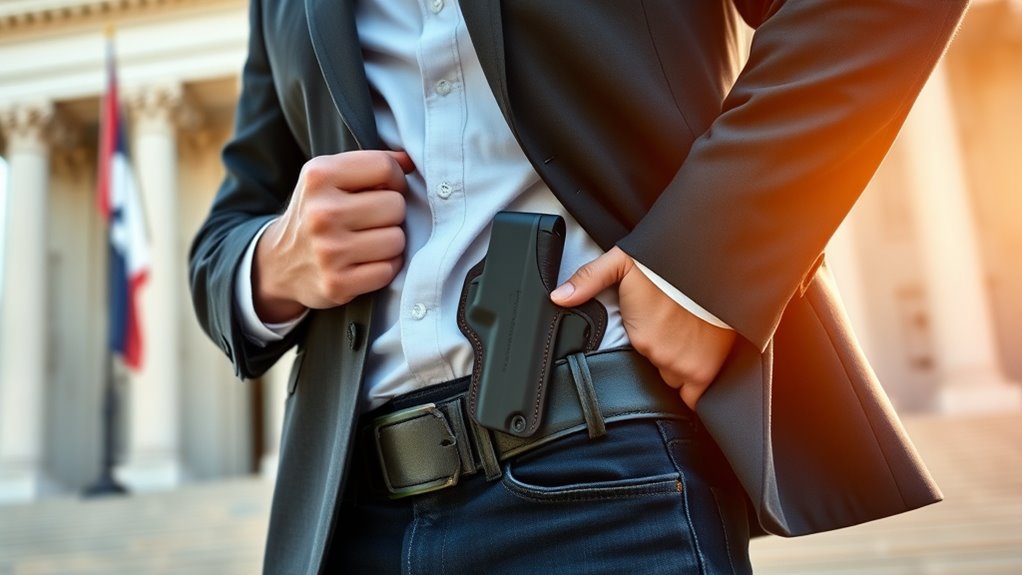
Though Texas has long been known for its permissive gun laws, recent updates have changed key aspects of concealed carry that you should be aware of. For starters, as of September 2021, Texas allows permitless carry, meaning you can legally carry a handgun—either openly or concealed—without a license if you’re 21 or older and not prohibited by law. However, having a license still offers benefits, like reciprocity with other states and the ability to carry in certain restricted places.
Also, the state has updated rules on where you can’t carry, such as federal buildings, schools, and certain private properties that post clear signage. You must always respect these boundaries to stay compliant. Ultimately, the law now provides clearer protections for those who use deadly force in self-defense, emphasizing your right to protect yourself without fear of unnecessary prosecution.
Staying informed on these changes ensures you carry responsibly and legally in Texas.
Applying For Your Texas Concealed Carry License
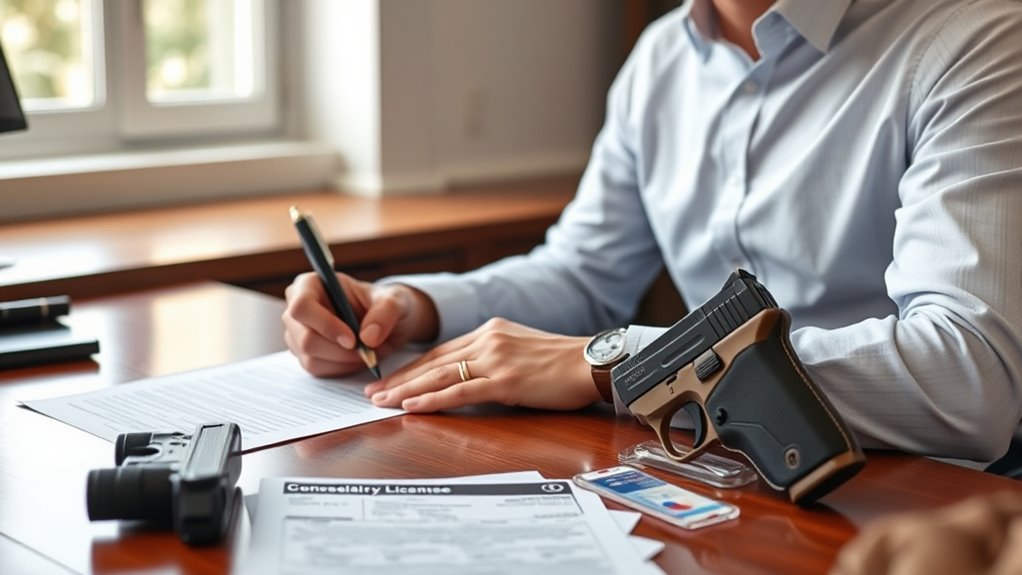
Before you can carry concealed in Texas, you’ll need to meet certain eligibility requirements and complete the application process. You’ll also want to gather all the necessary documents to avoid delays.
Let’s walk through each step to make sure you’re fully prepared.
Eligibility Requirements Overview
When you decide to apply for a Texas Concealed Carry License, you’ll need to meet specific eligibility requirements set by the state. You must be at least 21 years old, or 18 if you’re an active-duty military member. You need to be a legal resident of Texas, and you can’t have any felony convictions or certain misdemeanors, especially those involving violence or drugs.
You also can’t be chemically dependent or have a history of certain mental health issues. Additionally, you must not be under any protective or restraining orders. Finally, you should be able to demonstrate competency with a handgun through approved training.
Meeting these requirements guarantees you’re eligible to carry concealed legally in Texas.
Application Process Steps
There are several clear steps you’ll need to follow to apply for your Texas Concealed Carry License. First, complete a state-approved training course covering firearm safety, laws, and proficiency.
After finishing the course, submit your application online or by mail through the Texas Department of Public Safety (DPS). You’ll need to pay the required fees and provide your fingerprints during this process.
The DPS will then conduct a background check to guarantee you meet all eligibility criteria. Once your application is approved, you’ll receive your license by mail.
Keep in mind, the entire process may take several weeks, so plan accordingly. Following these steps carefully will help you legally carry concealed in Texas without unnecessary delays or issues.
Required Documentation Checklist
Although the application process may seem straightforward, having all the required documents ready will save you time and prevent delays. When applying for your Texas Concealed Carry License, you’ll need a completed application form, a valid government-issued ID like your driver’s license, and proof of Texas residency if your ID isn’t from Texas.
You must also provide a certificate showing you completed the required handgun proficiency training. Additionally, you’ll need to submit a fingerprint card and pay the application fee. If applicable, include documents verifying any exemptions or special conditions.
Double-check that all documents are current and legible before submitting. Being organized and thorough guarantees your application moves smoothly through the approval process without unnecessary setbacks.
Training Requirements For Texas Concealed Carry
Since carrying concealed in Texas requires a license, you’ll need to complete specific training to qualify. This training guarantees you understand firearm safety, proper handling, and relevant laws. The Texas Department of Public Safety (DPS) mandates that your course must be at least four to six hours long and taught by a certified instructor.
You’ll cover topics like handgun use, storage, and maintenance, plus legal responsibilities, including when and where you can legally carry. The training also includes a shooting proficiency demonstration, proving you can safely handle and accurately shoot a handgun.
After completing the course, you’ll receive a Certificate of Completion, which you must submit with your license application. Keep in mind, the training is designed to prepare you for responsible concealed carry, so pay close attention to both the practical and legal aspects. Meeting these requirements is essential before you can legally carry concealed in Texas.
Where You Can and Cannot Carry Concealed in Texas
Now that you know the training requirements, it’s important to understand where you can and cannot carry concealed in Texas. Certain private properties may restrict carrying, and government buildings often have strict rules you’ll need to follow.
Plus, there are specific guidelines for carrying in public spaces that you should be aware of.
Private Property Restrictions
Even if you have a valid license to carry concealed in Texas, you still need to respect private property rules. Private property owners can generally decide whether to allow firearms on their premises. Here are key points to keep in mind:
- Property owners can prohibit concealed carry by giving effective notice, such as posting a 30.06 or 30.07 sign.
- If you see these signs, you must not carry your firearm openly or concealed on that property.
- Failure to comply with posted restrictions may result in trespassing charges.
- Some businesses may also restrict firearms inside, even without signage, so always ask if unsure.
Respecting these rules helps you avoid legal trouble while carrying concealed in Texas.
Government Building Policies
Although you may have a license to carry concealed in Texas, certain government buildings have strict rules about where firearms are allowed. You cannot carry a concealed weapon inside courthouses, government offices with metal detectors, or any place where carrying firearms is explicitly prohibited by law. Federal buildings, such as post offices and federal courthouses, also generally ban firearms, regardless of your Texas license.
Keep in mind, these restrictions are in place for security reasons, and violating them can lead to serious legal consequences. Always pay attention to signage and specific policies at the entrance of government buildings. If you’re unsure whether carrying is permitted, it’s best to leave your firearm secured elsewhere to avoid potential issues.
Knowing these rules helps you stay safe and compliant.
Public Spaces Guidelines
While Texas generally allows you to carry concealed with a valid license, there are specific public spaces where restrictions apply. Knowing where you can and cannot carry is crucial to avoid legal trouble. Here are key public space guidelines you should follow:
- Schools and school grounds: Carrying concealed is prohibited unless you have written authorization from the school.
- Private businesses: Owners can prohibit concealed carry by posting proper signage.
- Bars and establishments deriving 51%+ revenue from alcohol: Carrying concealed is not allowed.
- Federal properties: Federal laws override state laws, so concealed carry is generally prohibited.
Always check local rules and posted signs before carrying concealed in public spaces to stay compliant with Texas law.
How To Carry Your Concealed Gun Safely and Legally
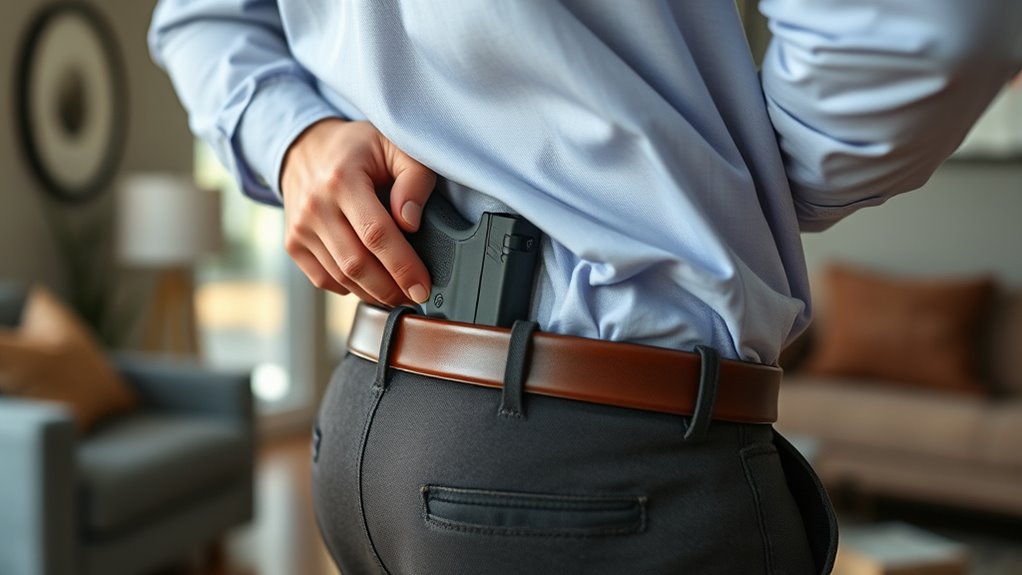
Before you carry your concealed gun, it’s essential to understand Texas laws and safety practices to guarantee you’re both legal and responsible. Always keep your gun concealed and secured on your person to avoid accidental exposure, which can lead to legal issues. Use a quality holster designed for your firearm to make certain it stays in place and prevents accidental discharge.
Regularly practice safe handling, including keeping your finger off the trigger until you’re ready to shoot. Make sure your handgun is unloaded when holstering or unholstering. Stay aware of prohibited places like schools, polling places, and certain businesses displaying “No Firearms” signs.
What To Do If You’re Stopped While Carrying Concealed
If you’re stopped by law enforcement while carrying concealed, stay calm and keep your hands visible. This helps avoid any misunderstandings and ensures the officer feels safe. Here’s what you should do:
- Inform the officer immediately that you’re carrying a concealed handgun and have a valid license. This is required by Texas law.
- Follow the officer’s instructions carefully. Don’t make sudden movements or reach for your gun unless asked.
- Keep your concealed handgun secure and do not attempt to show or hand it to the officer unless specifically requested.
- Provide your license and identification when asked, and answer questions politely and honestly.
Tips To Stay Compliant With Texas Concealed Carry Laws
Carrying concealed in Texas comes with important responsibilities to guarantee you stay within the law. First, always carry your License to Carry (LTC) or a recognized permit with you. If you’re asked, present it promptly along with your ID.
Always carry your License to Carry and ID to stay compliant with Texas concealed carry laws.
Remember, you must be 21 or older unless you’re a military member. Keep your firearm concealed at all times, as openly carrying a handgun without a license is prohibited. Avoid prohibited places like schools, polling locations, and secure government buildings.
Be aware that private property owners can forbid concealed carry on their premises, so respect their rules and signage. Also, never carry while under the influence of alcohol or drugs. Regularly review Texas’s current laws since they can change.
Finally, practice safe firearm handling and secure your weapon when not on your person. Following these tips helps you carry responsibly and legally, minimizing risks and ensuring peace of mind.
Common Mistakes To Avoid When Carrying Concealed in Texas
Although having a License to Carry is essential, many people make mistakes that can lead to legal trouble or unsafe situations. To carry concealed legally and responsibly in Texas, avoid these common errors:
- Ignoring prohibited locations: Don’t carry where firearms are banned, like schools, polling places, or certain businesses with posted signs.
- Improper firearm storage: Always secure your weapon when not on your person to prevent unauthorized access.
- Failing to identify yourself: If approached by law enforcement, promptly show your License to Carry and be cooperative.
- Carrying while intoxicated: Texas law prohibits carrying a handgun if you’re under the influence of alcohol or drugs.
Frequently Asked Questions
Can I Carry Concealed While on Federal Property in Texas?
No, you can’t carry concealed firearms on most federal property in Texas, even with a license. Federal laws prohibit it, so you’ll need to leave your weapon off these premises to stay legal and avoid trouble.
This means that even if you have a concealed carry permit issued by Texas, it does not override federal restrictions. Always check the specific rules for the federal property you plan to visit.
Failing to comply can result in serious legal consequences, including fines and criminal charges. When in doubt, it’s best to secure your firearm elsewhere before entering federal grounds.
How Does Texas Honor Concealed Carry Permits From Other States?
Like receiving a telegram from a bygone era, Texas honors concealed carry permits from states with similar requirements. You’ll need to check if your permit’s on Texas’s reciprocity list to carry concealed legally here.
Are There Restrictions on the Type of Firearm for Concealed Carry?
You’re generally allowed to carry most handguns concealed in Texas, but fully automatic weapons and certain firearms prohibited by federal law aren’t allowed.
Always check specific local restrictions to stay compliant with the law.
What Should I Know About Carrying Concealed in Vehicles?
Think of your vehicle as a trusted chest; you can carry concealed firearms inside as long as they’re readily accessible and you have a license.
Keep them secure, avoid brandishing, and always follow local laws to stay safe.
Can I Carry Concealed While Consuming Alcohol in Texas?
No, you can’t carry concealed while consuming alcohol in Texas. Doing so can lead to serious legal trouble, even if you have a license. Always avoid mixing alcohol and carrying to stay safe and compliant.
Conclusion
Carrying concealed in Texas isn’t just a right—it’s practically a superpower, but with great power comes great responsibility! If you skip the rules, you might as well be juggling flaming swords blindfolded. Follow the laws, get your training, and carry smart.
Doing it right means you’re not just carrying a gun—you’re carrying confidence, safety, and peace of mind. So suit up legally, stay sharp, and own that concealed carry like a Texas legend!
Remember, to carry concealed legally in Texas, you must comply with state laws, obtain the proper licenses, and always practice responsible firearm handling. Staying informed and prepared ensures your right to carry remains protected.