Holsters Police Use: 7 Most Common Types
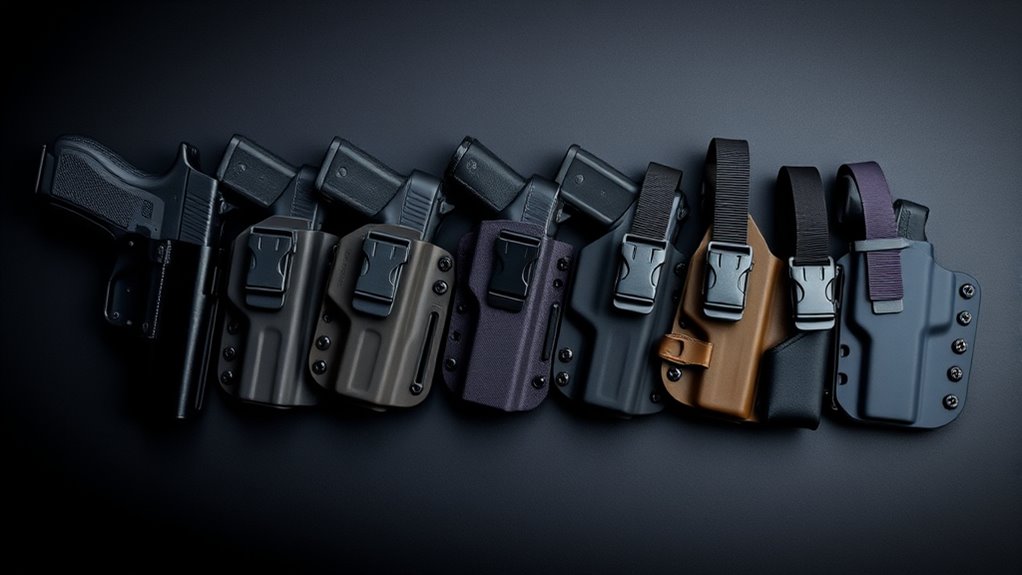
When choosing holsters as a police officer, it’s important to find options that balance security, comfort, and quick access. Holsters police use typically fall into several common types, each designed to meet specific needs. Understanding these types helps officers stay prepared and effective on duty.
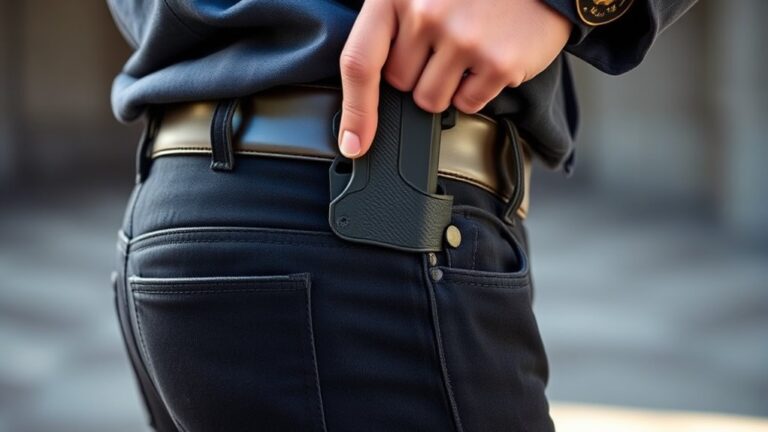
The most common types include duty belt holsters for gear support, inside-the-waistband (IWB) holsters for concealed carry, paddle holsters for fast removal, and thumb break holsters for added retention.
Shoulder, drop leg, and ankle holsters offer specialized mobility and backup solutions. Each type suits different scenarios, so knowing their benefits ensures you are equipped for any situation.
Key Takeaways
- Duty belt holsters provide quick access and secure retention, supporting additional gear like handcuffs and radios.
- Inside waistband (IWB) holsters offer superior concealment and comfort by keeping the firearm close to the body.
- Paddle holsters enable rapid attachment and removal while securely gripping the waistband for quick response.
- Shoulder holsters distribute weight for extended wear and concealment, ideal for discreet or tactical scenarios.
- Drop leg holsters keep firearms accessible during active movements and prevent interference in vehicle operations.
How to Choose the Right Holster for Police Officers
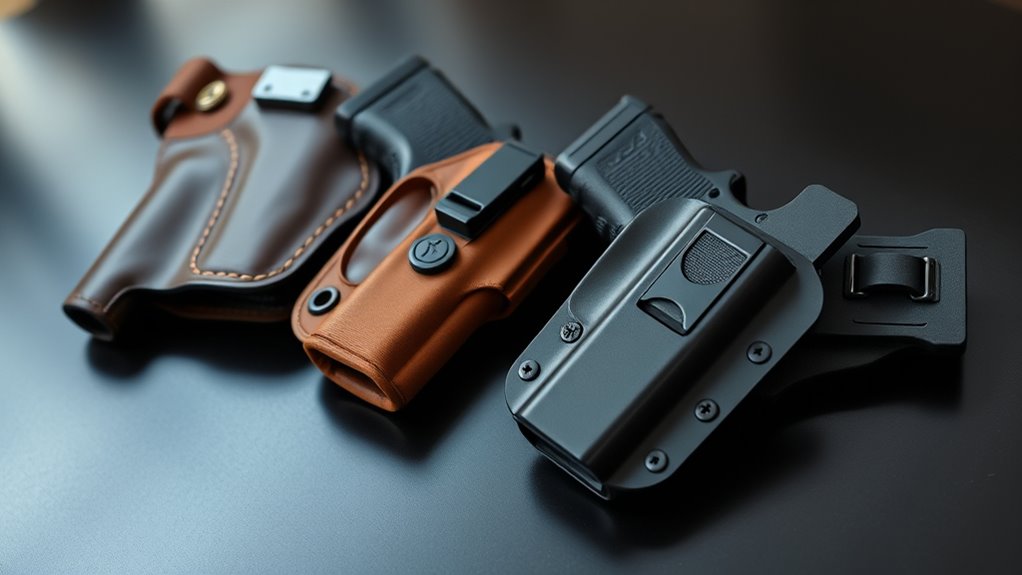
When choosing the right holster for police officers, you’ll want to focus on factors like comfort, security, and accessibility. It’s crucial that the holster fits your firearm snugly to prevent any accidental drops or easy removal by others. Comfort matters because you’ll be wearing it for long shifts; a poorly fitting holster can cause discomfort or even injury.
Accessibility is key—you want to draw your weapon quickly and smoothly in critical situations without fumbling. Materials like leather, nylon, or Kydex each offer different benefits in durability and flexibility, so pick one that suits your needs. Consider holsters with adjustable retention screws or locking mechanisms for added security.
Also, think about the holster’s position on your body—whether it’s inside the waistband, outside, or thigh-mounted—based on what feels most natural and practical for your duty activities. Ultimately, the right holster balances all these elements to support your safety and efficiency.
Why Duty Belt Holsters Are Essential for Police Use
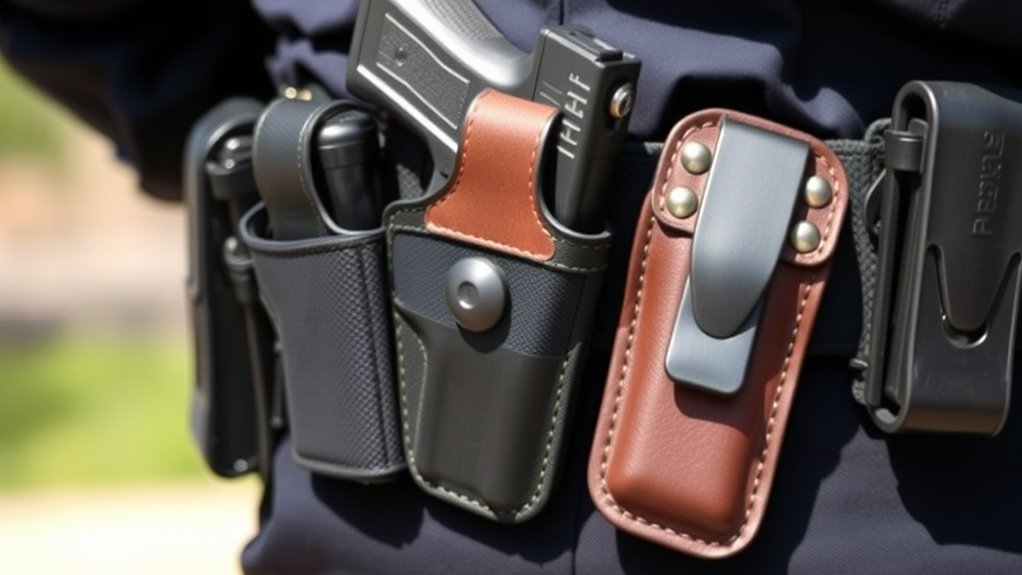
Why should you consider a duty belt holster as an essential part of your police gear? Because it offers unmatched accessibility, security, and functionality tailored to your demanding role. A duty belt holster keeps your firearm in a consistent, easy-to-reach position, allowing you to react swiftly under pressure.
Here’s why duty belt holsters are indispensable:
- Quick Draw: Positioned on your hip, it ensures your weapon is always within immediate reach for faster response times.
- Secure Retention: Most models have retention features preventing accidental drops or unauthorized access.
- Comfort and Stability: Designed to distribute weight evenly, reducing fatigue during long shifts.
- Accessory Integration: Supports attachment of other gear like handcuffs, radios, or tasers, keeping everything organized.
With these benefits, duty belt holsters help you stay prepared and effective, making them a critical part of your police equipment.
Why Inside-the-Waistband (IWB) Holsters Are Growing in Popularity
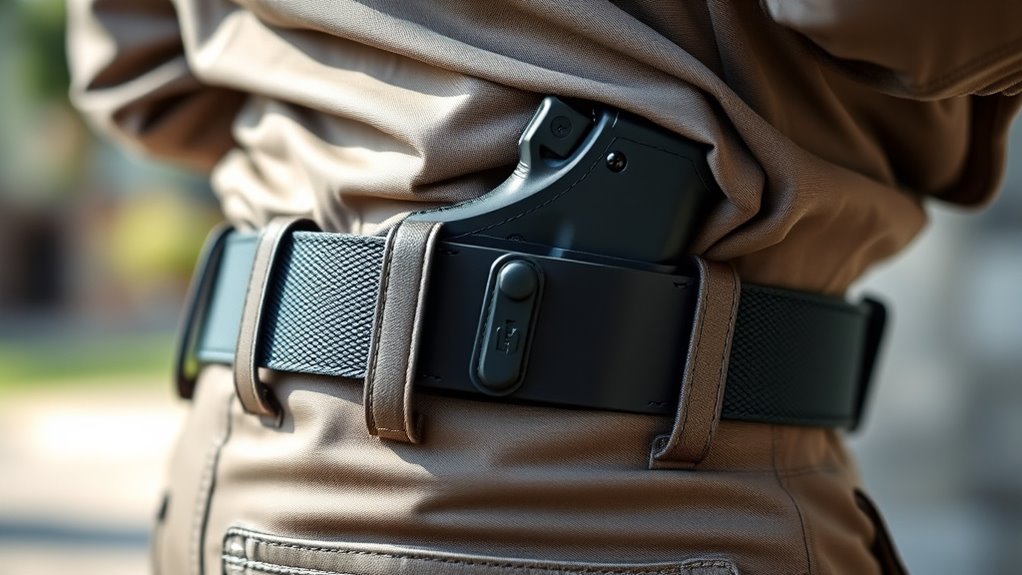
If you want better concealment, inside-the-waistband (IWB) holsters are becoming a top choice. They tuck your weapon closer to your body, making it less visible and more secure.
Plus, many find them more comfortable and easier to access throughout the day.
Enhanced Concealment Benefits
Although many officers have relied on traditional holsters, you’ll find that inside-the-waistband (IWB) holsters are gaining ground due to their superior concealment. When you use an IWB holster, your firearm stays snug and hidden beneath your clothing, reducing visible outlines and minimizing printing. This discreetness is essential for undercover work or when you want to avoid drawing attention.
Here are key concealment benefits you’ll notice with IWB holsters:
- Keeps the firearm closer to your body, blending with your natural silhouette.
- Allows for easier coverage under various clothing types.
- Reduces the risk of the weapon snagging or catching on objects.
- Facilitates quick, unobtrusive access without compromising concealment.
Increased Comfort And Accessibility
Beyond concealment, IWB holsters offer notable improvements in comfort and accessibility that many officers appreciate. When you wear an IWB holster, the firearm sits snugly inside your waistband, reducing bulk and minimizing movement. This design keeps the weapon close to your body, which not only feels more secure but also evenly distributes weight, making it easier to carry for long shifts.
Accessibility is another key advantage—you can quickly draw your weapon with a natural, intuitive motion, vital in high-pressure situations. Plus, because the holster stays hidden under your clothing, you avoid snagging or catching on objects, enhancing both safety and convenience. These comfort and accessibility benefits explain why more police officers are choosing IWB holsters for daily use.
Advantages of Paddle Holsters for Quick Police Draws
When you need to draw your weapon quickly, paddle holsters offer easy on-off access that saves precious seconds. They provide a secure yet flexible fit, so your holster stays put even during rapid movement.
This makes them a top choice for officers who require both speed and stability on the job.
Easy On-Off Access
Because paddle holsters attach securely yet detach easily from your belt, they offer unmatched convenience for officers who need quick access to their firearm. You can quickly remove or reattach the holster without fumbling, which is essential during fast-paced situations. This ease of use means you can shift between duties smoothly, whether going on or off duty.
Here’s why easy on-off access matters:
- Swift removal for vehicle entry or exit
- Quick reattachment during shifts or breaks
- Easy holster transfer between different belts or uniforms
- Simplified maintenance without belt removal
With paddle holsters, you get the freedom to manage your gear efficiently, helping you stay prepared without sacrificing speed or security.
Secure Yet Flexible Fit
Although paddle holsters offer easy on-off access, they don’t compromise on fit security. When you wear one, the paddle’s broad surface grips your waistband firmly, preventing unwanted movement during your shift. This means your firearm stays snugly in place, ready for a quick draw when seconds count.
Plus, the flexible design allows the holster to conform comfortably to your body’s shape, minimizing discomfort without sacrificing stability. You won’t have to worry about the holster shifting or loosening as you move, giving you confidence in every step. This balance of secure retention and flexibility is why many officers prefer paddle holsters—they ensure your weapon is both accessible and reliably positioned, essential for effective, rapid response in the field.
Ideal For Rapid Movement
The secure yet flexible fit of paddle holsters doesn’t just keep your firearm in place—it also supports quick, fluid movement. When every second counts, you need a holster that allows you to draw without hesitation. Paddle holsters excel in this area, letting you maneuver rapidly without fumbling or snagging.
Here’s why paddle holsters are ideal for rapid movement:
- Easy on/off design lets you remove or reattach quickly.
- Smooth paddle base glides against your body, reducing friction.
- Adjustable retention ensures your weapon stays secure during fast motions.
- Minimal bulk keeps you agile and unencumbered during pursuits.
Using a paddle holster means you’re ready to respond instantly while maintaining comfort and control.
How Thumb Break Holsters Improve Firearm Retention for Officers
When you’re on duty, keeping your firearm secure is essential, and thumb break holsters offer a reliable solution for that. The thumb break strap locks your weapon firmly in place, preventing it from slipping or being snatched during physical confrontations. You can quickly disengage the strap with a simple thumb motion, allowing for a smooth, instinctive draw when seconds count.
This added retention feature helps reduce the risk of accidental drops or unauthorized grabs, which is critical in tense situations. It also provides peace of mind knowing your firearm stays put whether you’re running, climbing, or grappling.
Unlike some holsters without retention, thumb break models strike a balance between security and accessibility, so you’re not slowed down.
When Shoulder and Drop Leg Holsters Are Best for Police
If you need quick access to your firearm without compromising mobility, shoulder and drop leg holsters can be the ideal choice. These holsters offer versatility that’s especially useful in dynamic or tactical environments. You’ll find them beneficial when your duty requires a lot of movement or when your waist area is cluttered with gear.
For quick firearm access and enhanced mobility, shoulder and drop leg holsters excel in dynamic, gear-heavy situations.
Here’s when you’d choose these holsters:
- Active Pursuit – When chasing suspects on foot, drop leg holsters keep your firearm accessible without slowing you down.
- Heavy Gear Load – Shoulder holsters free up your waist for other essential equipment, balancing your load.
- Concealment Needs – Shoulder holsters allow you to keep your firearm hidden under a jacket or vest.
- Vehicle Operations – Drop leg holsters prevent interference when sitting or moving inside vehicles.
Why Ankle Holsters Are Ideal Backup Options for Officers
Although ankle holsters may not be your primary choice, they serve as excellent backup options for officers who want a discreet and easily accessible secondary firearm. You’ll appreciate how ankle holsters keep your backup weapon secure yet hidden, reducing the chance of it being noticed by suspects or interfering with your main gear. They’re especially handy during undercover operations or when your uniform limits where you can carry.
Wearing a backup gun on your ankle also frees up space on your belt, helping you avoid overcrowding and discomfort. Plus, ankle holsters are designed to hold smaller firearms comfortably, so you won’t feel weighed down. When the situation demands it, you can quickly draw your secondary weapon, ensuring you’re prepared for unexpected threats.
Frequently Asked Questions
How Do Holster Materials Affect Comfort During Long Shifts?
Holster materials affect comfort by how breathable, flexible, and weight-distributing they are. You’ll find leather molds to your body but can get hot, while nylon’s lighter but less form-fitting, impacting your comfort during long shifts.
Choosing the right material depends on your priorities for comfort and durability. Some materials offer better ventilation, reducing sweat buildup. Others provide more flexibility or support to ease weight distribution.
Can Holsters Be Customized for Different Firearm Models?
You’ll be surprised, but yes, holsters can be customized for different firearm models. This means you won’t have to worry about fit or accessibility—it’ll feel tailor-made, enhancing your comfort and confidence during every shift.
What Maintenance Is Required to Keep Holsters in Good Condition?
You’ll want to regularly clean your holster, check for wear or damage, and keep it dry. Conditioning leather holsters helps maintain flexibility, while plastic ones just need wiping down.
Proper care guarantees safety and longevity.
Are There Holsters Designed Specifically for Female Officers?
Yes, there are holsters designed specifically for female officers. They’re made to fit different body shapes comfortably, ensuring better accessibility and comfort during long shifts.
This design helps you perform your duties without distraction.
How Do Holsters Impact an Officer’s Mobility and Agility?
Holsters can either enhance or restrict your mobility and agility depending on their design and placement. A well-fitted, lightweight holster lets you move freely, while bulky or poorly positioned ones might slow you down or cause discomfort.
Conclusion
Choosing the right holster is vital for your safety and efficiency on the job. Whether you prefer the classic duty belt or the modern inside-the-waistband style, each has its perks. Paddle holsters speed up your draw, while thumb break models keep your firearm secure.
Shoulder and drop leg holsters suit specific situations, and ankle holsters make perfect backups. Each type serves a unique purpose depending on your duty requirements and personal comfort.
So, don’t be a Johnny Appleseed—equip yourself wisely and stay ready out there! Remember, understanding the different holsters police use helps you choose the best option for optimal safety and quick access.