How to Wear a Concealed Carry Holster in 7 Simple Steps
To wear a concealed carry holster confidently, start by selecting a holster that fits your firearm perfectly and suits your lifestyle. Choosing the right concealed carry holster is essential for comfort, safety, and quick access.
Whether you prefer an inside-the-waistband or outside-the-waistband option, make sure it complements your daily activities and clothing style.
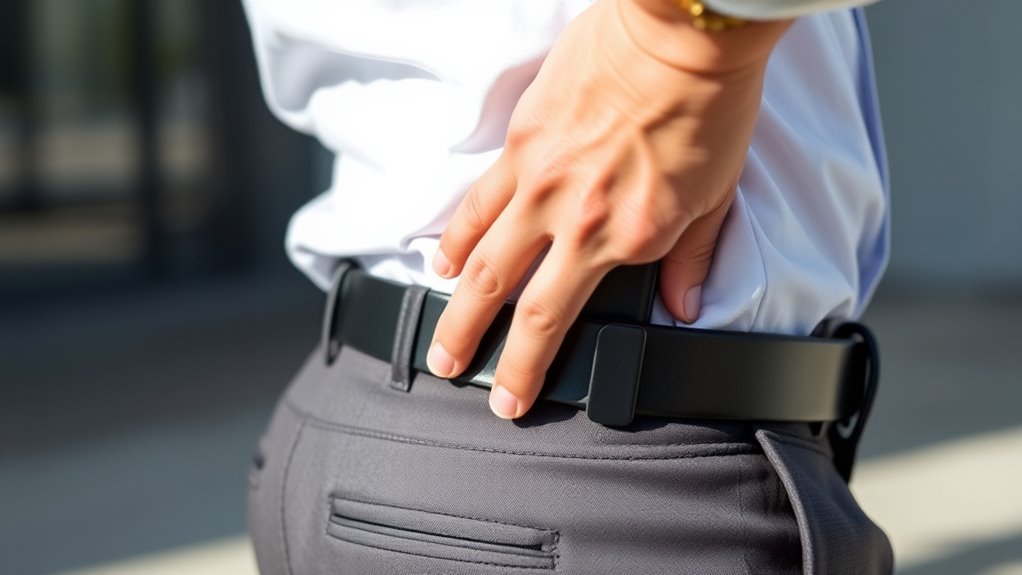
Position the holster where it feels natural, such as the appendix or strong-side hip, and adjust it for comfort and ease of drawing.
Dress in layers or wear loose, dark clothing to effectively conceal your weapon.
Regularly practice safe drawing and reholstering techniques to build muscle memory and ensure safety.
Maintain your holster by inspecting it frequently and cleaning it as needed.
Keep these steps in mind, and you’ll discover even more tips for mastering concealed carry.
Key Takeaways
- Choose a holster that fits your firearm snugly and suits your daily activities and clothing style for comfort and concealment.
- Select a carry position like appendix, strong side hip, or behind the hip based on accessibility and concealment preferences.
- Adjust holster ride height and cant angle to avoid discomfort and ensure quick, secure access to your firearm.
- Use a sturdy belt for support, wear loose-fitting, dark, and matte clothing to effectively conceal the holster and firearm.
- Practice safe drawing and reholstering with proper grip, trigger discipline, and smooth, controlled motions regularly to build muscle memory.
How to Pick the Right Holster for You
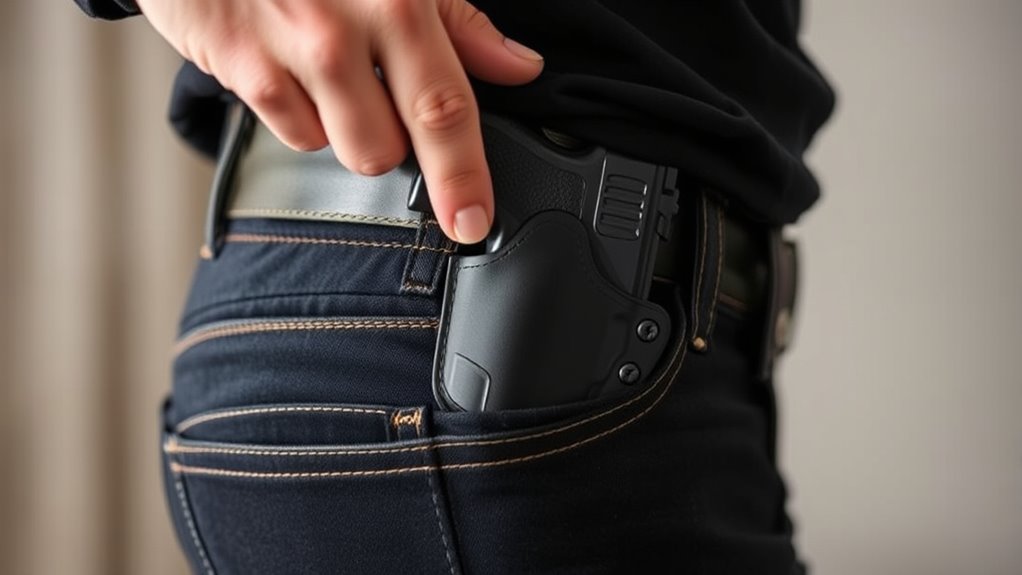
Before you choose a holster, consider how you’ll carry your firearm daily. Think about your typical activities and clothing style since these factors impact comfort and concealment. You’ll want a holster that fits your specific firearm model snugly to guarantee safety and quick access.
Materials matter—leather offers a classic feel and molds to your body over time, while Kydex is durable and provides consistent retention. Don’t overlook retention features; some holsters have adjustable tension or locking mechanisms to keep your gun secure during movement. Also, decide if you prefer inside-the-waistband (IWB), outside-the-waistband (OWB), ankle, or pocket carry based on your lifestyle and comfort.
Keep in mind that a holster should protect the trigger guard completely to prevent accidental discharges. Finally, try a few options if you can; a holster that feels right to someone else might not suit you. Investing time in selecting the right holster will enhance safety, comfort, and confidence in everyday carry.
Position Your Holster for Comfort and Concealment
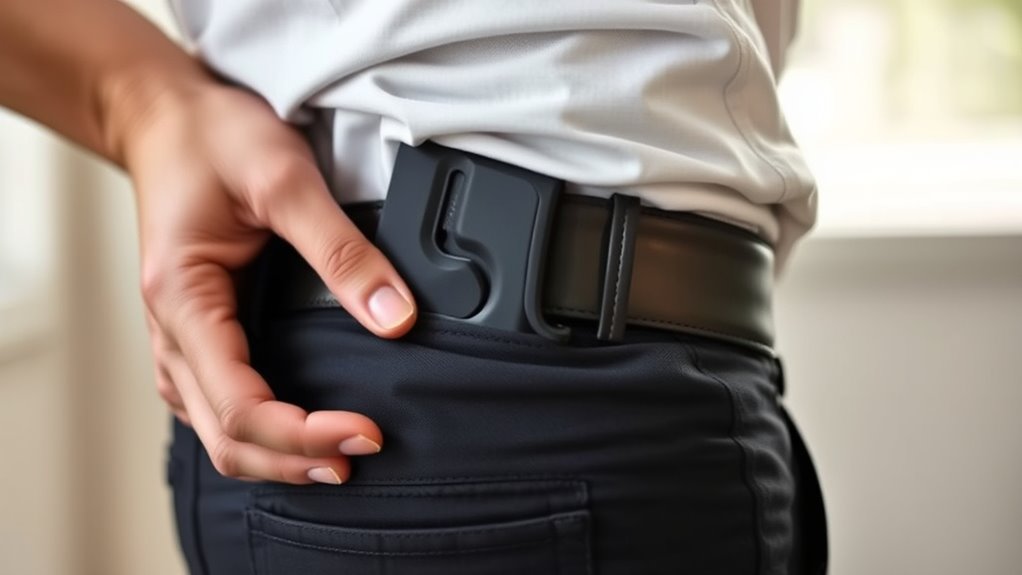
Finding the right spot for your holster is key to staying comfortable while keeping your firearm hidden. You’ll want to take into account how the position affects both ease of access and how well it blends with your clothing.
Balancing these factors ensures you carry confidently without drawing attention.
Optimal Holster Placement
Where you position your holster can make all the difference in both comfort and concealment. The most common placements are appendix (front of hip), strong side hip, and behind the hip. Appendix carry offers quick access but may feel less comfortable for some.
Strong side hip is traditional and generally easy to conceal under a shirt. Behind the hip can provide excellent concealment but might slow your draw. When choosing your spot, consider your daily movements, clothing style, and dominant hand.
Also, test different positions to find what feels natural and secure. Remember, the goal is to keep the firearm accessible while minimizing printing or discomfort. Optimizing placement guarantees you’re ready without drawing unwanted attention.
Balancing Comfort And Concealment
Once you’ve settled on a general holster placement, it’s important to balance comfort with concealment. You want your holster positioned so it doesn’t dig into your body or restrict movement, yet remains hidden under your clothing. Adjust the ride height and cant angle to find a spot that feels natural and keeps the gun close to your body.
Consider the thickness of your clothing; looser garments can help conceal a holster placed in more accessible positions. Don’t ignore how you sit, bend, or walk—test your setup in different scenarios to avoid discomfort or print. Remember, if your holster is uncomfortable, you’re less likely to wear it consistently, defeating the purpose of concealed carry.
Prioritize both comfort and concealment to carry confidently every day.
Adjust Your Concealed Carry Holster for Comfort and Access
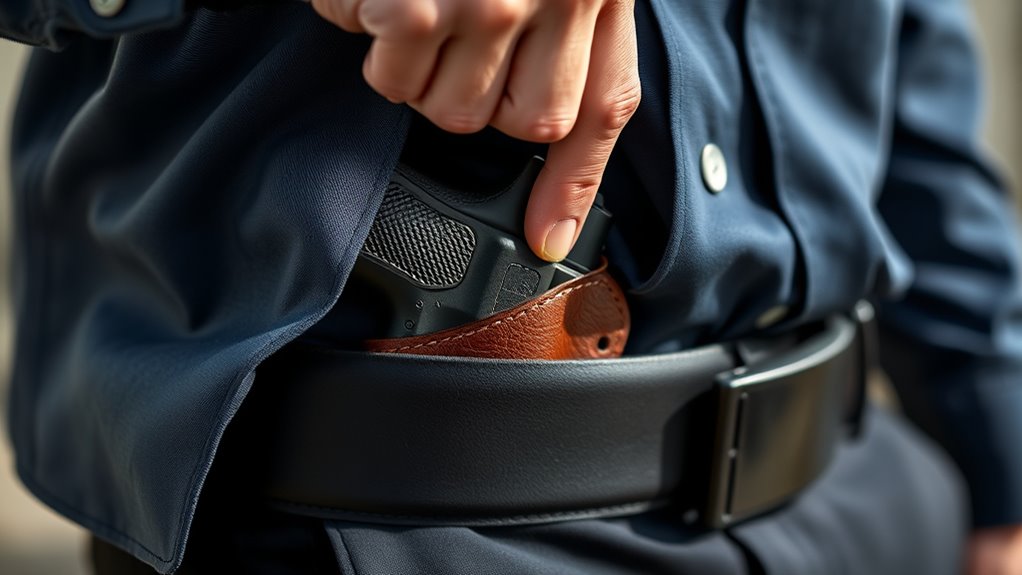
Although you might have chosen the right holster, adjusting it properly is key to both comfort and quick access. Start by positioning the holster where it feels natural and doesn’t dig into your body. Experiment with slight shifts forward or backward on your waistband until you find a spot that balances concealment and ease of reach.
Next, check the cant, or angle, of the holster. Tilting it slightly forward or backward can improve draw speed and comfort, especially when sitting or moving. Make sure the retention is neither too tight nor too loose—your firearm should stay secure but not be difficult to draw.
Finally, wear your holster for extended periods at home before heading out. This helps you fine-tune adjustments based on real movement and detect any pressure points early. Regularly revisiting these modifications ensures your setup stays comfortable and accessible throughout daily activities.
Safely Draw and Reholster Your Concealed Carry Holster
When drawing your concealed carry holster, you need to focus on a proper grip to guarantee control and safety. Reholstering should be done slowly and deliberately to avoid any accidents.
Let’s go over the key techniques that keep you safe during these critical movements.
Proper Grip Techniques
Before you draw your concealed carry holster, you need to establish a proper grip to guarantee safety and control. Start by placing your strong hand on the grip, assuring your fingers wrap firmly around the handle without touching the trigger. Your thumb should rest along the frame, ready to engage once drawn.
This grip minimizes the risk of accidental discharge and maximizes your control during the draw.
| Grip Element | Technique |
|---|---|
| Finger Placement | Off the trigger until ready |
| Thumb Position | Along the frame, not the slide |
| Palm Contact | Full grip for stability |
| Pressure | Firm but controlled |
Mastering these details ensures you maintain control, prevent accidents, and prepare for a smooth, safe draw every time.
Controlled Reholstering Methods
Since reholstering requires just as much care as drawing, you need to maintain your focus and control throughout the process. Start by keeping your finger off the trigger and outside the trigger guard until the firearm is fully seated in the holster. Use your support hand to guide the muzzle safely into the holster while your dominant hand maintains a secure grip on the firearm.
Don’t rush—move deliberately to avoid any accidental discharge. Make sure the holster is stable and properly aligned before inserting the firearm. Once the gun is fully seated, check that the retention mechanism engages correctly.
Practicing controlled reholstering regularly will build muscle memory, helping you stay safe and efficient in real situations. Safety always comes first.
Dress to Conceal: Clothing Tips for Concealed Carry
Although carrying concealed requires careful planning, choosing the right clothing can make all the difference in staying discreet. You’ll want to avoid tight or clingy fabrics that might outline your holster or firearm. Opt for loose-fitting shirts or jackets that provide natural coverage without drawing attention.
Patterns, textures, and layers are your friends—they help break up the silhouette and mask any bulges. Dark colors and matte fabrics reduce shine and glare, which keeps your setup less noticeable. When wearing belts, make sure they’re sturdy enough to support your holster without sagging or twisting.
If you prefer inside-the-waistband carry, shirts that drop below the beltline help keep everything tucked away. Also, avoid wearing tucked-in shirts if it exposes the holster’s shape or strap. Remember, comfort matters too; if you’re uncomfortable, you might adjust your clothing in public, risking exposure.
Dressing smartly ensures your concealed carry remains truly concealed throughout your day.
Practice Drawing Your Concealed Carry Holster Daily
Choosing the right clothing helps keep your concealed carry truly hidden, but mastering your draw is just as important. Practicing drawing your holster daily builds muscle memory, allowing you to access your firearm quickly and smoothly under stress. Make it a habit to simulate a full draw—from grip to presentation—while standing and sitting.
This helps you understand how your clothing and holster interact during movement. Focus on a consistent, controlled motion rather than speed at first. Over time, your draw will become faster and more natural.
Remember to practice with an unloaded firearm or a training gun to stay safe. Also, include re-holstering in your routine since that’s a critical moment for safety. Avoid distractions and maintain proper trigger discipline throughout.
Keep Your Holster in Top Shape for Safety
Even the best holster can become unsafe if it’s not properly maintained. You need to regularly check your holster for wear and tear, ensuring it securely holds your firearm without risking accidental release. Dirt and debris can build up, affecting retention and draw speed, so clean your holster often using appropriate methods for its material.
Here’s a quick guide to keeping your holster in top shape:
| Maintenance Task | Frequency | Tips |
|---|---|---|
| Inspect for damage | Weekly | Look for cracks or loose parts |
| Clean holster | Monthly | Use mild soap & water or leather cleaner |
| Check retention | Weekly | Adjust screws or straps as needed |
| Lubricate moving parts | Every 3 months | Use recommended lubricant only |
Frequently Asked Questions
What Are the Legal Requirements for Carrying a Concealed Weapon?
You need a valid concealed carry permit, which usually requires background checks and sometimes training.
Laws vary by state, so you’ve got to follow local regulations, avoid restricted areas, and always carry your permit with you.
Can I Carry a Concealed Holster While Running or Exercising?
You can carry a concealed holster while running, but it’s like trying to hold a hurricane in your pocket—it needs to fit snugly and securely to avoid bouncing or shifting.
Choose a well-designed holster made for active movement.
How Do I Choose the Right Firearm Caliber for Concealed Carry?
You’ll want a caliber that balances stopping power with manageable recoil, so you can shoot accurately under stress. Consider your comfort, skill level, and typical carry size to pick the right firearm for concealed carry.
Are There Restrictions on Carrying a Concealed Holster in Vehicles?
Imagine driving with a loaded toolbox—you wouldn’t leave it loose.
Similarly, many states restrict carrying concealed firearms in vehicles unless properly holstered or declared.
Check your local laws to avoid surprises and stay compliant on the road.
What Should I Do if My Concealed Carry Permit Is Lost or Stolen?
If your concealed carry permit is lost or stolen, you should report it to your local law enforcement immediately, then contact the issuing agency to apply for a replacement.
Don’t carry without a valid permit until it’s replaced.
Conclusion
Wearing a concealed carry holster is all about finding the perfect fit for your lifestyle. By choosing the right holster, positioning it thoughtfully, and practicing daily, you’ll have confidence at your fingertips.
Remember, the devil’s in the details—small adjustments make a big difference in comfort and safety. Keep your gear in top shape, dress smart, and stay ready.
With these steps, you’ll carry smoothly and securely, no matter the situation. Proper concealed carry techniques, the right holster, and consistent practice ensure you are prepared and comfortable every day.