7 Key Features to Look for in a Gun Safe
When choosing a gun safe, it’s essential to consider key features that ensure both security and convenience. The right size is crucial to fit your firearms and future additions comfortably.
Strong construction with thick steel and reinforced frames provides the durability needed to protect your valuables.
Secure locks, such as biometric or keypad types, guarantee quick and reliable access when you need it.
Fire and water resistance are important factors to safeguard your belongings from unexpected damage.
Interior organization helps keep everything orderly and easily accessible.
Additional safety features like alarms offer extra protection against unauthorized access.
Keep these features in mind, and you’ll find the perfect balance between security and convenience for your gun safe.
Key Takeaways
- Choose a safe with strong steel construction and reinforced door frames for maximum resistance against prying and drilling.
- Opt for advanced lock types like biometric or electronic keypads for quick, secure access and backup key options.
- Ensure the safe has fire and water resistance ratings to protect firearms and valuables from disasters.
- Look for interior organization features such as adjustable racks, foam inserts, and labeled storage compartments.
- Prioritize additional security features like alarm systems, drill-resistant plates, and time-delay locks for enhanced protection.
Gun Safe Size: Choosing the Right Fit
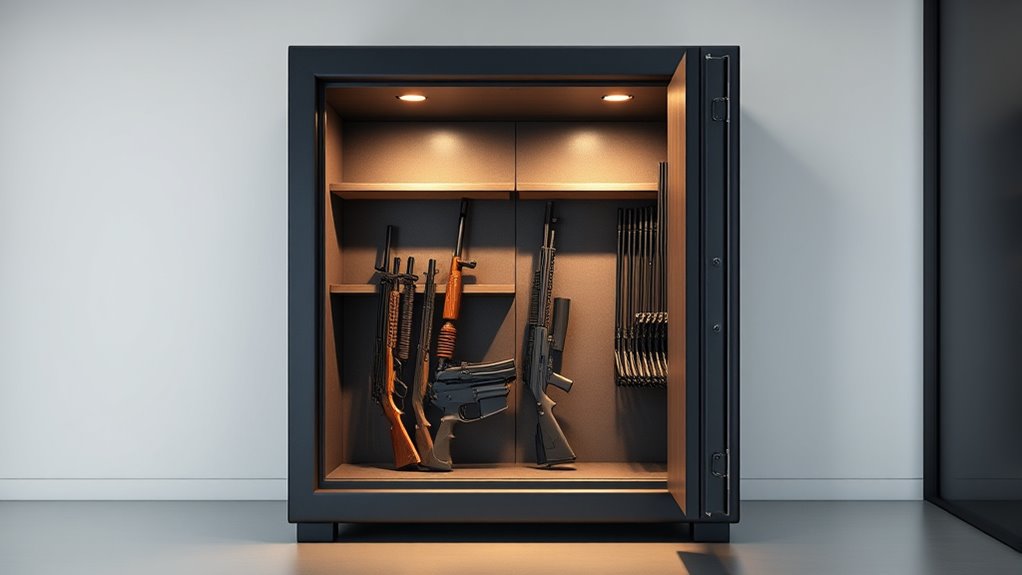
How do you know what size gun safe will work best for you? Start by taking inventory of your firearms and any additional valuables you want to store. Consider not only the number of guns but also their sizes—long rifles need more vertical space, while handguns require less.
Don’t forget to factor in room for future purchases, so you won’t outgrow your safe quickly. Also, think about extra storage for ammo, documents, or accessories. Measure the space where you’ll place the safe; it should fit comfortably without obstructing movement.
Keep in mind that larger safes can be harder to move and may require more robust flooring. Balancing your current needs with future plans ensures you pick a safe that’s practical and secure. Choosing the right size means your guns stay protected and organized, while maximizing convenience and space efficiency.
Secure Lock Types for Gun Safes
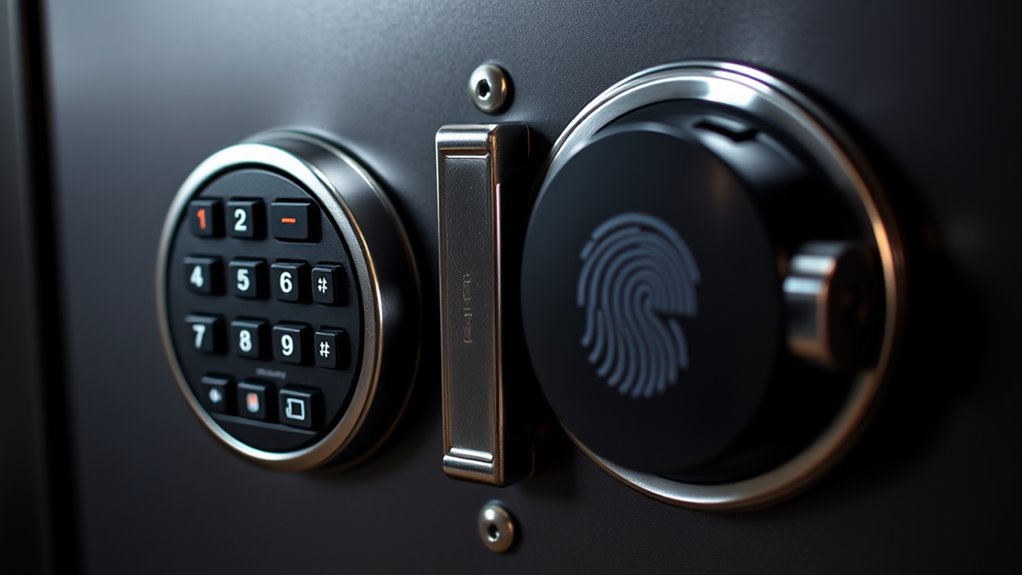
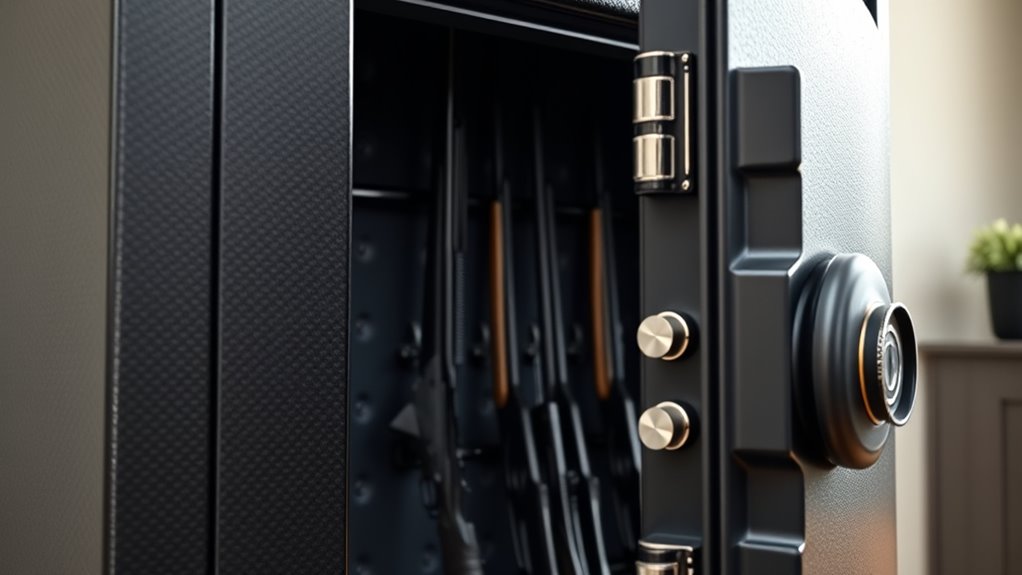
When choosing a gun safe, the lock type you pick is vital for both security and convenience. You’ll want to weigh the pros and cons of mechanical versus electronic locks, consider the benefits of biometric access, and check if there’s a backup key option.
Each type offers different levels of speed, reliability, and protection that matter depending on your needs.
Mechanical vs Electronic Locks
Although both mechanical and electronic locks provide solid security for gun safes, you’ll find each has distinct advantages depending on your needs. Mechanical locks don’t rely on batteries and are often praised for durability and reliability under harsh conditions.
Electronic locks offer quicker access with a keypad, which is handy in emergencies but need battery changes.
Here’s a quick comparison:
| Feature | Mechanical Lock | Electronic Lock |
|---|---|---|
| Power Requirement | None | Battery-powered |
| Access Speed | Slower, manual dialing | Fast, keypad entry |
| Maintenance | Minimal | Battery replacement needed |
Choosing between them depends on whether you prioritize reliability or convenience.
Biometric Access Advantages
Since quick and secure access is critical in emergencies, biometric locks offer a smart solution by using your unique fingerprint to open the safe instantly. You won’t have to fumble with keys or remember complex codes, which saves valuable time. These locks are highly reliable, recognizing authorized users quickly while keeping unauthorized people out.
Plus, you can usually register multiple fingerprints, allowing trusted family members easy access without compromising security. Biometric systems also resist tampering better than traditional locks, providing peace of mind that your firearms are both safe and accessible when you need them most. While they require power, many models have low battery alerts, so you won’t be caught off guard.
Backup Key Options
What happens if your biometric lock fails or the batteries die? Having a reliable backup key option is essential. It guarantees you can still access your safe without hassle.
Backup keys provide peace of mind and a straightforward alternative when electronic locks malfunction.
When choosing a gun safe, consider these backup key features:
- High-quality metal keys that resist wear and breakage
- Hidden or discreet keyholes to deter tampering
- Unique key patterns for added security
- Easy-to-use key access that won’t get stuck
- Multiple backup keys provided in case of loss
Always test your backup key system to make sure it works smoothly. This way, you’re prepared for any lockout situation, ensuring your firearms stay both secure and accessible.
Fire and Water Resistance in Gun Safes
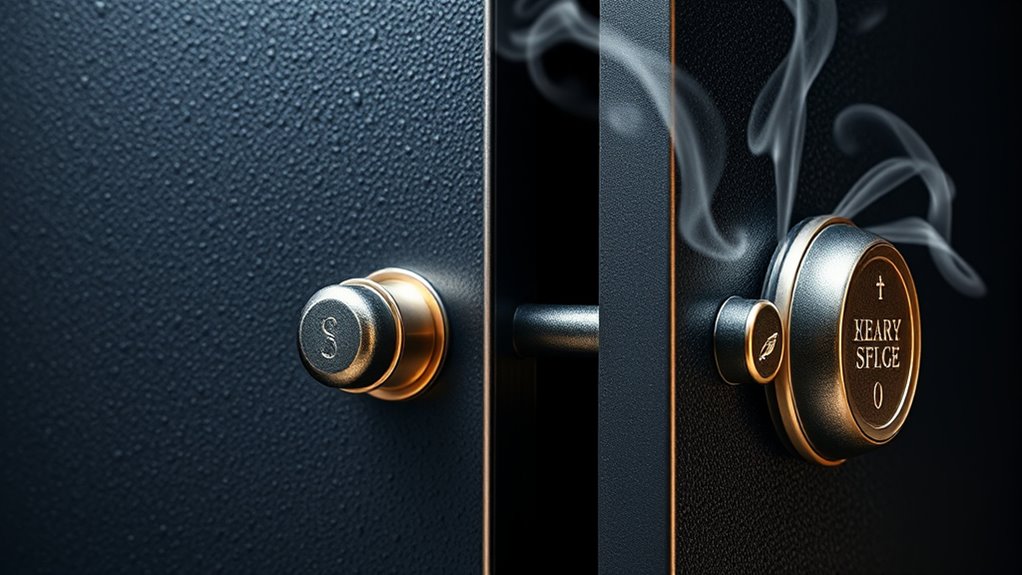
When protecting your firearms, fire and water resistance in a gun safe can make all the difference between loss and preservation. Fires and floods are unpredictable disasters that can destroy your valuable guns and important documents if your safe isn’t designed to withstand them. You want a safe with a fire rating that indicates how long it can protect contents at high temperatures—ideally at least 30 minutes at 1200°F or more.
This guarantees your firearms won’t warp, melt, or lose functionality during a fire.
Water resistance is equally important, especially if you live in an area prone to flooding or want protection against sprinkler systems. Look for safes with sealed doors and waterproof seals to prevent water from seeping inside. Some safes are tested for submersion or heavy water exposure, giving you added peace of mind.
Prioritizing fire and water resistance means your firearms stay secure, no matter what nature throws at you.
Strong Construction Materials to Protect Your Guns
You want a gun safe built with thick steel gauge to resist break-ins and impacts.
Pay attention to reinforced door frames, as they add extra strength where it matters most.
These materials work together to keep your firearms secure and protected.
Steel Gauge Thickness
How tough is the steel in your gun safe? The steel gauge thickness plays a vital role in protecting your firearms from theft or damage. Thicker steel means better resistance against drilling, prying, and forced entry.
When choosing a safe, you want to guarantee the steel is thick enough to deter burglars but not so heavy that it becomes impractical.
Keep these points in mind about steel gauge thickness:
- Lower gauge number means thicker steel (e.g., 10-gauge is thicker than 14-gauge)
- Common safe walls range from 10 to 14 gauge steel
- Thicker steel adds weight and durability
- Thin steel can be easily compromised with tools
- Ideal thickness balances security and portability
Choosing the right steel gauge helps keep your guns secure without unnecessary bulk.
Reinforced Door Frames
Thicker steel walls provide solid protection, but the door frame is where many safes are most vulnerable. When you’re choosing a gun safe, look for reinforced door frames made from strong materials like steel or composite alloys. These frames add extra resistance against prying and forced entry, keeping your firearms safer.
Here’s a quick comparison of common door frame materials:
| Material | Strength | Resistance to Tools |
|---|---|---|
| Steel | High | Excellent |
| Composite Alloy | Moderate-High | Good |
| Aluminum | Low | Poor |
You want a frame that won’t bend or warp under pressure. Reinforced door frames act as your first line of defense, so don’t overlook them when securing your guns.
Gun Safe Accessibility Features for Quick Access
When seconds count, having a gun safe with quick-access features can make all the difference. You want a safe that lets you get to your firearm instantly without fumbling or delays. Prioritize accessibility so you’re ready when it matters most.
Look for these quick-access features:
- Biometric fingerprint scanners for instant, secure unlocking.
- Electronic keypads with customizable, easy-to-enter codes.
- Dual access options combining keypad and key override.
- Gas strut-assisted doors that open smoothly and silently.
- Interior LED lighting to help you see your firearm clearly in low light.
These elements ensure you don’t waste precious time trying to open your safe. When you’re in a high-pressure situation, every second matters, so choose a safe designed for rapid, reliable access.
Gun Safe Interior Organization Tips
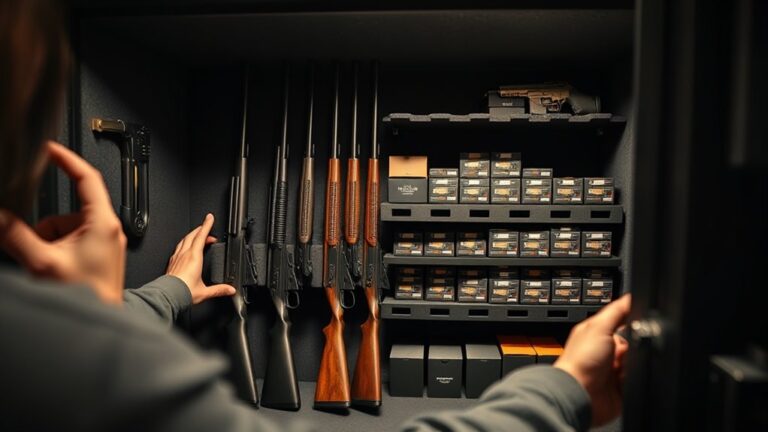
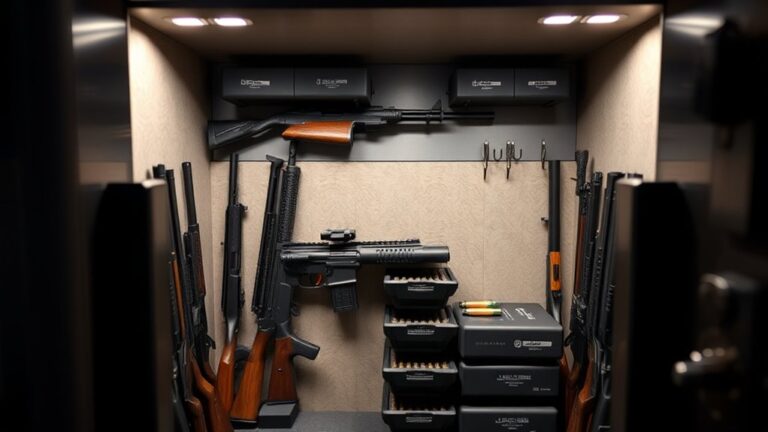
Organizing your gun safe effectively can make a huge difference in how quickly and safely you access your firearms. Start by grouping your guns by type—handguns, rifles, and shotguns—to avoid fumbling during urgent moments. Use adjustable racks or foam inserts to keep each firearm secure and prevent damage.
Shelves and bins help store ammunition, cleaning kits, and accessories neatly. Label everything clearly, so you know exactly where each item is without guesswork. Remember to leave some space for future additions and make sure heavier items are stored lower to avoid accidents.
Here’s a simple way to organize your gun safe interior:
| Gun Type | Storage Method | Additional Tips |
|---|---|---|
| Handguns | Pistol racks | Use foam inserts |
| Rifles | Vertical racks | Secure with straps |
| Shotguns | Slotted shelves | Avoid stacking |
| Ammo | Lockable bins | Label containers |
| Accessories | Small drawers | Keep cleaning kits separate |
Extra Gun Safe Safety Features to Enhance Security
Although a solid build is essential, adding extra safety features to your gun safe can greatly enhance its security. These features provide additional layers of protection, making unauthorized access even more difficult. When choosing your safe, consider options that go beyond just thick steel walls and strong locks.
Enhancing your gun safe with extra safety features adds crucial layers of security beyond just sturdy construction.
Here are some extra safety features you should look for:
- Biometric Locks: Use fingerprint recognition for quick, secure access only to authorized users.
- Reinforced Door Frames: Help resist prying and leverage attacks.
- Drill-Resistant Plates: Protect critical locking areas from drilling attempts.
- Alarm Systems: Trigger alerts if someone tries to tamper with the safe.
- Time-Delay Locks: Prevent immediate opening, deterring impulsive theft attempts.
Frequently Asked Questions
How Do I Properly Maintain and Clean My Gun Safe?
You should regularly dust and vacuum inside your gun safe, wipe surfaces with a damp cloth, and check for moisture or rust.
Use a dehumidifier if needed, lubricate the locking mechanism, and keep the door seals clean to maintain it properly.
Can a Gun Safe Be Bolted to Any Type of Floor?
Floors fluctuate from fragile to firm, so no, you can’t bolt a gun safe to just any surface. You’ll need sturdy, solid support like concrete or thick wood to securely set and safeguard your safe’s stability.
What Are the Insurance Benefits of Owning a Gun Safe?
You’ll often get lower insurance premiums because a gun safe reduces theft risk. Insurers see your firearms as better protected, which can lead to discounts and added peace of mind knowing your valuables are securely stored.
Are There Specific Gun Safes Designed for Pistols Only?
Yes, there are gun safes designed specifically for pistols. You’ll find compact, portable options that focus on quick access and secure storage.
These are perfect if you only need to protect handguns without taking up much space.
How Do Temperature Fluctuations Affect Gun Safe Contents?
Temperature fluctuations can cause moisture buildup inside your gun safe, leading to rust and damage.
You’ll want a safe with good insulation and a dehumidifier to keep your firearms and valuables protected from humidity changes.
Conclusion
When choosing a gun safe, remember that size, lock type, and fire resistance are vital for protecting your firearms. Did you know that 48% of gun owners don’t use a safe at all? That’s why picking the right safe with strong construction and quick-access features is so important.
Organizing the interior and adding extra security options can give you peace of mind, knowing your guns are both secure and accessible when you need them. Considering these key features ensures your firearms are well-protected against theft, fire, and unauthorized access. Ultimately, choosing a gun safe with these essential features will provide safety, convenience, and durability for your valuable firearms.