Are Striker Fired Guns Safe: A Safety Guide
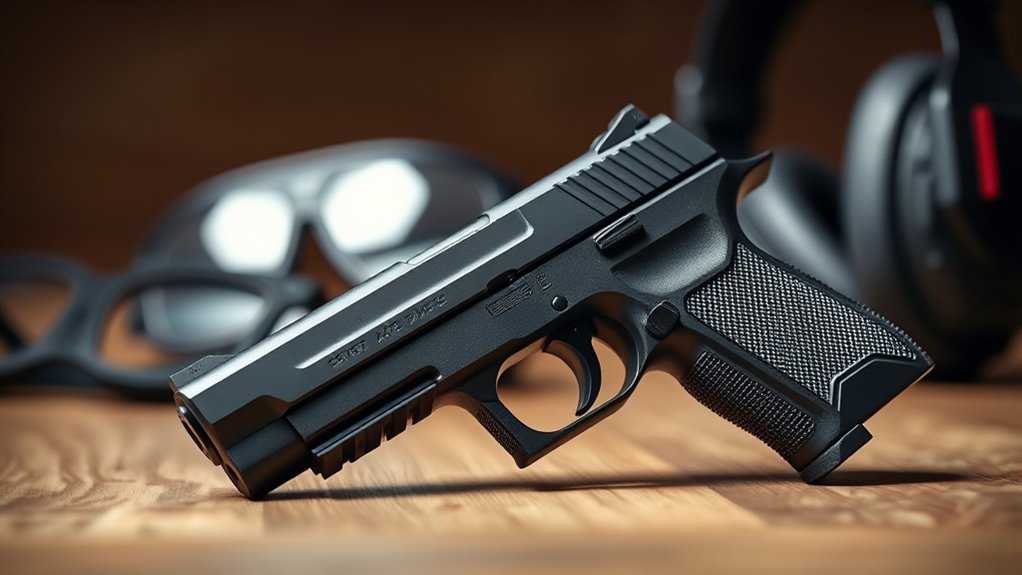
Striker-fired guns are widely regarded as safe to handle and carry when you adhere to basic firearm safety rules and receive proper training. These firearms come equipped with built-in safety features such as trigger safeties and drop safeties, which help prevent accidental discharge.
Their consistent trigger pull and straightforward design make them reliable and user-friendly, especially for self-defense and concealed carry purposes.
However, safe use extends beyond handling. Responsible maintenance, secure storage, and an ongoing awareness of safety concerns are essential to maximize safety.
Following these guidelines ensures that striker-fired guns remain a dependable option for many firearm owners.
You’ll find more tips on choosing, handling, and caring for these firearms ahead.
Key Takeaways
- Striker-fired guns feature multiple built-in safeties, like trigger and firing pin blocks, preventing accidental discharge without a full trigger pull. Consistent, lighter trigger pull enhances control but requires proper training to avoid unintentional firing.
- Absence of external manual safeties simplifies operation but increases reliance on correct handling and trigger discipline. Regular inspection, maintenance, and safe storage are essential to ensure reliable and safe firearm operation.
- Ideal for self-defense and concealed carry due to streamlined design, reduced snagging, and ease of use under stress.
Are Striker-Fired Guns Safe to Handle and Carry?
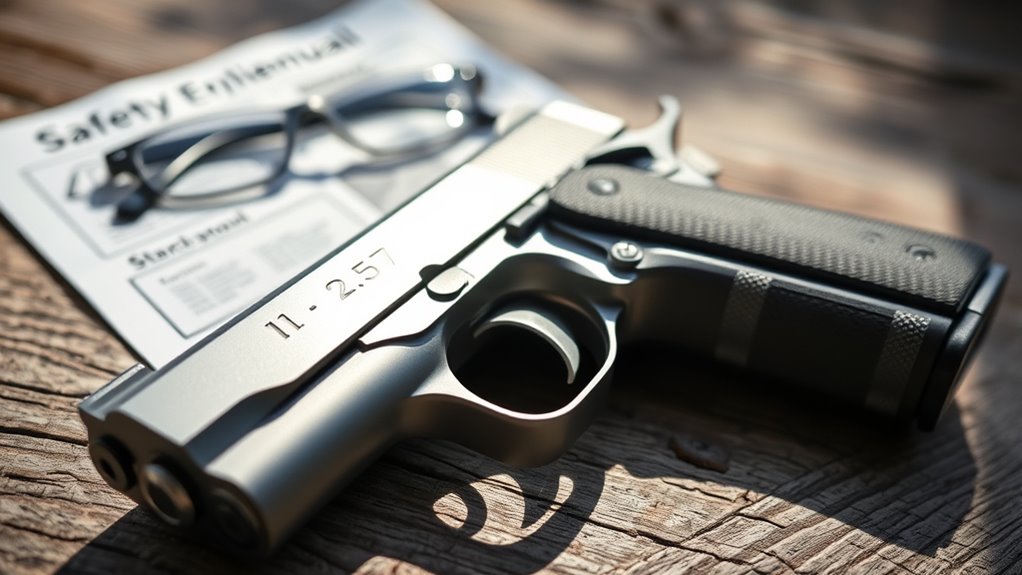
While striker-fired guns have fewer external safety features than some other designs, they’re generally safe to handle and carry when you follow basic firearm safety rules. You need to treat every firearm as if it’s loaded, never point it at anything you don’t intend to shoot, and keep your finger off the trigger until you’re ready to fire. These core rules help prevent accidental discharges regardless of the gun’s design.
When carrying a striker-fired gun, use a proper holster that fully covers the trigger guard to avoid unintentional trigger pulls. Regular cleaning and maintenance ensure the gun functions reliably, reducing the chance of malfunctions. Also, familiarize yourself with your firearm’s manual and practice safe handling habits consistently.
If you respect these fundamentals, you’ll minimize risks while carrying and using striker-fired pistols. Safety depends more on your actions and responsibility than on the number of external safeties the gun has.
Safety Features Built Into Striker-Fired Guns
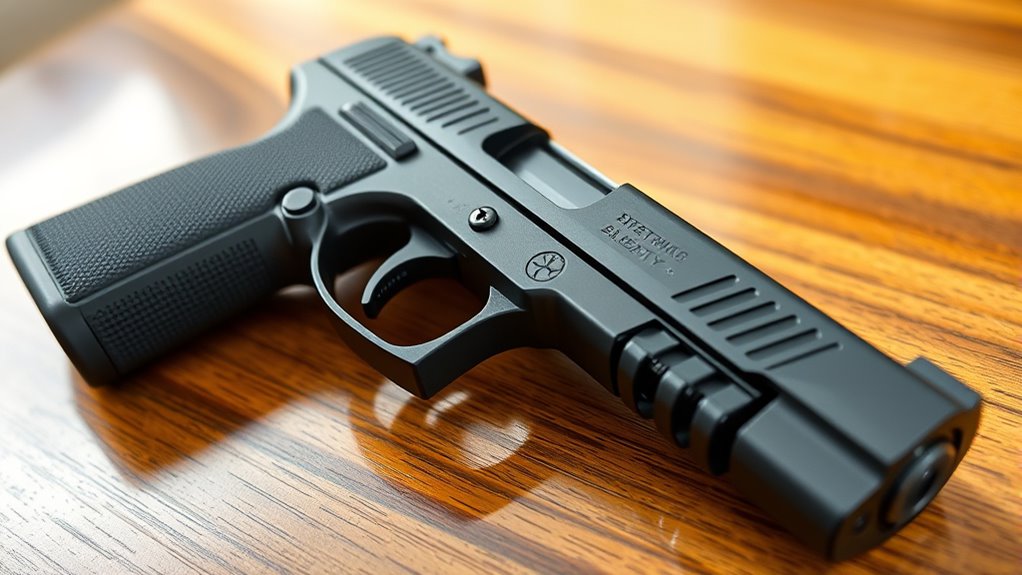
Because striker-fired guns often lack external safeties, you might wonder how they stay safe to use. These firearms rely on a combination of internal safety features designed to prevent accidental discharge while keeping operation straightforward. When you handle a striker-fired gun, several mechanisms work together to guarantee safety without extra manual safeties.
Here’s a quick look at common safety features built into striker-fired pistols:
| Safety Feature | Description |
|---|---|
| Trigger Safety | Blocks trigger until fully pressed |
| Firing Pin Block | Prevents firing pin moving without trigger |
| Drop Safety | Stops discharge if gun is dropped |
| Striker Safety | Locks striker until trigger pull is complete |
| Disconnect Safety | Prevents firing without the slide fully closed |
These features help you carry and use striker-fired guns confidently, knowing they only fire intentionally.
How Striker-Fired Guns Work vs. Other Types
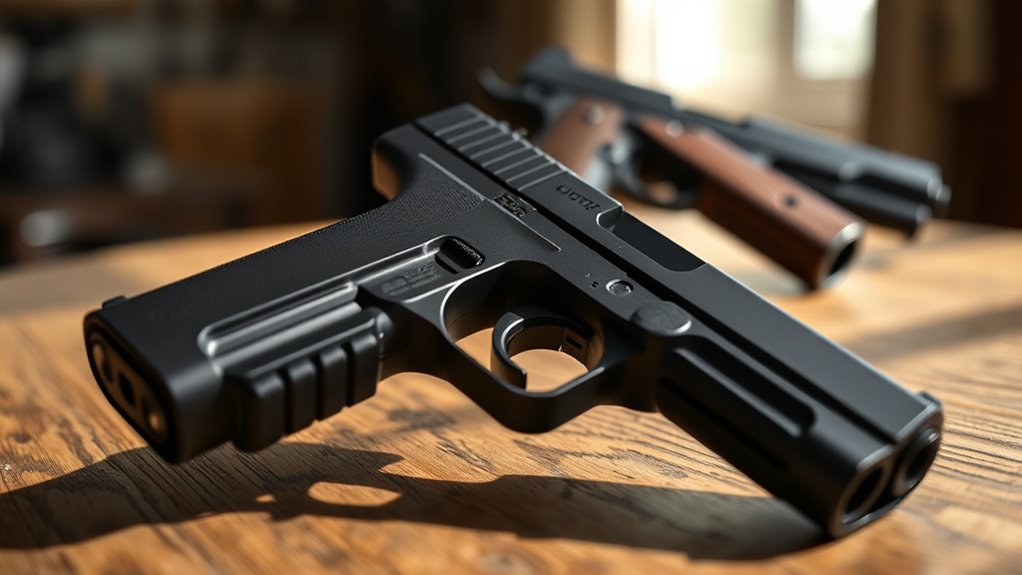
If you’ve ever handled different types of handguns, you’ve probably noticed striker-fired guns feel simpler and smoother to operate. Unlike traditional hammer-fired guns, which use a hammer to strike the firing pin, striker-fired guns use a spring-loaded firing pin called a striker. When you pull the trigger, the striker is released, hitting the primer and firing the round.
This design eliminates the external hammer, reducing moving parts and often resulting in a consistent trigger pull.
In contrast, hammer-fired guns have either single-action, double-action, or double-action/single-action triggers, which can change how heavy or light the pull feels. Revolvers, another type, rotate the cylinder and have distinct trigger mechanics. Striker-fired pistols tend to blend safety and ease of use by having a consistent trigger pull without needing to manually cock a hammer or worry about different trigger modes.
This simplicity makes them popular for self-defense and law enforcement.
Common Safety Concerns With Striker-Fired Guns
Striker-fired guns are known for their straightforward operation and consistent trigger pull, but you might still wonder about their safety. While these firearms reduce some risks associated with traditional hammer-fired guns, there are specific concerns you should keep in mind.
- Accidental Discharge: Since the trigger pull is lighter and consistent, you need to be cautious not to unintentionally fire the gun, especially under stress or when handling improperly.
- Trigger Safety Mechanisms: Striker-fired guns often rely heavily on trigger safeties, which means if the trigger is pressed without proper finger placement, the gun might still fire.
- Lack of External Safety: Many striker-fired pistols don’t have manual safeties, which can make some users uneasy about carrying them loaded.
- Potential for Neglecting Maintenance: Because of their internal striker mechanisms, regular cleaning and maintenance are essential to prevent malfunctions or misfires.
Understanding these concerns will help you approach striker-fired guns with the respect and caution they deserve.
Safe Handling Practices for Striker-Fired Guns
While these guns are designed for simplicity, you still need to follow strict handling practices to guarantee safety. Always treat your striker-fired gun as if it’s loaded, keep your finger off the trigger until you’re ready to shoot, and point the muzzle in a safe direction at all times.
Regularly inspect your firearm for any malfunctions or wear and ensure it’s clean and properly maintained.
Here’s a quick reference to safe handling practices:
| Practice | Why It Matters | Tip |
|---|---|---|
| Treat as Loaded | Prevents accidental discharge | Always check chamber first |
| Finger Off Trigger | Avoids unintentional firing | Rest finger alongside frame |
| Muzzle Direction | Prevents injury or damage | Never point at anything you don’t intend to shoot |
Choosing a Beginner-Friendly Striker-Fired Gun Safely
When picking a striker-fired gun as a beginner, you’ll want to focus on key safety features that protect you during use. It’s important to choose a model that’s easy to operate without complicated controls.
Sticking with reliable brands can also give you confidence in your gun’s performance and safety.
Safety Features Overview
Because safety is the top priority for anyone new to firearms, understanding the key safety features on a striker-fired gun is essential before making a choice. These features help prevent accidental discharges and guarantee you handle your gun with confidence.
When selecting a beginner-friendly model, focus on these critical safety components:
- Trigger Safety: A built-in mechanism that blocks the trigger from moving unless you deliberately pull it.
- Firing Pin Block: Prevents the firing pin from striking a cartridge unless the trigger is fully pressed.
- Drop Safety: Ensures the gun won’t fire if dropped, protecting against accidental discharge.
- Loaded Chamber Indicator: Lets you know if there’s a round in the chamber without needing to open the gun.
Knowing these features helps you pick a striker-fired gun that keeps you safe.
Ease Of Use
Understanding the safety features on a striker-fired gun lays the foundation for choosing one that’s easy to handle. As a beginner, you’ll want a gun with intuitive controls and minimal manual safeties to avoid confusion. Striker-fired pistols often have consistent trigger pulls, which can boost your confidence and accuracy.
Here’s a quick comparison to help you pick a beginner-friendly model:
| Feature | Beginner-Friendly Benefit | What to Avoid |
|---|---|---|
| Trigger Pull | Consistent, smooth | Heavy or inconsistent |
| Manual Safety | Minimal or none | Complex, multiple safeties |
| Grip Design | Comfortable, ergonomic | Slippery or bulky |
Choosing a gun with these traits ensures safer and easier handling as you learn.
Reliable Brand Choices
Although many brands offer striker-fired pistols, choosing one known for reliability and quality can make a big difference in your safety and confidence as a beginner. You want a gun that functions smoothly with minimal malfunctions, ensuring you focus on learning rather than troubleshooting. Reliable brands also often provide better customer support and easier access to parts.
Here are four trusted brands to contemplate:
- Glock – Renowned for durability and simplicity.
- Smith & Wesson M&P – Offers ergonomic designs and safety features.
- SIG Sauer P320 – Modular and user-friendly.
- Springfield XD – Balanced grip and consistent trigger pull.
Picking from these brands helps you start with a safe, dependable firearm suited for beginners.
Why People Love Carrying Striker-Fired Guns
You’ll appreciate how striker-fired guns offer a simplified trigger mechanism that makes shooting more straightforward. The consistent trigger pull helps you build reliable habits and improves accuracy.
Plus, their design often means enhanced concealability, which is key for everyday carry.
Simplified Trigger Mechanism
Because striker-fired guns have a simplified trigger mechanism, they’re often favored by those who carry daily. This design removes the external hammer, reducing parts and making the gun easier to operate under stress. You’ll appreciate how this simplicity leads to fewer malfunctions and easier maintenance.
Here’s why the simplified trigger mechanism stands out:
- Fewer moving parts mean less chance of mechanical failure.
- Streamlined design helps with quicker, more intuitive use.
- Reduced snagging on clothing or holsters thanks to no hammer.
- Easier to clean and maintain, saving you time and effort.
This straightforward mechanism enhances reliability and user confidence, key factors for anyone depending on their firearm for personal protection.
Consistent Trigger Pull
When you carry a striker-fired gun, you’ll notice the trigger pull feels the same every time you squeeze it. This consistency helps build muscle memory, so you can focus on accuracy without worrying about variable trigger weights or stages. Unlike some firearms with double-action or traditional hammer systems, striker-fired triggers don’t change between shots.
That predictability reduces surprises during critical moments and makes training more straightforward. You won’t have to adapt your trigger finger to different pulls, which means faster, smoother follow-up shots. For many, this consistent feel translates to increased confidence and better control under stress, contributing to safer handling overall.
Ultimately, the reliable trigger pull is one reason so many people prefer striker-fired guns for carry and self-defense.
Enhanced Concealed Carry
That consistent trigger pull isn’t just about accuracy—it also makes striker-fired guns more practical for concealed carry. You’ll appreciate how their simplicity and reliability enhance your daily protection.
Here’s why people love carrying striker-fired guns:
- Slim Profile: Their design allows for easier concealment under clothing.
- Lightweight: You won’t feel weighed down, making all-day carry comfortable.
- Fewer Controls: With no manual safety or external hammer, drawing and firing are quicker and less complicated.
- Reliability: The consistent trigger reduces the chance of misfires, boosting your confidence in high-stress situations.
These features combine to offer you a dependable, easy-to-carry option that fits seamlessly into your lifestyle while prioritizing safety and readiness.
Cleaning and Maintenance Tips for Striker-Fired Guns
Although striker-fired guns are known for their reliability, regular cleaning and maintenance are essential to keep them functioning safely and smoothly. You should clean your firearm after every use or at least once a month if it’s stored. Start by verifying the gun is unloaded, then disassemble it according to the manufacturer’s instructions.
Use a quality cleaning solvent and brushes to remove powder residue, dirt, and debris from the barrel, slide, and frame. Lubricate moving parts sparingly to prevent wear and ensure smooth operation, but avoid over-lubrication which can attract dirt. Pay special attention to the striker channel and firing pin area, as buildup there can affect performance.
After cleaning, reassemble the gun and perform a function check to confirm everything works correctly. Regular maintenance not only extends your gun’s life but also helps prevent malfunctions, guaranteeing your striker-fired pistol remains safe and dependable every time you need it.
Safe Storage Tips for Striker-Fired Guns
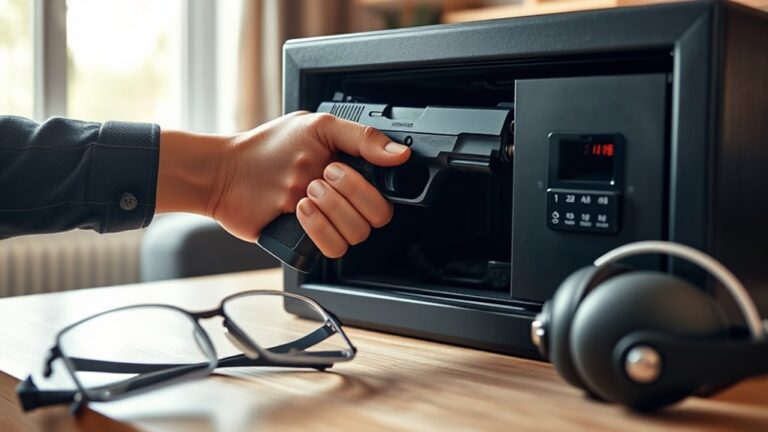
Keeping your striker-fired gun clean and well-maintained is just one part of responsible ownership; how you store it plays a big role in safety too. Safe storage prevents unauthorized access and reduces the risk of accidents.
Here are some essential tips you should follow:
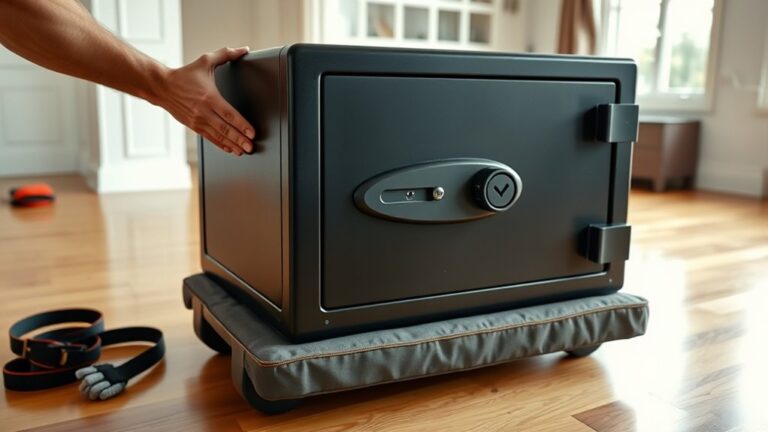
- Use a Gun Safe or Lockbox – Secure your firearm in a sturdy, lockable container designed specifically for guns.
- Keep Ammunition Separate – Store ammo in a different locked location to minimize danger.
- Engage Safety Locks – Utilize trigger or cable locks for an extra layer of security.
- Store in a Cool, Dry Place – Avoid humidity to prevent rust and damage.
Frequently Asked Questions
Can Striker-Fired Guns Be Customized With Aftermarket Parts?
Yes, you can customize striker-fired guns with aftermarket parts like triggers, slides, and sights. Just make sure the parts are compatible and installed correctly to maintain safety and reliability while enhancing your firearm’s performance and aesthetics.
Do Striker-Fired Guns Perform Well in Extreme Weather Conditions?
Yes, striker-fired guns generally perform well in extreme weather, but you’ll want to keep them clean and lubricated. Cold, heat, or moisture can affect any firearm, so regular maintenance guarantees reliable function in tough conditions.
Proper care is essential to ensure your gun operates smoothly regardless of the environment. Regular cleaning removes debris and prevents corrosion. Lubrication helps maintain the moving parts and reduces wear.
What Are the Legal Restrictions on Owning Striker-Fired Guns?
Legal restrictions on owning striker-fired guns vary like shifting sands—depending on where you live, you might need permits, pass background checks, or face bans. Always check local laws before buying or carrying one to stay compliant.
How Do Striker-Fired Guns Compare in Cost to Hammer-Fired Guns?
Striker-fired guns usually cost less than hammer-fired ones because they have fewer parts and simpler mechanisms. If you’re budget-conscious, you’ll find striker-fired models more affordable and easier to maintain compared to hammer-fired pistols.
Are There Popular Brands Specializing in Striker-Fired Pistols?
You’ll find popular brands like Glock, Smith & Wesson, and Sig Sauer dominating striker-fired pistols, with Glock holding over 60% of the market share, showing how trusted these manufacturers are in this design.
Conclusion
When it comes to striker-fired guns, safety isn’t just a feature—it’s a responsibility you carry. Like a carefully balanced dance, knowing how they work, practicing safe handling, and maintaining them properly guarantees you stay in control.
So, whether you’re a beginner or seasoned carrier, remember: the safest gun is the one handled with respect and knowledge. After all, safety isn’t luck; it’s the art of preparedness in your hands.
In conclusion, understanding striker-fired guns and following strict safety guidelines is essential. Proper training and awareness ensure that every shot is secure and controlled. Striker-fired gun safety is not optional—it’s a vital commitment for every owner.