How Fast Does 5.56 Ammo Travel?
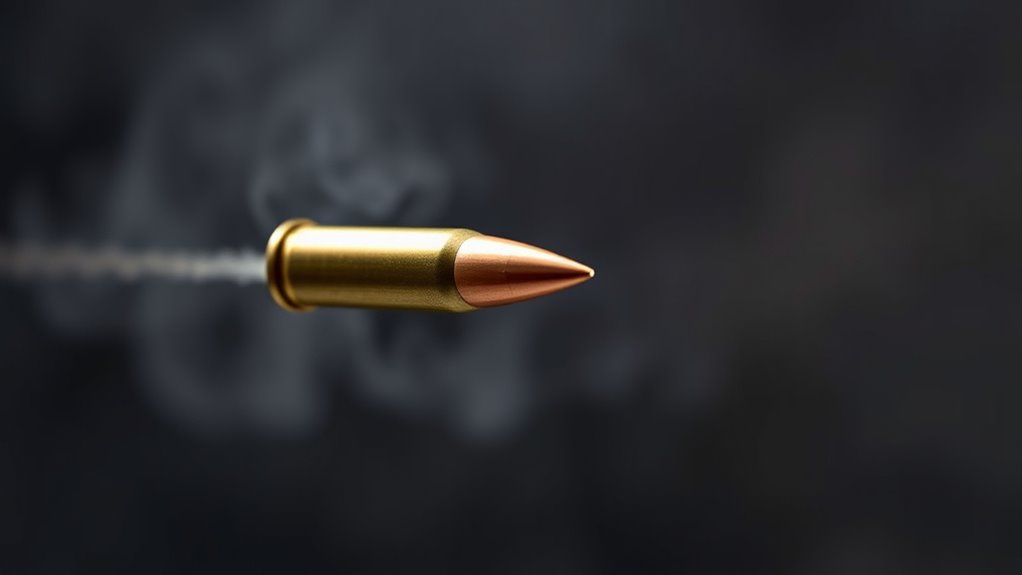
5.56 ammo typically travels around 3,000 feet per second, making it a popular choice for many shooters due to its impressive velocity. However, this speed can vary based on several factors such as barrel length, bullet weight, and environmental conditions.
Understanding how fast 5.56 ammo travels is essential for optimizing accuracy and performance.
Shorter barrels tend to slow down the bullet, while longer barrels can boost velocity up to about 3,200 feet per second. Environmental factors like temperature and altitude also influence the speed.
Additionally, your choice of ammo—whether lighter or heavier bullets—affects both speed and overall performance.
If you want to understand how all these variables impact accuracy and lethality, keep exploring more details. Mastering these aspects can help you make better decisions for your shooting needs.
Key Takeaways
- 5.56 ammo typically travels around 3,000 feet per second, varying with load and barrel length.
- Longer barrels (up to 20″) increase velocity, with speeds ranging from 2,700 to 3,200 fps.
- Lighter bullets like 55-grain rounds reach higher speeds than heavier 77-grain match bullets.
- Environmental factors like temperature and altitude subtly affect bullet velocity.
- Velocity impacts accuracy, range, penetration, and terminal ballistic effectiveness.
How Fast Does 5.56 Ammo Travel? Typical Muzzle Velocity Explained
While the exact speed can vary depending on the specific load and barrel length, 5.56 ammo typically travels at a muzzle velocity of around 3,000 feet per second. This speed means the bullet leaves the barrel incredibly fast, allowing for a flat trajectory and effective range in combat or sport shooting. When you’re shooting, this velocity helps the 5.56 round maintain accuracy and deliver sufficient energy on target.
You should know that different types of 5.56 rounds, like the M193 or the M855, have slightly different speeds due to variations in bullet weight and powder charge. Lighter bullets generally travel faster, but heavier ones can offer better penetration. Overall, this velocity range makes 5.56 ammo versatile and popular among military and civilian shooters alike.
Understanding this muzzle velocity is key to appreciating how the 5.56 performs under various conditions.
How Barrel Length Affects 5.56 Ammo Speed
You’ll notice that barrel length plays a big role in how fast 5.56 ammo travels. Finding the ideal barrel length can boost velocity, but longer barrels also come with trade-offs like added weight and reduced maneuverability.
Let’s explore how these factors balance out for the best performance.
Barrel Length And Velocity
Because the barrel length directly impacts the time the bullet spends accelerating, it considerably affects the velocity of 5.56 ammo. When you use a longer barrel, the expanding gases push the bullet for a longer time, increasing its speed. Conversely, a shorter barrel limits this push, reducing velocity.
Understanding this relationship helps you gauge how your firearm’s barrel size influences ammo performance.
| Barrel Length (inches) | Approximate Velocity (fps) |
|---|---|
| 10 | 2700 |
| 14.5 | 2950 |
| 16 | 3050 |
| 20 | 3200 |
This table shows how velocity rises as barrel length increases, highlighting the significant impact barrel length has on 5.56 ammo speed.
Optimal Length For Speed
Although longer barrels generally boost 5.56 ammo speed, there’s a point where increasing length yields minimal gains. Typically, barrels around 20 inches offer a preferable balance for maximizing velocity. Beyond this, the powder inside the cartridge has mostly burned, so extra barrel length doesn’t considerably accelerate the bullet.
If your barrel is shorter than 16 inches, expect a noticeable drop in speed because the bullet exits before all the powder energy is utilized. Conversely, barrels longer than 20 inches add little speed but increase weight and handling complexity.
Trade-Offs In Barrel Size
Finding the right barrel length means balancing speed with other factors like weight, maneuverability, and recoil. Longer barrels generally boost the 5.56 ammo’s velocity by allowing more complete powder burn, but they add weight and can make your firearm less handy in tight spaces.
Shorter barrels improve maneuverability and reduce overall weight, helping you react faster, but they decrease bullet speed and effective range. You’ll also notice more muzzle blast and recoil with shorter barrels due to incomplete powder burn.
How Different Ammunition Types Affect 5.56 Ammo Speed
When you consider how different types of 5.56 ammunition can affect the bullet’s velocity, it’s clear that not all rounds travel at the same speed. The bullet’s weight, powder load, and design all play key roles. For example, lighter bullets like the 55-grain FMJ tend to reach higher velocities, often around 3,200 feet per second, because less mass means they accelerate faster.
On the other hand, heavier bullets such as the 77-grain match rounds typically travel slower, closer to 2,700 feet per second, due to increased mass and drag. You’ll also find variations in powder charge and cartridge design between manufacturers, which can slightly boost or reduce velocity. Specialty rounds like hollow points or tracer rounds may weigh differently and consequently affect speed.
Ultimately, if you want faster 5.56 ammo, you’ll likely choose lighter, standard FMJ rounds, while heavier or specialty bullets trade velocity for other performance factors like stability and terminal effect.
How Environmental Factors Influence 5.56 Bullet Speed
Because environmental factors like temperature, altitude, and humidity affect air density, they can profoundly influence how fast your 5.56 bullet travels. When temperatures rise, the air becomes less dense, reducing resistance on your bullet and allowing it to maintain higher velocities. Conversely, colder air increases drag, slowing your bullet down more quickly.
Altitude plays a similar role; at higher elevations, thinner air means less drag, so your 5.56 round will typically fly faster than at sea level. Humidity also impacts air density, but in a less intuitive way—more humidity actually decreases air density because water vapor is lighter than dry air. This means on humid days, your bullet might encounter less resistance and travel faster.
When you’re shooting in different environments, these factors combine to subtly change your bullet’s speed, which is why understanding them helps you anticipate performance variations.
Why 5.56 Velocity Matters for Accuracy and Range
You’ll notice that the velocity of 5.56 ammo directly affects how much the bullet drops over distance. Faster speeds mean less drop, helping you stay on target.
Plus, higher velocity improves penetration, so your rounds hit harder where it counts.
Impact On Bullet Drop
Although you might not notice it at close range, the velocity of 5.56 ammo plays a crucial role in how much the bullet drops over distance. The faster the bullet travels, the flatter its trajectory, making it easier for you to hit targets farther away without adjusting your aim drastically.
Lower velocities mean gravity pulls the bullet down sooner, increasing drop and reducing effective range.
Here’s a quick look at bullet drop over distance at typical 5.56 velocities:
| Distance (yards) | Bullet Drop (inches) |
|---|---|
| 100 | 1.5 |
| 200 | 6.0 |
| 300 | 15.0 |
| 400 | 30.0 |
| 500 | 52.0 |
Understanding this helps you compensate and maintain accuracy.
Effect On Target Penetration
When 5.56 ammo travels at higher velocities, it packs more energy to penetrate targets effectively, which directly impacts your accuracy and effective range. The faster the bullet moves, the less it slows down before hitting the target, allowing it to maintain enough force to pierce barriers like light cover or body armor. This means your shots are more likely to reach critical areas with consistency, improving your hit probability.
Velocity also influences how stable the bullet remains in flight, reducing deviation caused by environmental factors. If velocity drops too much, penetration suffers, and your effective range shortens, making distant shots less reliable. Understanding this helps you choose the right ammo or adjust your shooting tactics to maximize performance in the field.
How 5.56 Ammo Speed Compares to Other Popular Rounds
While the 5.56 ammo is known for its impressive velocity, understanding how it stacks up against other popular rounds can help you better appreciate its performance. The 5.56 NATO typically travels around 2,900 to 3,100 feet per second (fps), which is faster than many traditional handgun rounds like the 9mm, which averages about 1,200 fps.
Compared to the .308 Winchester, a popular rifle round, the 5.56 is faster, but the .308 delivers more energy due to its heavier bullet weight. Meanwhile, the .223 Remington, very similar to the 5.56, has comparable velocities, often in the same 3,000 fps range. Even faster rounds like the .22-250 Remington can exceed 3,500 fps, but they aren’t as widely used for military or general-purpose rifles.
How 5.56 Ammo Speed Impacts Terminal Ballistics
Since the speed of 5.56 ammo plays a crucial role in how it performs upon impact, understanding its terminal ballistics helps you grasp why this round is so effective. The high velocity of 5.56 rounds generates significant kinetic energy, causing the bullet to fragment or tumble upon hitting a target. This fragmentation increases tissue damage, making it more incapacitating than slower rounds that tend to pass through cleanly.
You’ll also notice that the velocity affects penetration depth. Faster 5.56 rounds can penetrate light barriers and body armor more effectively, but they lose velocity—and consequently terminal effectiveness—over longer distances. This means you get ideal stopping power within typical engagement ranges, but performance drops off beyond that.
Common Myths About 5.56 Ammo Speed: Debunked
You might think 5.56 ammo always travels at the same speed, but that’s not the case. Various factors like barrel length and bullet type can change its velocity considerably.
Let’s clear up some common myths about how fast this round really moves.
Typical Velocity Misconceptions
Though many believe 5.56 ammo consistently travels at a set speed, the truth is more nuanced. You might hear people say it always moves around 3,000 feet per second, but that’s a simplification. The velocity can vary depending on the specific load and barrel length, even without diving into external factors.
Another common misconception is that all 5.56 rounds perform identically; in reality, different bullet weights and powder charges change their speed markedly. You might also think muzzle velocity equals impact speed, but that’s not the case—the bullet slows down as it travels. Understanding these typical misconceptions helps you grasp why 5.56 ammo speed isn’t a fixed number but a range influenced by design choices before external elements come into play.
Factors Affecting Bullet Speed
While many factors influence the speed of 5.56 ammo, some common beliefs about what affects bullet velocity are misleading. You might think barrel length is the only factor, but it’s not the whole story. Yes, longer barrels generally increase velocity, but ammo type, powder quality, and even environmental conditions play key roles.
For example, hotter temperatures can boost powder burn rate, slightly increasing speed. Humidity and altitude also matter, affecting air density and resistance. Additionally, the bullet’s weight and design influence how fast it travels.
How to Measure 5.56 Ammo Speed: Tools and Techniques
Measuring the speed of 5.56 ammo requires precise tools and techniques to guarantee accuracy. To get started, you’ll need a reliable chronograph, which is designed specifically to measure bullet velocity. Place the chronograph a set distance from the muzzle, typically 10 to 15 feet, to assure consistent readings.
Make sure the area is well-lit and free from obstructions that could interfere with the sensors. Before firing, calibrate your chronograph according to the manufacturer’s instructions. When you shoot, the device records the bullet’s speed as it passes through its sensors.
For best results, fire multiple rounds and average the readings to account for slight variations. Additionally, using a laser or radar-based speed measurement tool can give you alternative data, but these are generally more expensive and less common. Always prioritize safety by wearing protective gear and following proper firearm handling protocols while conducting your measurements.
What to Expect From 5.56 Ammo Speed in Real-World Use
Once you’ve gotten a solid understanding of how to measure 5.56 ammo speed, it’s helpful to know what those numbers mean in practical terms. When you’re out in the field or at the range, the velocity impacts everything from bullet trajectory to stopping power.
Here’s what you can expect from 5.56 ammo speed in real-world use:
- A flatter trajectory at typical engagement distances (up to 300 yards), helping you hit targets more accurately.
- Quick time of flight, meaning less lead time on moving targets.
- Consistent performance in various weather conditions, though extreme cold or heat can slightly alter velocity.
- Effective penetration on light barriers, thanks to high speed and bullet design.
- Manageable recoil, allowing you to maintain control and fire follow-up shots faster.
Understanding these real-world effects lets you better anticipate how your 5.56 rounds will perform when it counts.
Frequently Asked Questions
What Is the History of the 5.56 Cartridge Development?
You’ll find the 5.56 cartridge was developed in the late 1950s by the U.S. military, evolving from the .223 Remington to create a lightweight, high-velocity round for the M16 rifle during the Vietnam War.
How Much Does 5.56 Ammo Typically Cost per Round?
You’ll typically find 5.56 ammo costing between 30 to 60 cents per round, depending on brand and quality. Bulk purchases or surplus rounds can lower the price, while specialty ammo might cost a bit more.
What Are the Best Firearms Chambered for 5.56 Ammo?
For fierce firing fun, you’ll find the AR-15, FN SCAR, and SIG Sauer MCX magnificent. These mighty machines masterfully maximize 5.56 ammo’s potential, providing precision, power, and performance perfect for your practical pursuits.
How Do Different Manufacturers Affect 5.56 Ammo Quality?
Different manufacturers affect 5.56 ammo quality through varying powder types, bullet construction, and manufacturing precision. You’ll notice differences in reliability, accuracy, and consistency depending on the brand you choose, so pick wisely for your needs.
What Safety Precautions Should Be Taken When Handling 5.56 Ammo?
Wondering how to stay safe with 5.56 ammo? You’ve got to wear eye and ear protection, handle rounds carefully, keep them away from heat, and always store them in a cool, dry place to avoid accidents.
Conclusion
You feel the rush as the 5.56 round leaps from the barrel, slicing through the air with a sharp, swift whisper. Its speed dances with the wind, shaped by barrel length and ammo type, pushing accuracy and power further. Understanding this velocity lets you predict its path, ensuring every shot counts.
So next time you fire, imagine that bullet’s journey—a lightning bolt chasing its target—fast, precise, and unstoppable. Knowing how fast 5.56 ammo travels is key to mastering your shot. This knowledge enhances both your accuracy and effectiveness in the field.