How to Open Gun Safe Lock in 7 Easy Steps
To open your gun safe lock in 7 easy steps, start by identifying your lock type—mechanical dial, electronic keypad, or biometric. Knowing the type of lock is essential for using the correct method to gain access.
This guide will help you navigate each lock type effectively and avoid common mistakes.
Try default or backup codes before manually dialing mechanical locks by turning the dial in sequence.
For electronic locks, use reset steps or override keys, and replace batteries if needed to ensure proper function.
Biometric locks may require re-enrollment or cleaning scanners to recognize fingerprints accurately.
If you encounter difficulties, calling a locksmith can provide professional assistance.
Keep practicing these steps, and you’ll discover smarter ways to avoid lockouts and maintain easy access to your gun safe.
Key Takeaways
- Identify your safe’s lock type: mechanical dial, electronic keypad, or biometric scanner.
- For mechanical locks, turn the dial clockwise three times, stop at the first number, then follow the combination sequence.
- Enter the default or personal code on electronic keypads, replace batteries if unresponsive, or use a mechanical override key.
- For biometric safes, ensure clean sensors, properly enrolled fingerprints, and replace batteries if scanning fails.
- Contact a professional locksmith if all access methods fail or if the lock malfunctions to avoid damage.
Identify Your Gun Safe Lock Type
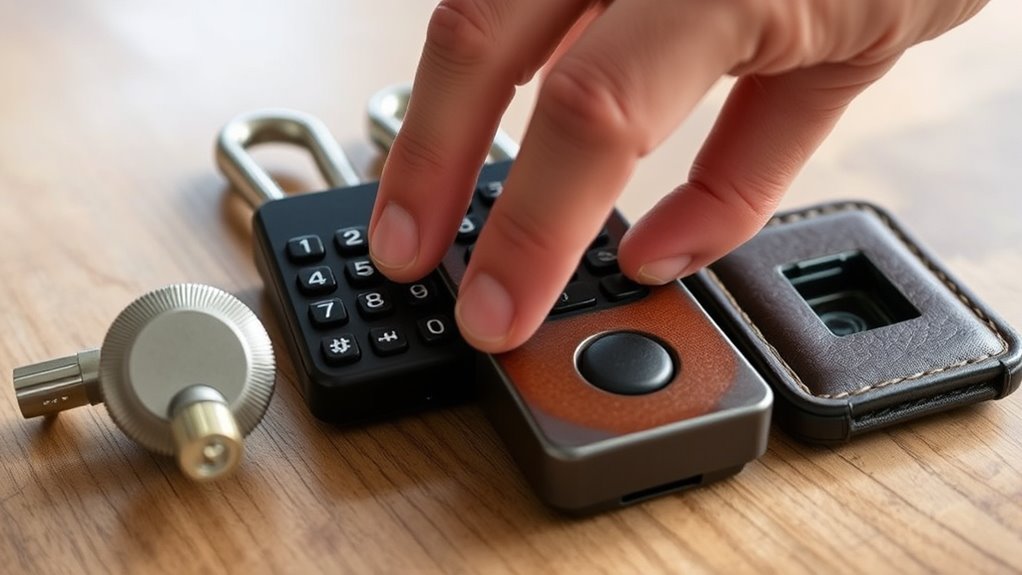
Before you try to open your gun safe, you need to know what kind of lock it has. Gun safes typically use one of three lock types: mechanical dial locks, electronic keypad locks, or biometric locks. Mechanical dial locks have a rotating dial you’ll turn to enter a combination.
Identify your gun safe lock type before opening: mechanical dial, electronic keypad, or biometric scanner.
These are common in older models. Electronic keypad locks require you to enter a numeric code on a keypad. They’re faster and more convenient but depend on battery power.
Biometric locks use fingerprints or other biometric data for access, offering high security and quick entry. Take a look at your safe’s front panel to identify the lock type. If you see a dial, it’s mechanical; a keypad means electronic; and a small sensor or scanner indicates a biometric lock.
Knowing this helps you understand the opening process and what tools or methods you might need, so you won’t waste time trying the wrong approach.
Try Common Default or Backup Codes First
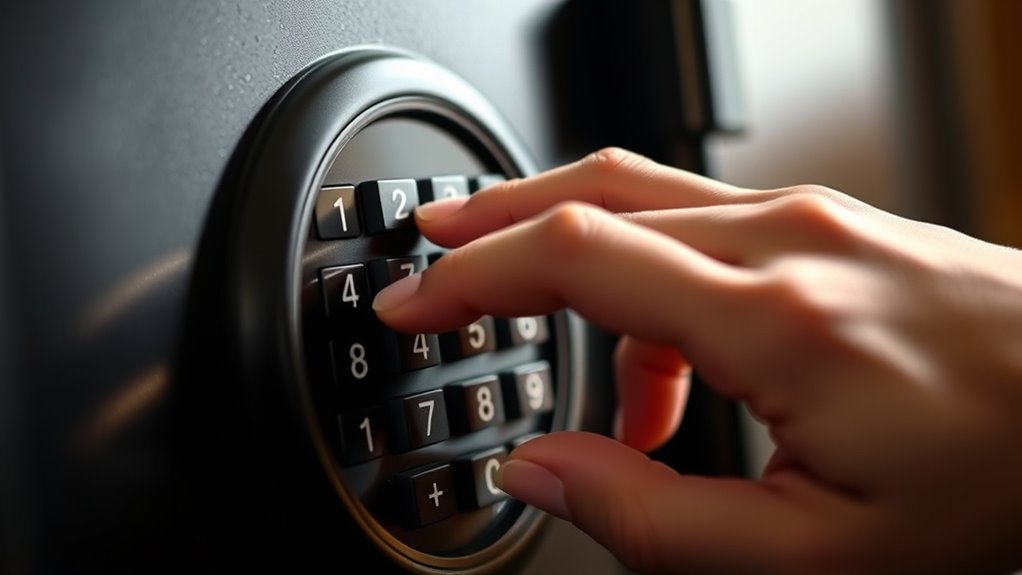
Once you know what type of lock your gun safe has, the next step is to try common default or backup codes. Many gun safes come programmed with factory-set default codes or have backup codes provided by the manufacturer. These codes are often simple sequences like 0000, 1234, or 1111.
Before attempting any complex methods, try entering these common combinations—they might just unlock your safe quickly. If you have the safe’s manual, check it for any default codes or instructions on resetting the lock. Sometimes, manufacturers include a backup override code that can be used if you forget your personal combination.
Be cautious not to enter too many wrong codes consecutively, as some safes lock you out temporarily after multiple failed attempts. Trying these default or backup codes first can save you time and effort, avoiding unnecessary damage or professional locksmith intervention. It’s a practical initial step when you’re locked out and don’t remember the code.
Manually Dial Mechanical Gun Safe Locks
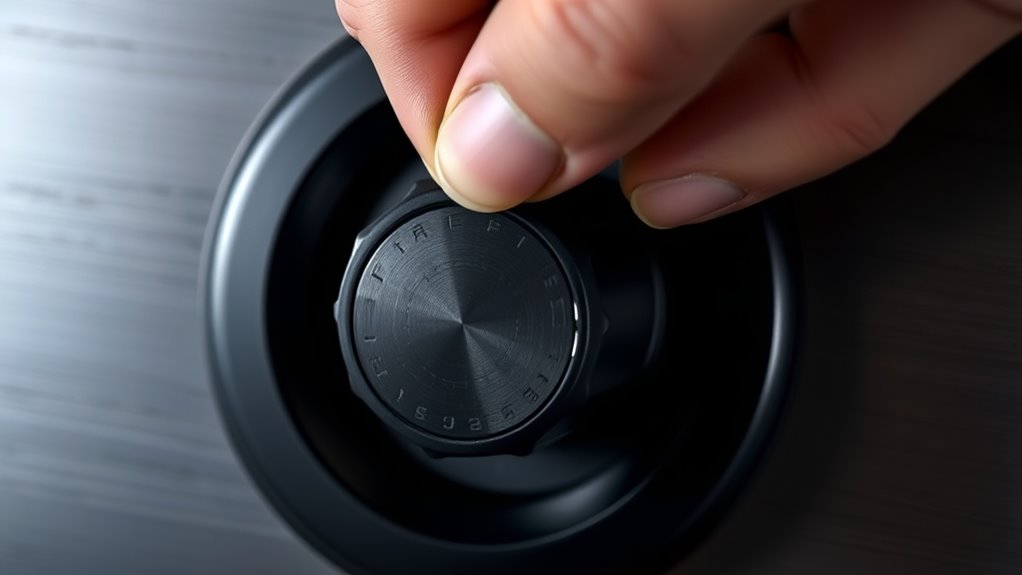
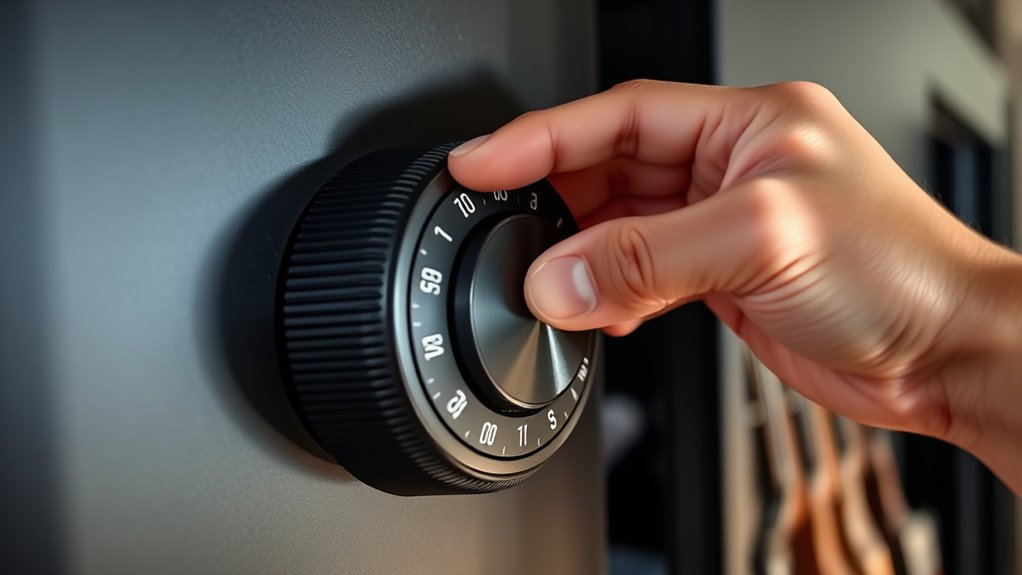
If your gun safe has a mechanical dial lock, you’ll need to understand how the dial mechanism works before attempting to open it. Follow a step-by-step dialing process to enter the correct combination accurately.
If you run into problems, troubleshooting common issues can help you avoid damaging the lock.
Understanding Dial Mechanism
Although dial mechanisms on mechanical gun safes might seem complex at first, you’ll find that understanding their basic function is straightforward. The dial connects to a spindle inside the lock, which turns a set of wheels or cams. Each wheel lines up with a specific number on the combination.
When you rotate the dial correctly, these wheels align precisely, allowing the lock’s bolt to retract. The dial usually turns both clockwise and counterclockwise, letting you engage and disengage the wheels in sequence. Knowing this helps you grasp why the combination must be entered in a particular order and direction.
Step-by-Step Dialing Process
Knowing how the dial mechanism works sets you up to follow the dialing process accurately. To open your mechanical gun safe lock, you’ll need to carefully turn the dial in a specific sequence. Here’s how to do it:
- Turn the dial clockwise (right) three times to clear it.
- Stop at the first number of your combination on the third turn.
- Turn the dial counterclockwise (left), passing the first number once, and stop at the second number.
- Turn the dial clockwise again directly to the third number.
- Pull the handle or latch to open the safe.
Following these steps precisely is key. Make sure you dial slowly and stop exactly on each number to avoid errors.
Troubleshooting Common Issues
When you run into trouble opening your mechanical gun safe lock, it’s usually due to common issues like misdialing, a stuck dial, or worn components. First, double-check your combination and make sure you’re turning the dial in the correct direction and stopping at precise numbers.
If the dial feels stuck, don’t force it; try gently cleaning around the dial to remove debris or dust. Worn or loose parts inside the lock can cause misalignment, so listen for unusual sounds when turning the dial.
If you suspect internal damage, it might be best to call a professional locksmith rather than risk breaking the lock. Regular maintenance, like lubricating with graphite powder (not oil), can prevent many of these problems and keep your safe functioning smoothly.
Reset or Bypass Electronic Keypad Gun Safes
Wondering how to reset or bypass an electronic keypad on your gun safe? First, check the user manual for a reset procedure, as most models have a master reset code or button inside the battery compartment.
If you’re locked out, here are some quick tips:
- Remove the battery pack and wait a few minutes before reinserting it to reset the system.
- Use the factory default code if you never changed it or forgot your custom code.
- Try the mechanical override key, usually hidden behind a panel or under the keypad.
- Replace dead batteries, as weak power can cause keypad malfunction.
- Contact the manufacturer for a master code or professional override instructions.
Open Biometric Gun Safes Without Fingerprints
If your fingerprint isn’t recognized, don’t worry—you can use alternative biometric methods or troubleshoot the scanner. Many biometric safes also offer backup access codes as a reliable way to get in.
Let’s explore how to handle these options when your fingerprint won’t work.
Alternative Biometric Access Methods
Although fingerprint recognition is common for biometric gun safes, there are other reliable methods to gain access without using your fingerprint. These alternative biometric options offer convenience and security when fingerprints aren’t viable.
You might consider:
- Retina or Iris Scanning: Uses unique eye patterns for quick identification.
- Facial Recognition: Compares your facial features to stored data.
- Voice Recognition: Verifies your identity via vocal patterns.
- Palm Vein Scanning: Reads the unique vein patterns in your palm.
- Multi-Biometric Systems: Combine several methods for enhanced security.
Each method has its own strengths and can be a good backup or primary access mode depending on your needs and the safe’s technology. Exploring these options guarantees you won’t be locked out if fingerprint recognition fails.
Troubleshooting Fingerprint Scanner Issues
When your fingerprint scanner isn’t working, you don’t have to panic or give up on accessing your gun safe. First, check if your finger or the scanner surface is dirty or wet—clean both gently with a soft cloth. Ensure your finger is dry and positioned properly on the sensor.
Sometimes, low battery power can cause recognition issues, so replace the batteries if needed. If your fingerprint still isn’t recognized, try enrolling your fingerprint again according to the manufacturer’s instructions. Also, temperature or humidity extremes can affect scanner performance, so ensure the safe is in a suitable environment.
If none of these steps work, consult the user manual for specific troubleshooting tips or contact customer support before attempting other access methods.
Using Backup Access Codes
While biometric scanners provide quick access, you’ll want to have backup access codes ready in case your fingerprint sensor fails or your fingers are wet or injured. These codes act as a reliable alternative, guaranteeing you can still open your gun safe without hassle.
Here’s what you should keep in mind:
- Memorize your backup codes or store them securely away from the safe.
- Use codes that are complex enough to prevent unauthorized access.
- Change your backup codes periodically to enhance security.
- Avoid sharing your backup access codes with others unless necessary.
- Test the backup codes occasionally to ensure they work properly.
When to Call a Locksmith for Your Gun Safe
If you’ve tried every combination and key without success, it might be time to call a locksmith for your gun safe. When you’re locked out and can’t access your firearms, a professional locksmith has the tools and expertise to open your safe without causing damage. Don’t attempt forceful entry or tampering—it can ruin the lock and lower your safe’s security.
Also, if your safe’s locking mechanism malfunctions or the keypad stops working despite fresh batteries, a locksmith can diagnose and fix the issue. Calling a locksmith is especially important if you’ve lost your keys or forgotten the combination entirely, and backup access methods aren’t available.
Choosing a certified locksmith ensures your safe is handled securely and discreetly. It’s better to rely on their skill than risk damaging valuable contents or voiding your warranty. In short, when all else fails, a locksmith is your safest and most efficient solution.
Use Backup Strategies to Prevent Future Lockouts
Since getting locked out of your gun safe can be frustrating and potentially dangerous, you’ll want to have backup strategies in place to avoid future lockouts. Being proactive helps ensure you always have access when needed, especially in emergencies. Here are some practical steps you can take:
Avoid lockouts by having backup access plans to ensure emergency availability of your gun safe at all times.
- Keep a spare key in a secure but accessible location, like a trusted friend’s house.
- Store your combination code in a safe digital note or password manager.
- Regularly update and test your lock’s batteries if it’s electronic.
- Create a written copy of the combination and keep it somewhere safe but separate from the safe.
- Consider installing a biometric lock as a secondary access option.
Frequently Asked Questions
How Do I Maintain My Gun Safe Lock for Long-Term Use?
You should clean the lock regularly, lubricate it with graphite or a lock-specific lubricant, avoid forcing the dial, and keep the safe in a dry environment to prevent rust.
Check and service it annually for smooth operation.
What Are the Best Brands of Gun Safes for Security?
Imagine trusting a fortress like Fort Knox; brands like Fort Knox, Browning, and Liberty offer that peace. Their top-rated safes combine steel strength with advanced locks, ensuring your valuables stay as secure as a knight’s treasure.
Can Gun Safe Locks Be Hacked Remotely?
Yes, some electronic gun safe locks can be hacked remotely if they have wireless features.
You should choose safes with strong encryption and avoid connecting them to insecure networks to reduce hacking risks.
Are There Legal Restrictions on Owning Biometric Gun Safes?
You generally won’t face legal restrictions on owning biometric gun safes, but laws vary by state or country. Make sure you check local regulations to guarantee your safe complies with any firearm storage requirements where you live.
How Often Should I Update My Gun Safe’s Access Codes?
You should update your gun safe’s access codes at least every six months, like changing a knight’s armor before battle.
If you suspect a breach or share codes, update immediately to keep your valuables secure.
Conclusion
Now that you know how to open your gun safe lock in seven easy steps, you’re better prepared for any lockout situation. Remarkably, studies show that nearly 30% of gun safe owners forget their combination or lose their keys at least once, highlighting the importance of backup strategies.
By understanding your lock type and using these tips, you can avoid frustration and keep your firearms secure without costly locksmith visits. Remember, knowing how to open your gun safe lock quickly and safely is essential for every gun owner.
Implementing these steps ensures you maintain access while protecting your valuables and firearms from unauthorized access.