Can You Lay a Gun Safe Down Safely?
You can lay a gun safe down safely if you take careful precautions to protect its integrity and functionality. When moving a gun safe, it’s important to consider factors like weight distribution, internal security, and maintaining the lock mechanism.
Proper handling ensures your gun safe remains secure, functional, and fire-resistant during transport or repositioning.
Always empty the safe to reduce weight and secure internal shelves or drawers to prevent shifting. Use padding like blankets to protect both the exterior and interior parts, and avoid placing the safe on the door side.
Keep the safe stable and avoid sudden impacts during movement. Proper handling maintains lock function, security, and fire resistance.
There’s more to know about keeping your safe safe and sound.
Key Takeaways
- It is best to keep a gun safe upright to prevent internal component shifting and maintain lock alignment.
- If laying down, do so gently on a padded surface, avoiding sudden impacts or placing weight on the door.
- Minimize the time the safe remains horizontal to reduce risks of misalignment and fire resistance loss.
- Secure internal shelves and drawers before laying the safe down to prevent internal damage during movement.
- Allow internal mechanisms to settle after laying down before using the safe to ensure proper function.
Can You Lay a Gun Safe Down Without Damage?
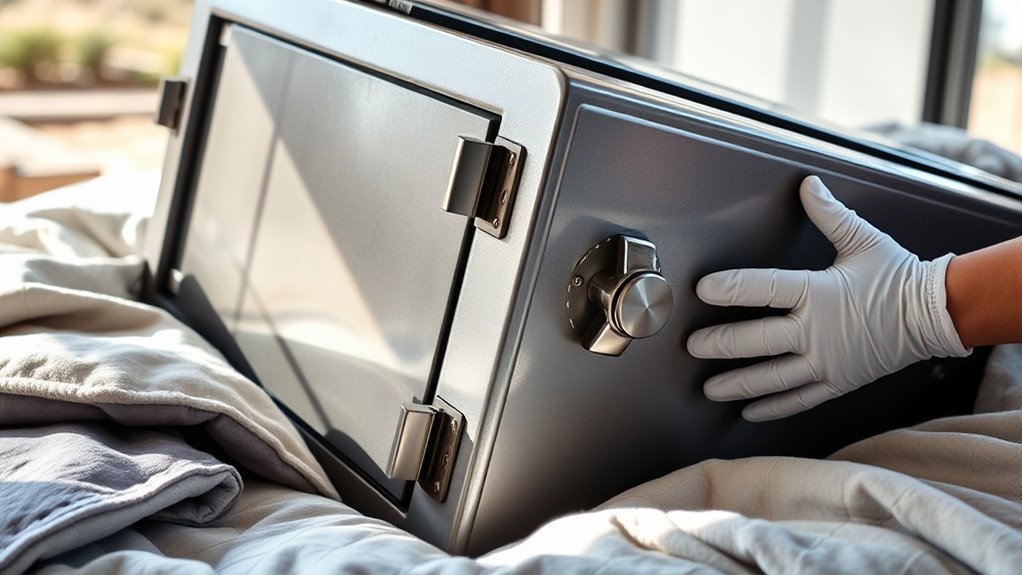
Although it’s generally best to keep your gun safe upright, you can lay it down carefully without causing damage if you take the right precautions. When you do, make sure the safe is empty to reduce weight and prevent internal damage.
Place the safe on a soft, flat surface like thick blankets or foam to protect its exterior and prevent scratches or dents. Avoid tilting the safe too far or dropping it, as sudden impacts can harm the locking mechanism or internal shelves.
Also, consider the safe’s design; some models have components that might shift or break if not kept upright. Before laying it down, check the manufacturer’s guidelines—they often specify whether your model can be laid flat safely.
How to Safely Lay or Transport Your Gun Safe
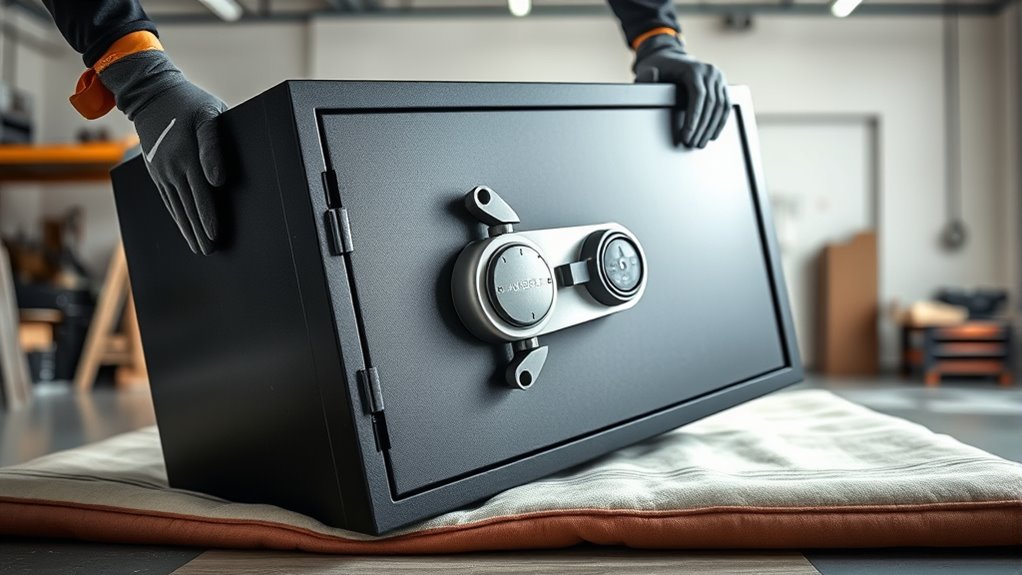
When you lay or transport your gun safe, keeping it in the right position is key to preventing damage. You’ll also want to secure it properly to avoid any shifting during transit. Taking these steps helps protect both the safe and its contents from harm.
Proper Gun Safe Positioning
If you need to lay your gun safe down or move it, it is crucial to handle it carefully to avoid damaging the locking mechanism or internal components. Proper positioning helps maintain the safe’s integrity and functionality.
Here’s how to position your gun safe safely:
- Keep it upright when possible – This prevents internal parts from shifting or breaking.
- If laying flat, do so gently – Avoid sudden drops or impacts that could jar the locking system.
- Rest on a padded surface – Use blankets or foam to cushion the safe and protect its finish.
- Keep doors and drawers closed and secured – This stops them from swinging open and damaging the interior.
Following these steps will help keep your gun safe secure and fully operational during moves or storage.
Securing During Transportation
Because gun safes are heavy and delicate, you’ll need to secure them properly during transportation to prevent damage and guarantee safety. Always use sturdy straps or ratchet tie-downs to keep the safe from shifting. Place padding like moving blankets around it to cushion any bumps.
If you’re laying the safe down, verify it’s on its back or side, never on the door. When loading, use a dolly and get help to avoid injury.
| Step | Action | Tip |
|---|---|---|
| 1 | Use ratchet straps | Tighten securely |
| 2 | Add padding | Use blankets or foam |
| 3 | Position safely | Lay on back or side |
| 4 | Use a dolly | Prevents strain |
| 5 | Get assistance | Avoid injury and damage |
Avoiding Internal Damage
Securing your gun safe during transport is just part of the process; you also need to prevent internal damage to its contents. To keep everything intact, consider these steps:
- Empty the Safe: Remove all firearms, ammo, and valuables before moving. This reduces weight and risk of damage.
- Secure Shelves and Drawers: Use tape or straps to fix internal components. This keeps them from shifting or breaking.
- Use Padding: Line the inside with foam or blankets to cushion against shocks and vibrations.
- Keep Upright When Possible: Even if you must lay it down, try to minimize the time it’s not upright to avoid misalignment of locking mechanisms.
Following these tips helps assure your gun safe and its contents stay safe during transport.
Which Internal Parts Can Get Damaged If You Lay Your Safe Down?
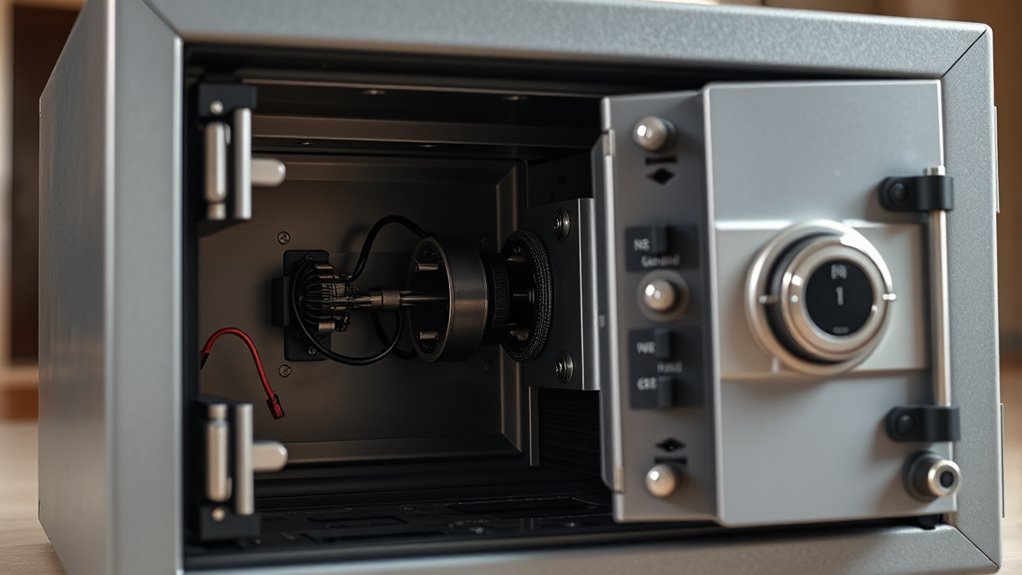
When you lay your gun safe down, certain internal components may be at risk of damage due to shifting or impact. One critical part vulnerable to damage is the locking mechanism. It can become misaligned or jammed if the safe is tilted or dropped, making it difficult to open.
The bolts and locking bars are also at risk; they may bend or break under uneven pressure. Another area to watch is the door hinges, which can warp or loosen, affecting the safe’s seal and security. Inside, shelves and racks designed to hold firearms and valuables might shift, crack, or detach, especially if the safe isn’t secured properly.
Additionally, electronic components like keypads or biometric scanners can be damaged by sudden impacts or pressure if the safe isn’t handled carefully. Being aware of these parts helps you understand why laying your safe down requires caution to avoid costly repairs or compromised security.
Why Proper Gun Safe Positioning Protects Its Security
You need to position your gun safe correctly to keep it stable and guarantee the lock mechanisms work properly. Laying it down can affect its fire resistance and compromise the safe’s integrity.
Even the weight distribution plays a key role in maintaining its security features.
Stability and Lock Mechanisms
Although it might seem harmless to lay a gun safe on its side, doing so can compromise its stability and affect how the lock mechanisms function. When a safe isn’t upright, the locking bolts and internal components may not align properly, making it easier for the lock to jam or malfunction. This can weaken your safe’s security and make it difficult to open when needed.
Here’s why keeping your gun safe upright matters:
- Lock bolts are designed to slide horizontally or vertically, so tilting can cause misalignment.
- Internal locking mechanisms rely on gravity for smooth operation.
- Stability reduces the risk of tipping or shifting, which can damage locks.
- Proper positioning ensures the safe functions as intended, maintaining security integrity.
Keep your safe upright to protect both your valuables and your peace of mind.
Impact on Fire Resistance
How does laying your gun safe on its side affect its fire resistance? When you position your safe horizontally, the fireproof materials inside may not perform as intended. Fire insulation is designed to protect contents when heat rises evenly around the safe in an upright position.
Laying it down can cause gaps or uneven coverage, reducing its ability to shield your valuables from intense heat. Additionally, fire-resistant seals around the door might not sit properly, compromising their effectiveness. This misalignment allows hot gases or flames to penetrate more easily during a fire.
To guarantee your gun safe offers maximum fire protection, it’s best to keep it upright as the manufacturer recommends. That way, you maintain the integrity of its fire-resistant design and keep your firearms secure.
Safe Weight Distribution
Because the weight inside a gun safe is carefully balanced to keep it stable, laying it on its side can disrupt that balance and increase the risk of tipping or damage. When you position your safe properly, you guarantee its security and longevity.
Here’s why you should be mindful of weight distribution:
- Internal shelves and hardware are designed to support weight vertically, not horizontally.
- Uneven weight can strain the safe’s frame and hinges, leading to structural issues.
- The locking mechanism relies on alignment that can be compromised if the safe isn’t upright.
- Proper positioning minimizes the risk of internal contents shifting, which could cause damage or malfunction.
Keeping your gun safe upright preserves its integrity and protects your firearms effectively.
Best Practices for Setting Up Your Gun Safe After Moving
Once you’ve moved your gun safe to its new location, setting it up correctly is essential to guarantee both security and functionality. First, place the safe on a flat, stable surface to assure it sits evenly. Uneven placement can affect the locking mechanism and compromise security.
Next, reconnect any electrical components, like dehumidifiers or alarms, being careful to follow manufacturer instructions. If the safe has adjustable feet or leveling bolts, use them to stabilize it firmly.
Make sure the door opens and closes smoothly without obstruction. If your safe was laid down during the move, allow time for any internal mechanisms to settle before locking it. Finally, organize your firearms and valuables inside thoughtfully, keeping heavier items at the bottom to maintain balance.
Taking these steps will help you maintain your safe’s integrity and certify it functions as intended in its new spot.
Signs Your Gun Safe Is Damaged From Poor Handling
If you’ve handled your gun safe roughly or laid it down improperly, you might notice some warning signs indicating damage. Catching these early can save you from bigger problems down the road. Here are four signs you should watch out for:
- Difficulty Opening or Closing the Door – If the door sticks or won’t latch properly, it could mean the frame is warped or the locking mechanism is misaligned.
- Visible Dents or Cracks – Check the exterior carefully. Dents, cracks, or bent panels often result from impact and can compromise the safe’s integrity.
- Unusual Noises – Grinding, scraping, or clicking sounds when operating the safe can indicate internal damage to the locking bolts or hinges.
- Misaligned Interior Shelves or Components – If shelves shift or don’t sit level, it may mean the safe was twisted or dropped, affecting the interior structure.
If you notice any of these, it’s best to inspect your safe thoroughly before continuing to use it.
Tools and Equipment to Help Move Gun Safes Safely
Although moving a gun safe can be challenging due to its weight and size, having the right tools and equipment makes the process much safer and smoother. Using proper gear not only protects your safe but also prevents injury. Essential items include heavy-duty moving straps, a sturdy dolly, furniture sliders, and protective padding.
Here’s a quick look at some key tools:
| Tool | Purpose | Tip |
|---|---|---|
| Moving Straps | Secure grip & weight distribution | Use with multiple people |
| Dolly | Easier rolling on flat surfaces | Ensure wheels are locked when stationary |
| Furniture Sliders | Glide heavy safe over floors | Place under corners |
| Protective Padding | Prevent scratches and dents | Wrap corners and edges |
When to Call Professionals for Gun Safe Moving
Having the right tools can make moving a gun safe much easier, but there are times when the job is better left to professionals. If you’re unsure about the weight, size, or complexity of your safe, calling experts is the safest choice.
Here are four situations when you should consider professional help:
- Extremely Heavy Safes: If your safe weighs over 500 pounds, professionals have the equipment to handle it safely without risk of injury or damage.
- Tight Spaces or Stairs: Maneuvering narrow hallways, tight corners, or stairs can be tricky and dangerous without experience.
- Lack of Proper Equipment: If you don’t have dollies, straps, or protective gear, it’s safer to hire pros with the right tools.
- Insurance and Liability Concerns: Professionals are insured, so if anything goes wrong, you’re protected financially.
Don’t hesitate to call in experts—they’ll save you time, stress, and potential damage.
Frequently Asked Questions
How Often Should I Service My Gun Safe?
You should service your gun safe at least once a year to guarantee the locking mechanism and hinges work smoothly. Regular checks help prevent rust and damage, keeping your firearms secure and your safe functioning properly.
Performing maintenance regularly ensures that any potential issues are caught early. This proactive approach helps avoid costly repairs and enhances the longevity of your safe.
In addition to servicing, keep the interior clean and dry to prevent moisture buildup. Proper care will maintain the safe’s integrity and protect your valuables effectively.
What Is the Average Lifespan of a Gun Safe?
You can expect your gun safe to last 20 to 40 years or more, depending on the quality and maintenance.
Regular care and avoiding moisture will help guarantee it stays secure and functional for decades.
Can a Gun Safe Protect Against Fire Damage?
Imagine your valuables surrounded by a fortress of steel and fire-resistant insulation—yes, a quality gun safe can protect against fire damage.
Just make sure it’s rated for high temperatures and duration to keep your items safe.
Are Biometric Locks Reliable for Gun Safes?
Yes, biometric locks are reliable for gun safes, but you should expect occasional fingerprint reading issues due to dirt or moisture. Keep the scanner clean, and you’ll enjoy quick, secure access without hassle.
Regular maintenance helps ensure consistent performance. With proper care, these locks provide a convenient and secure way to protect your firearms.
How Do Humidity Levels Affect My Gun Safe?
You know what they say, “An ounce of prevention is worth a pound of cure.” High humidity can cause rust and damage inside your gun safe, so you’ll want to use dehumidifiers or moisture absorbers to keep your firearms protected.
Conclusion
Laying your gun safe down is like setting a mighty oak on its side—if done carelessly, its roots may break and weaken its strength. You want to keep your safe upright, preserving its integrity and security, just as you’d protect a tree’s deep roots. Handle it with care, use the right tools, and when in doubt, call the pros.
After all, your safe is the guardian of your most valued treasures. Proper handling ensures the safe remains secure and functional. Always prioritize safety and stability when moving or positioning your gun safe.