Are Nail Guns Safe and How to Use Them Without Injury
You can use nail guns safely every day if you follow proper safety protocols and wear the right protective gear like safety glasses, hearing protection, and gloves. Nail gun safety is crucial to prevent accidents and ensure a smooth working experience.
Always handle the tool carefully—never point it at yourself or others—and keep it well-maintained.
Be alert to avoid accidental trigger pulls and never bypass safety features. Taking these steps greatly reduces injury risks.
Keep paying attention, and you’ll find out how to work confidently and safely with nail guns.
Key Takeaways
- Nail guns are safe when used with proper training, safety gear, and adherence to manufacturer guidelines.
- Always wear impact-resistant eyewear, hearing protection, and work gloves to minimize injury risks.
- Use safety features like trigger locks and contact safety tips, and never disable or bypass them.
- Maintain alertness, avoid distractions, and never point the nail gun at yourself or others, loaded or unloaded.
- Regularly inspect, clean, and maintain the nail gun to ensure proper functioning and prevent accidental firing.
Are Nail Guns Safe to Use Every Day?
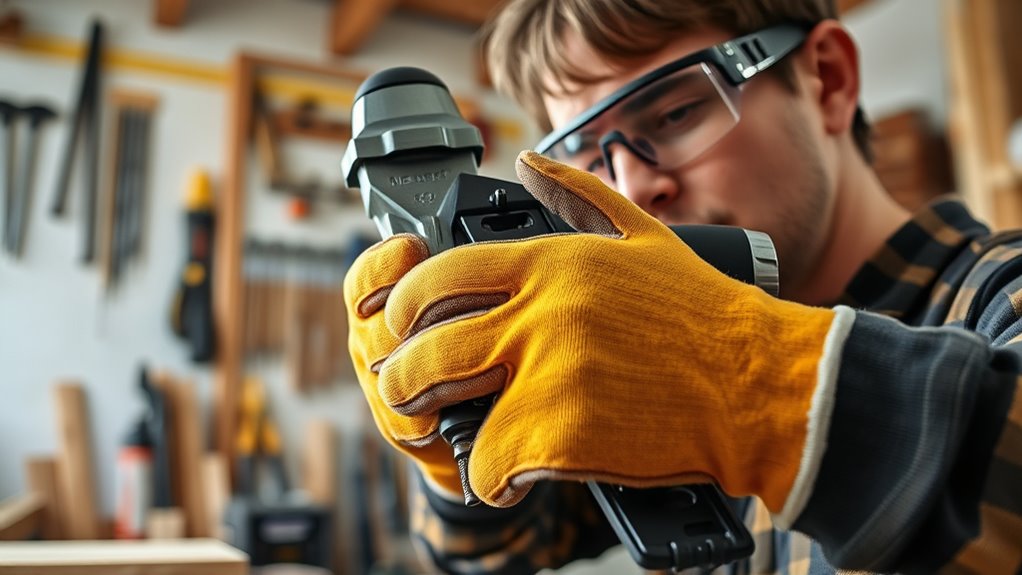
Although nail guns are powerful tools designed to improve efficiency, you might wonder if using them every day is truly safe. The good news is, yes, you can use nail guns daily as long as you follow proper safety protocols and maintain the tool well. Regular use demands that you stay alert and never become complacent, as even experienced users can make mistakes.
Ensuring your nail gun has safety features like a trigger lock and contact safety tip reduces risks considerably. You should also wear protective gear such as safety glasses and hearing protection every time you use the tool. Proper training and familiarizing yourself with the nail gun’s operation manual are essential, so you know exactly how it works before each use.
Finally, inspect your nail gun regularly for any damage or malfunctions. By adopting these habits, you can safely integrate nail guns into your daily routine without unnecessary risk.
Common Nail Gun Injuries and Causes
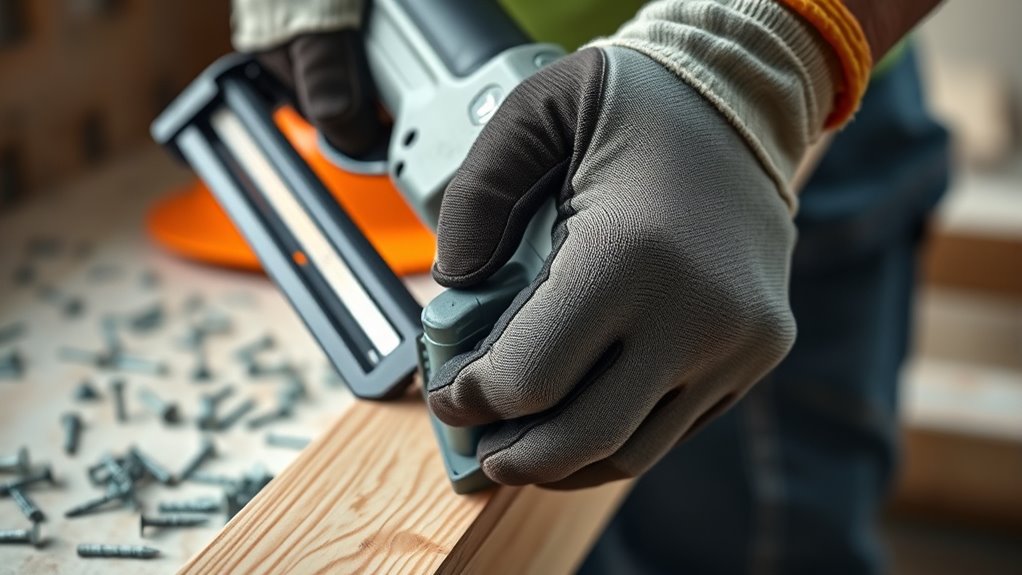
You need to know the most frequent types of injuries caused by nail guns to stay safe. Many accidents happen because of common triggers or when safety mechanisms fail.
Understanding these causes will help you prevent serious harm.
Frequent Injury Types
How do nail gun injuries typically happen, and what should you watch out for? The most frequent injuries involve puncture wounds to your hands, fingers, or legs when the nail gun misfires or slips. You could also experience eye injuries from flying debris or nails if you don’t wear proper protection.
Sometimes, nails can ricochet off hard surfaces, causing unexpected harm. Another common injury is muscle strain or repetitive stress from improper handling or prolonged use. Skin punctures are usually painful and can lead to infections if untreated.
Nail guns can also cause severe injuries if nails penetrate deeply, potentially affecting nerves or bones. Being aware of these injury types helps you stay cautious and handle the tool safely every time.
Common Trigger Causes
Since nail guns are powerful tools, their triggers need careful handling to prevent accidents. Many injuries happen because of accidental or improper trigger use. You might accidentally fire the nail gun if you’re distracted, rush your work, or don’t maintain a proper grip.
Sometimes, a bump or slip causes unintentional triggering too. Understanding these common causes helps you stay alert and avoid harm.
| Cause | Description |
|---|---|
| Accidental Trigger | Pressing trigger without aim |
| Distraction | Losing focus during operation |
| Improper Grip | Holding tool incorrectly |
| Tool Bump | Unintended contact causing fire |
Keep your eyes on the task and your grip firm to minimize these risks while working with nail guns.
Safety Mechanism Failures
Although safety mechanisms are designed to prevent accidental firing, failures in these systems can lead to serious injuries when using nail guns. If the safety tip or contact element malfunctions, the nail gun might fire unexpectedly, risking puncture wounds or worse. You need to regularly inspect and maintain these components to verify they work properly.
Dirt, wear, or damage can cause safety features to fail, making the tool unsafe. Never bypass or disable safety mechanisms, even if you think it’ll speed up your work—that shortcut can end badly. Always test the nail gun on scrap material before starting, so you can catch any issues early.
Staying alert and respecting the tool’s safety systems is key to preventing accidents caused by mechanical failures.
Essential Safety Gear for Nail Gun Users
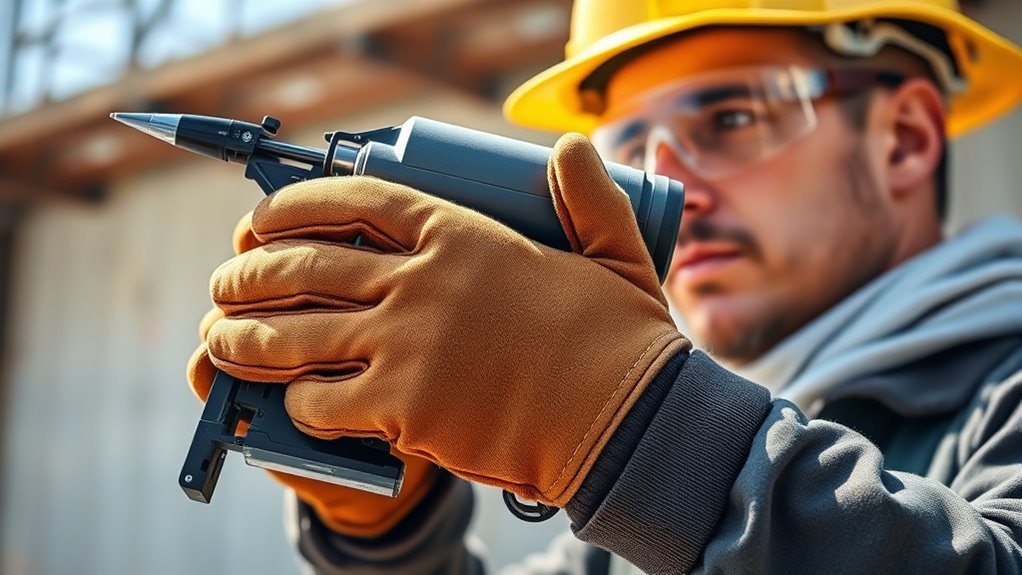
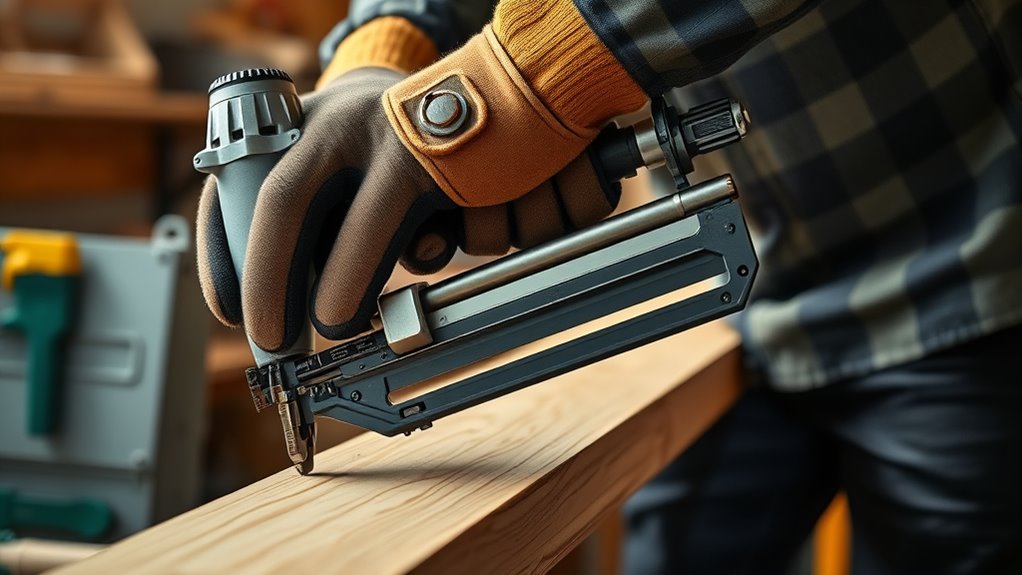
When using a nail gun, you’ll want to wear protective eyewear to shield your eyes from flying debris. Don’t forget hearing protection, since the noise can be damaging over time. Durable work gloves will also help protect your hands from accidental injuries.
Protective Eyewear Importance
If you want to protect your eyes while using a nail gun, wearing proper eyewear is non-negotiable. Nail guns can eject debris, nails, or wood splinters at high speeds, posing serious risks to your vision.
You need eyewear that’s specifically designed to shield your eyes from these dangers.
When choosing protective eyewear, look for:
- Impact-resistant lenses (polycarbonate)
- Wraparound design for side protection
- Anti-fog coating to maintain clear vision
- Comfortable fit for extended use
- Compliance with ANSI Z87.1 safety standards
Hearing Protection Necessity
Why should you never skip hearing protection while using a nail gun? Because these tools produce loud, sharp noises that can easily damage your hearing over time. Even short bursts of noise can cause permanent hearing loss or tinnitus.
Wearing proper hearing protection, like earplugs or earmuffs, considerably reduces the risk by dampening harmful sound levels. It’s not just about comfort—it’s about preserving your long-term ear health. Make it a habit to put on hearing protection before you start working.
This simple step keeps you safe without slowing down your job. Don’t underestimate the noise; nail guns are loud, and your ears deserve the same care as your eyes or hands when you’re on the job site.
Durable Work Gloves
Although your hands might feel tough enough to handle any task, durable work gloves are essential when using a nail gun to protect you from accidental punctures, abrasions, and splinters. These gloves act as a vital barrier between your skin and sharp materials or misfired nails. When choosing gloves, look for features that enhance safety and comfort.
Here’s what you should consider:
- Cut-resistant material to prevent punctures
- Good grip to handle tools securely
- Breathability to keep hands comfortable
- Flexibility allowing easy movement
- Durable fabric that withstands wear
Wearing the right gloves helps reduce injuries and guarantees you maintain control while working. Don’t skip this simple yet effective safety gear—it could save your fingers.
Step-by-Step Guide to Safe Nail Gun Use
Before you start using a nail gun, you’ll want to familiarize yourself with the essential safety steps to prevent accidents and injuries. Always wear safety goggles and durable gloves. Check that the nail gun is in proper working order and loaded correctly before use.
Keep your hands away from the nailing area, and never point the gun at yourself or others. Use the correct nail size for your project and verify the trigger is only engaged when the gun is pressed against the surface.
| Step | Action |
|---|---|
| 1. Prepare | Wear protective gear and inspect the tool. |
| 2. Load | Insert nails securely and check alignment. |
| 3. Position | Hold the gun firmly and align with surface. |
| 4. Fire & Release | Press safety contact, pull trigger, release. |
Following these steps will help you use a nail gun safely and efficiently every time.
How to Maintain Your Nail Gun for Safety
To keep your nail gun working safely and effectively, you’ll need to perform regular maintenance. Neglecting this can lead to malfunctions or accidents. Start by cleaning your nail gun after each use to remove dust, debris, and residue.
Check for loose screws or worn parts that might affect its operation. Lubricate moving components with the manufacturer-recommended oil to prevent sticking or jamming. Always inspect your air compressor hose and fittings for leaks or damage if you use a pneumatic nail gun.
Here are five key maintenance tips to keep your nail gun safe:
- Clean the magazine and feed system regularly
- Tighten screws and bolts as needed
- Use proper lubrication on moving parts
- Replace worn or damaged components promptly
- Store the nail gun in a dry, secure place
Tips to Prevent Nail Gun Accidents on the Job
Maintaining your nail gun properly is only part of staying safe on the job. To prevent accidents, always wear appropriate personal protective equipment, like safety glasses and hearing protection. Never disable safety features or remove guards—they’re there to protect you.
Before you start, inspect your work area for hazards and keep it clean to avoid tripping or distractions. Use the correct nails for your gun and never point it at yourself or others, even if it feels unloaded. Always engage the safety lock when not in use, and avoid “bump” firing unless you’re trained to do so.
Keep your fingers away from the trigger until you’re ready to fire. If you feel fatigued or distracted, take a break—most accidents happen when you’re not fully focused. By following these tips, you’ll considerably reduce the risk of injury and ensure your nail gun work stays safe and efficient.
Frequently Asked Questions
Can Nail Guns Be Used on Different Materials Safely?
Yes, you can safely use nail guns on different materials by adjusting the pressure and choosing the right nails. Always wear protective gear, follow instructions, and test on a scrap piece to avoid damage or injury.
What Types of Nails Are Compatible With Most Nail Guns?
You’ll find most nail guns work with common nails like brads, finish nails, and framing nails. Just make sure to check your gun’s specifications so you don’t use the wrong size or type, avoiding jams and damage.
Are Cordless Nail Guns Less Dangerous Than Pneumatic Ones?
You might be surprised to learn that over 70% of nail gun injuries involve pneumatic models. Cordless nail guns are generally less dangerous since they don’t rely on high-pressure air, reducing accidental discharge risks considerably.
How Do Weather Conditions Affect Nail Gun Safety?
You’ll find that wet or cold weather can make surfaces slippery and nails harder to drive, increasing injury risk. Always check conditions, wear proper gear, and avoid using nail guns in extreme weather to stay safe.
Can Nail Guns Be Used for DIY Projects at Home?
Thinking about tackling a home project? Yes, you can definitely use nail guns for DIY tasks. Just make sure you follow safety guidelines, wear protective gear, and practice proper handling to avoid any accidents or injuries.
Conclusion
Nail guns can be safe if you use them correctly, but remember, over 37,000 nail gun injuries happen annually in the U.S. alone. That’s why wearing essential safety gear and following proper steps is vital. Always stay alert, maintain your tool, and never skip safety checks.
By doing this, you’re protecting yourself and those around you. Use your nail gun smartly, and you’ll avoid becoming part of that statistic. Prioritizing nail gun safety is key to preventing injury and ensuring a secure work environment.