Do You Have to Sight Red Dot
Yes, you need to sight your red dot to guarantee the dot matches where your bullets actually hit. Properly zeroing your red dot sight is essential for accuracy and performance. Without zeroing it, your shots won’t be precise, wasting rounds and effort.
Sighting involves adjusting windage and elevation to align the reticle with your point of impact. This process ensures your shots consistently land where you aim. It’s key for consistency and precision, especially when conditions or ammo change.
If you want to get the best from your red dot, understanding how and when to zero it is essential. Proper sighting maximizes your shooting effectiveness and confidence.
Key Takeaways
- Yes, sighting a red dot is essential to align the reticle with the bullet’s actual point of impact.
- Proper zeroing ensures accuracy and consistency for different firearms and ammunition.
- Sighting compensates for environmental factors like wind and bullet drop.
- Without sighting, shots may miss, causing wasted ammunition and reduced effectiveness.
- Regular zero checks maintain precision after mounting, handling, or extended use.
What Does It Mean to Sight a Red Dot Sight?
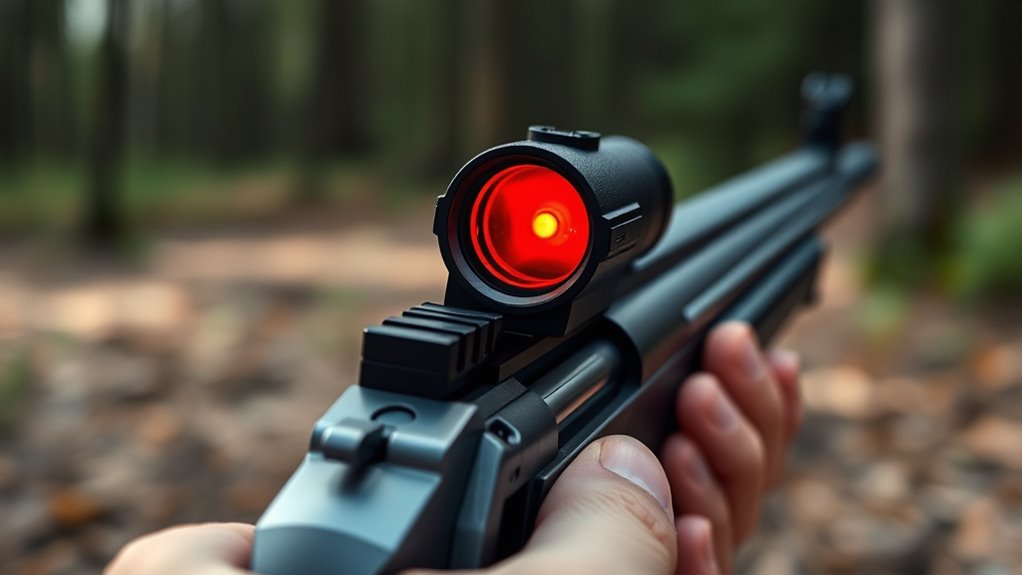
Before you start using a red dot sight effectively, you need to understand what it means to sight it properly. Sighting your red dot means aligning the sight’s reticle—the red dot itself—with the point where your bullets will actually hit. When you look through the sight, the dot should represent the exact spot you want to shoot, not just where it appears to be.
This alignment ensures your shots are accurate at your intended target distance. Sighting involves adjusting the windage (left-right) and elevation (up-down) settings on the sight to match your firearm’s bullet trajectory. It’s not just about slapping the sight on and hoping for the best; you’re fine-tuning the sight to compensate for real-world factors like bullet drop and drift.
Once you understand this concept, you’re better prepared to make your red dot an effective aiming tool.
Why You Must Zero Your Red Dot Sight First
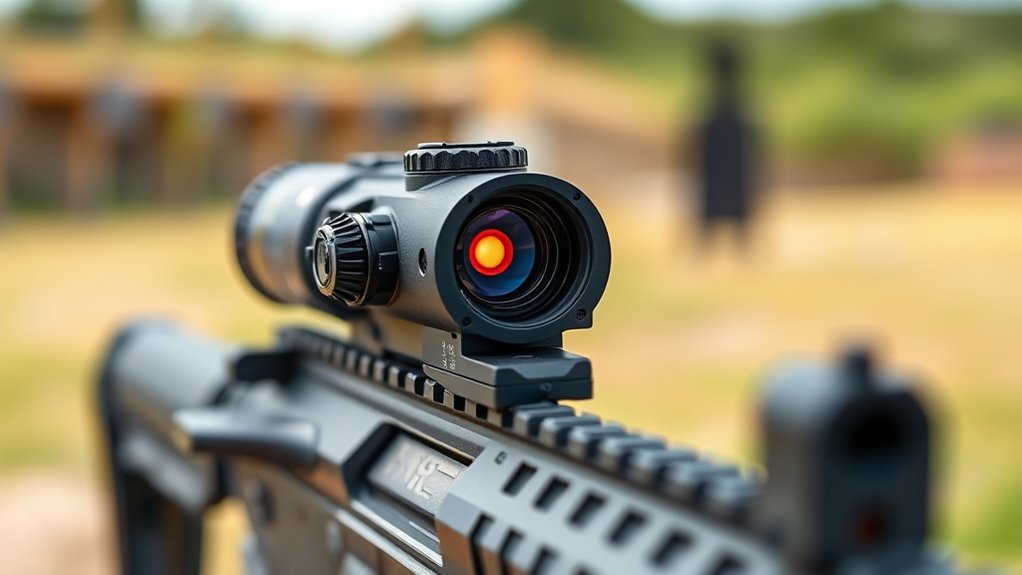
Even if your red dot sight looks perfectly aligned, you must zero it to guarantee your shots hit exactly where you aim. Zeroing adjusts your sight so the red dot reflects the true point of impact, accounting for factors like your firearm’s unique characteristics and the specific ammunition you use. Without zeroing, your shots might consistently land off-target, even if the dot appears centered.
This process ensures consistency and accuracy, which is vital whether you’re at the range or in a critical situation. Additionally, zeroing compensates for environmental variables and mounting differences that can subtly shift your aim. Skipping this step means you’re fundamentally guessing, which can lead to frustration and wasted rounds.
How to Sight In Your Red Dot Sight Step-by-Step
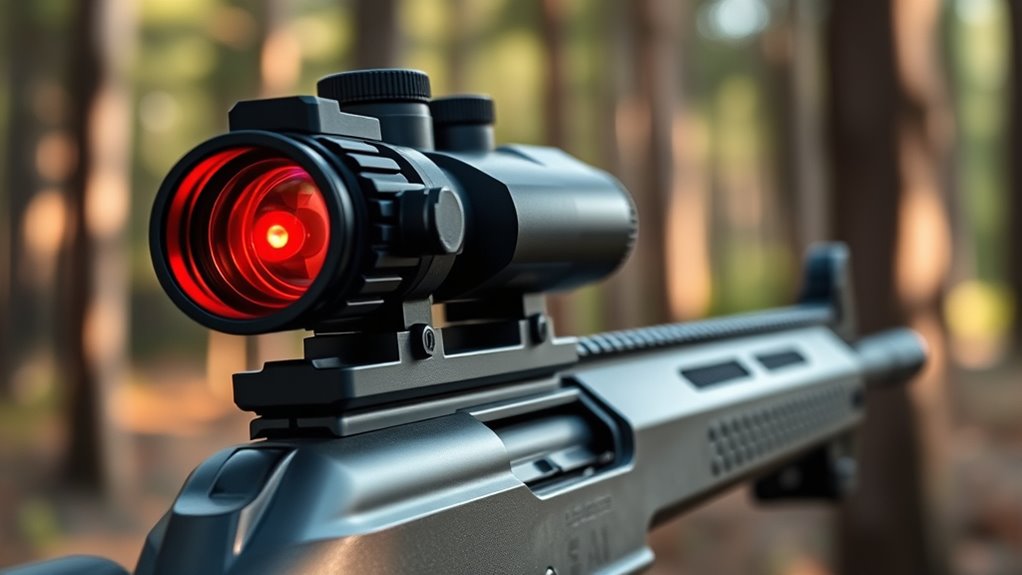
Once you’ve understood the importance of zeroing your red dot sight, the next step is to learn how to sight it in properly. Here’s a straightforward process you can follow:
- Set Up Your Target: Place a target at your desired zeroing distance, typically 25 yards for handguns or 50-100 yards for rifles.
- Stabilize Your Weapon: Use a rest or bench to steady your firearm, ensuring consistency with every shot.
- Adjust Windage and Elevation: Fire a group of three shots, then adjust the red dot’s windage (left/right) and elevation (up/down) turrets based on where the shots landed relative to your aim point.
- Confirm Zero: Repeat shooting and adjusting until your shots consistently hit the center of the target.
Mistakes to Avoid When Sighting Your Red Dot
Although sighting your red dot might seem straightforward, there are common mistakes that can throw off your accuracy and cause frustration. First, don’t rush the process—take your time to guarantee each adjustment is precise. Avoid zeroing at an unrealistic distance; pick a range that matches your typical shooting scenario.
Also, don’t overlook proper mounting; a loosely mounted sight will shift and ruin your zero. Make sure your firearm is stable during sighting—using a rest or sandbag helps prevent movement. Another mistake is ignoring the importance of consistent eye relief and sight alignment; even though red dots allow flexibility, inconsistent positioning can affect your point of impact.
Finally, don’t forget to check your sight’s brightness settings; too bright or too dim can obscure the dot or your target. By steering clear of these errors, you’ll save time and ensure your red dot performs reliably when it counts.
How Often Should You Check Your Red Dot Zero?
Since your red dot sight can be affected by recoil, handling, and environmental factors, it’s important to check its zero regularly to maintain accuracy. How often you do this depends on several factors, but establishing a routine is key to consistent performance.
Here’s a simple guideline to follow:
- After initial installation – Always verify zero before your first use.
- After any significant impact – Dropping or rough handling can shift the sight.
- Before each shooting session – Quick checks help catch any unnoticed shifts.
- Periodically during extended use – For example, every few hundred rounds to ensure sustained accuracy.
If you notice any change in point of impact, don’t wait; re-zero immediately. Maintaining your red dot’s zero ensures you’ll have reliable accuracy when it counts, saving you time and frustration in critical moments.
Can You Use a Red Dot Sight Without Zeroing?
Even if you don’t zero your red dot sight, you can still use it, but your accuracy will likely suffer. Without zeroing, the red dot won’t align precisely with your point of impact, which means your shots may land off-target. You might get lucky at very close ranges, but as distances increase, the discrepancy grows, making consistent accuracy difficult.
Zeroing calibrates the red dot to match your firearm’s trajectory, so skipping this step undermines reliability. If you’re in a pinch and can’t zero, you can still aim using the red dot for faster target acquisition compared to iron sights. Just be aware that you’ll need to compensate for the offset by adjusting your aim or guessing the point of impact.
For serious shooting, zeroing is vital. It guarantees your red dot provides the precision you expect, turning fast aiming into accurate shooting. So, while you can use it without zeroing, it’s not recommended if you want dependable results.
Frequently Asked Questions
What Types of Red Dot Sights Are Best for Beginners?
You’ll want to start with simple, durable red dot sights that offer easy zeroing and clear reticles. Look for models with adjustable brightness, reliable battery life, and beginner-friendly features like fixed mounts and straightforward controls.
These features help new users get accustomed to using red dot sights without unnecessary complications. Focus on sights that provide consistent performance and ease of use. This approach ensures a smoother learning curve and better shooting experience.
How Does Battery Life Affect Red Dot Sight Performance?
Battery life affects red dot sight performance by ensuring consistent brightness, maintaining reliability, and preventing sudden failures.
If your battery dies, your sight dims or shuts off, so you’ll want long-lasting power and easy replacements.
Can Red Dot Sights Be Used in Low-Light Conditions?
Yes, you can use red dot sights in low-light conditions since their illuminated reticle stays visible. Just make sure to adjust brightness settings to avoid glare or washout, ensuring clear targeting even in dim environments.
Proper brightness adjustment is key to maintaining visibility without overwhelming your vision. This helps you keep a clear sight picture and improves accuracy.
In addition, some red dot sights come with automatic brightness settings that adapt to ambient light, making them even more convenient for low-light use.
What Are the Main Differences Between Red Dot and Holographic Sights?
Think of red dot sights as simple flashlights, while holographic sights are like laser shows. You’ll find red dots use LED reflections; holographics project a hologram, offering quicker target acquisition and better accuracy in complex environments.
Are Red Dot Sights Waterproof or Weather-Resistant?
Most red dot sights are weather-resistant or waterproof to some degree, so you don’t have to worry about rain or moisture damaging them.
Just check the manufacturer’s specs to be sure it meets your needs.
Conclusion
Imagine aiming at a target and your red dot perfectly aligns—like fate guiding your shot. That’s what sighting your red dot does; it’s not just a step, it’s the essential link between you and your aim.
Skipping zeroing is like walking blindfolded—you might hit, but probably won’t. So, take the time to sight your red dot carefully.
It’s the small adjustment that turns coincidence into consistent success every time you shoot. Remember, do you have to sight red dot? Absolutely—it’s the key to accuracy and reliable performance.