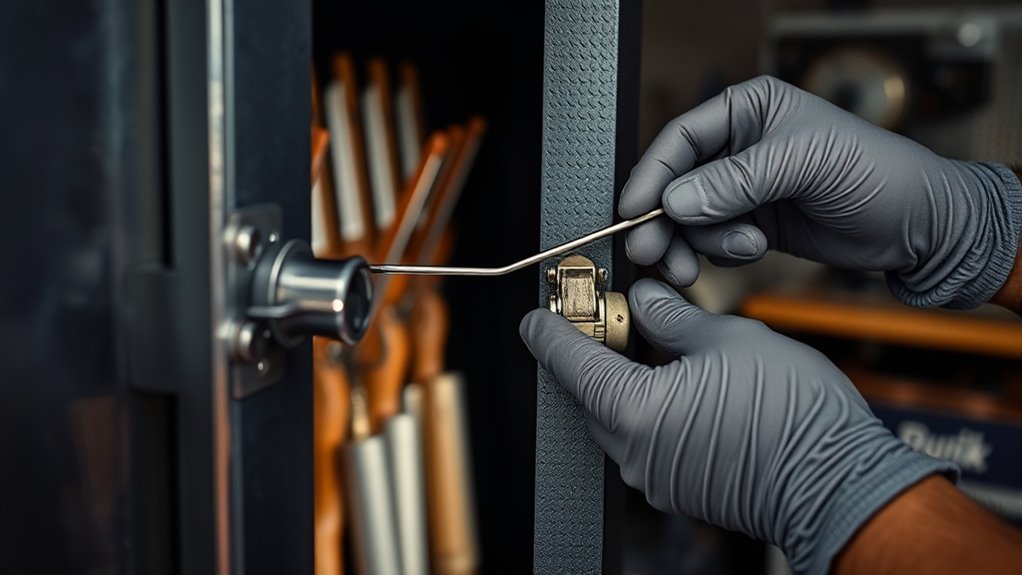
How to Open a Gun Safe Without a Key Using Step-by-Step Methods
If you don’t have the key to open your gun safe, there are several effective methods to try before considering more drastic measures. Start by checking for a factory reset code or a hidden reset button inside the battery compartment to override the lock. These options can often help bypass electronic locking mechanisms without causing damage.
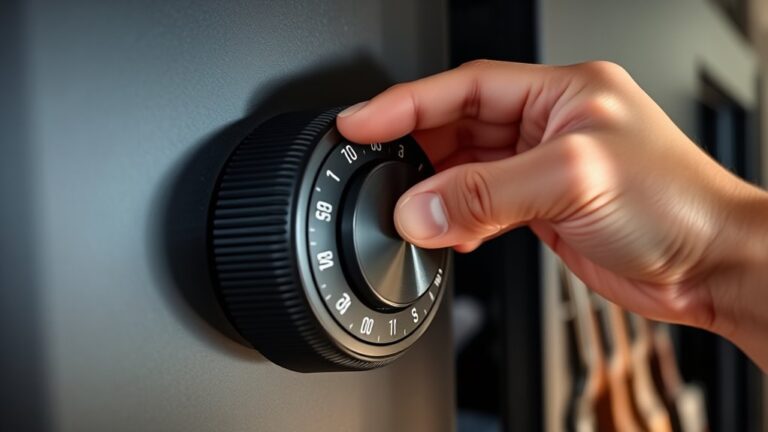
For mechanical safes, try systematically manipulating the dial by feeling for clicks or resistance at possible numbers. This tactile approach can help you identify the correct combination through careful trial and error.
Electronic safes might also allow you to use a 9V battery to power the keypad temporarily. This can help if the batteries inside the safe have died, making the lock unresponsive.
If all else fails, drilling is a last resort, but it’s best to seek expert help before attempting this. Keep reading to explore these methods in detail.
Key Takeaways
- Locate and use the factory reset code or press the reset button inside the battery compartment if available.
- Manipulate the mechanical dial by rotating it with patience, listening for subtle clicks to find the combination.
- For electronic safes, connect a 9V battery to the override terminals to power the lock and enter the default or last known code.
- Identify the safe type and lock mechanism to select the appropriate bypass or override method effectively.
- If all else fails, consider drilling at recommended points or contact a professional locksmith for expert assistance.
Use Factory Reset Codes and Overrides to Open Your Gun Safe
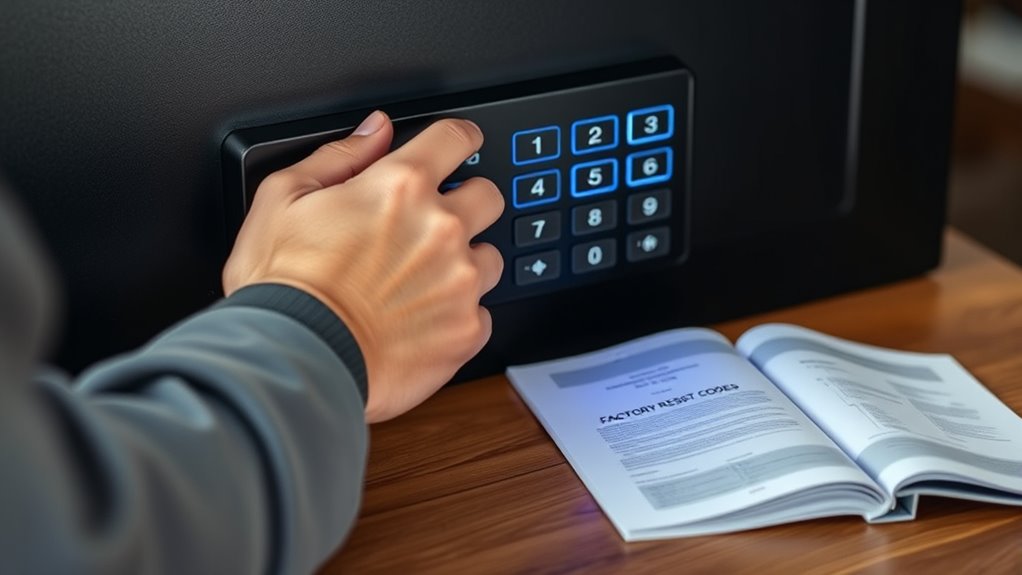
If you’ve lost your gun safe key, you might still be able to open it using factory reset codes or override options. Many gun safes come with a default factory code that allows you to reset the lock or bypass the lost key. Check your safe’s manual or the manufacturer’s website for this code.
Sometimes, a reset button inside the battery compartment can be pressed to initiate the override process. Additionally, some safes include an emergency override key hidden behind a removable panel or under the keypad. If your safe has an electronic lock, there might be a sequence of buttons to press that temporarily disables the lock.
Manipulate the Gun Safe Dial to Crack the Combination Lock
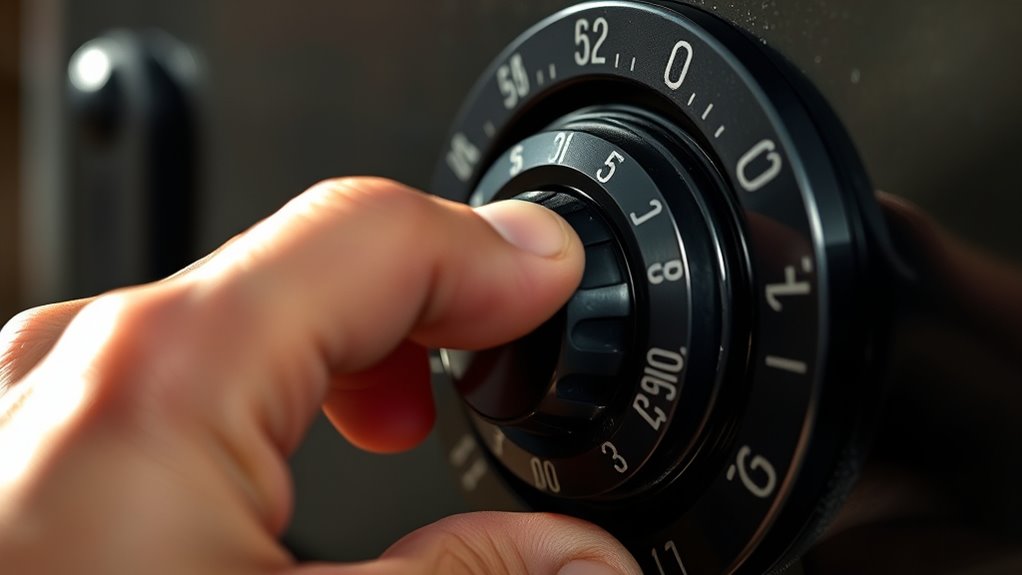
Although cracking a combination lock can be challenging, understanding how to manipulate the dial effectively can help you gain access to your gun safe without a key. The process requires patience and a methodical approach. Start by turning the dial several full rotations to reset the lock.
Then, slowly turn the dial clockwise and pay attention to any subtle clicks or resistance changes indicating the correct numbers.
Here’s a simple method to try:
- Rotate the dial clockwise, stopping at potential first numbers where you feel a notch.
- Turn the dial counterclockwise, passing the first number once, then stop at possible second numbers.
- Finally, rotate clockwise again to find the third number by testing for subtle feedback.
Open Electronic Gun Safes Without a Key or Code
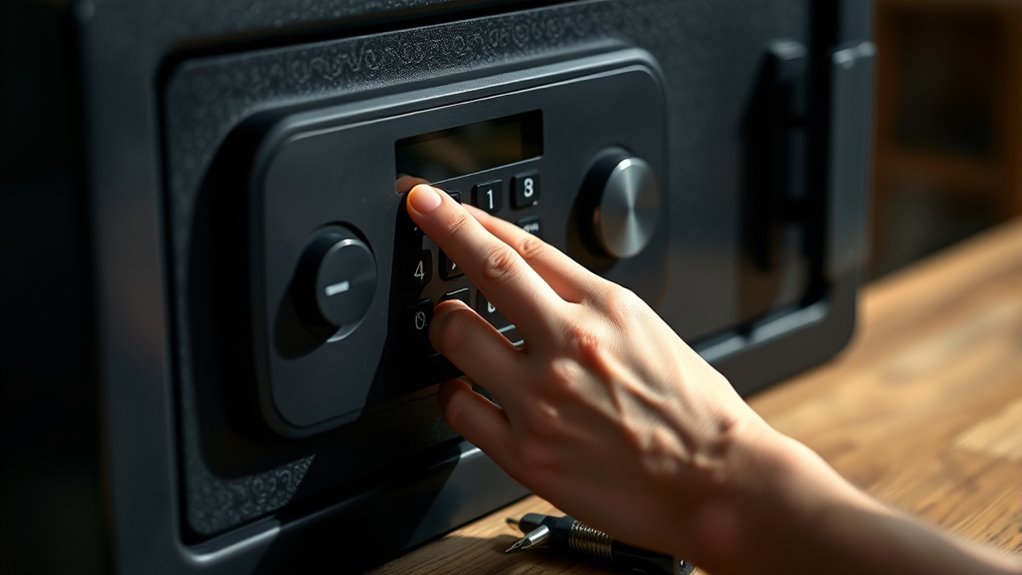
If you’ve lost both the key and code to your electronic gun safe, don’t panic. You can try resetting the electronic lock or use battery override methods to regain access. These options can help you open the safe without causing damage.
Resetting The Electronic Lock
Wondering how to regain access when you’ve lost both the key and code to an electronic gun safe? Resetting the electronic lock might be your solution. This process varies by model but generally involves accessing the lock’s reset button or panel inside the safe.
Here’s how you can approach it:
- Locate the reset button, often inside the door frame or near the battery compartment.
- Press and hold the reset button until you hear a beep or see a light indicator.
- Enter a new access code following the manufacturer’s instructions.
Using Battery Override Methods
When your electronic gun safe’s batteries die and you don’t have the key or code, using battery override methods can help you get inside without damaging your safe. Most safes have an external battery terminal or a hidden backup battery compartment allowing you to power the lock temporarily.
You can use a 9V battery to jump-start the system and enter your code or trigger the override.
| Step | Description |
|---|---|
| Locate Battery Terminals | Usually near the keypad or inside door |
| Connect 9V Battery | Attach to terminals to power the lock |
| Enter Override Code | Use default or previously set code |
| Open Safe | The lock should disengage |
| Replace Batteries | Install new batteries to avoid repeats |
This method’s quick and safe if you follow the manufacturer’s instructions carefully.
Identify Your Gun Safe Type and Lock Mechanism for Best Results
Before attempting to open your gun safe without a key, you’ll need to determine the type of safe and the lock mechanism it uses. This step is vital because different safes require different approaches, and knowing your safe’s specifics can save you time and prevent damage.
First, identify the safe type—whether it’s a wall safe, floor safe, or freestanding model. Each has unique features affecting access strategies.
Next, examine the lock mechanism. Common types include:
- Mechanical dial locks: Traditional combination dials requiring precise manipulation
- Electronic keypad locks: Digital codes, sometimes with backup keys or battery overrides
- Biometric locks: Fingerprint scanners or other biometric readers needing specific bypass methods
Use Gun Safe Drilling as a Last Resort to Regain Access
If you’ve tried every other option and still can’t open your gun safe, drilling might be your only choice. You’ll need to know exactly where and how to drill to avoid causing unnecessary damage.
Keep in mind, this method should only be used as a last resort to regain access safely.
When To Consider Drilling
Although drilling your gun safe should be a last resort, you might have no other choice if all other methods to regain access fail. It’s time to contemplate drilling when you’re locked out with no spare keys, forgotten combinations, or malfunctioning electronic locks.
Before you drill, make sure you’ve exhausted options like contacting the manufacturer or using lock-picking tools. Drilling can permanently damage your safe, so weigh the consequences carefully.
Think about drilling when:
- You’ve tried every non-destructive method without success.
- There’s an urgent need to access the contents, such as in an emergency.
- Professional locksmiths confirm drilling is the only option left.
Safe Drilling Techniques
When you’ve decided that drilling is your only option, it’s essential to approach the process carefully to avoid unnecessary damage. First, identify the safe’s model and locate the drill points recommended by the manufacturer to prevent harming internal mechanisms. Use a drill bit designed for metal, starting with a small pilot hole before moving to a larger size.
Maintain steady pressure and avoid overheating the drill bit. Wear safety goggles and gloves to protect yourself from metal shavings. Once you’ve drilled through the safe’s locking mechanism, you can manipulate the lock or bolt to open it.
How to Get Expert Help for Your Gun Safe Lockout
Since gun safes are designed to be highly secure, trying to open one without the key can quickly become frustrating and risky. When you’re locked out, getting expert help is often the safest and most efficient option. Professional locksmiths have the tools and skills to open your safe without causing damage, saving you time and stress.
Gun safes are tough to open without keys; expert locksmiths provide safe, damage-free access.
Here’s how to get expert help for your gun safe lockout:
- Find a certified locksmith: Look for professionals experienced in gun safes and with positive reviews.
- Verify credentials and insurance: Ensure the locksmith is licensed and insured to protect your property.
- Prepare proof of ownership: Have documentation ready to prove you own the safe before they assist you.
Prevent Future Lockouts and Safeguard Access to Your Gun Safe
To avoid the frustration and risk of being locked out again, it’s important to take proactive steps to safeguard access to your gun safe. First, consider creating a backup access method, like a secondary key hidden in a secure spot or a trusted person who knows the combination. Regularly update and memorize your combination to prevent forgetting it.
You might also want to invest in a safe with biometric access or a digital keypad that allows easy code changes. Keep a record of the safe’s serial number and lock type in a secure location separate from the safe itself; this info can be crucial if you need locksmith assistance. Finally, avoid storing the key or combination in obvious or vulnerable places.
Frequently Asked Questions
What Types of Guns Are Best Stored in a Gun Safe?
You should store handguns, rifles, and shotguns in a gun safe to protect them from theft, damage, and unauthorized access.
It’ll keep your firearms secure, organized, and in good condition for when you need them.
How Often Should I Clean and Maintain My Gun Safe?
You should clean and maintain your gun safe at least twice a year, or more if you live in humid areas.
It’s easy to forget, but staying consistent protects your firearms and gives you peace of mind.
Can a Gun Safe Protect Against Fire and Water Damage?
Yes, your gun safe can protect against fire and water damage if it’s rated for those hazards. Look for safes with fireproof and waterproof certifications to guarantee your firearms stay safe in emergencies.
Are Biometric Gun Safes More Secure Than Traditional Locks?
Biometric safes are like having a digital lock and key combo; they’re generally more secure than traditional locks because you can’t lose your fingerprint.
But remember, tech can glitch, so always have a backup plan ready.
What Legal Requirements Exist for Owning a Gun Safe?
You’ll need to follow local laws, which often require secure storage to prevent unauthorized access, especially if children are involved. Some states mandate locking devices or safes, so check your area’s specific gun storage regulations carefully.
Ensuring compliance helps promote safety and reduces the risk of accidents or theft. Always stay updated on any changes in legislation that might affect your responsibilities as a gun owner. Proper storage is a key part of responsible gun ownership.
Conclusion
Now that you know these steps, you’re just one move away from opening your gun safe without a key. But remember, some methods require patience and caution—rushing could cause damage or lock you out even longer.
If you hit a dead end, don’t panic; expert help is always available. Keep these strategies in mind, and you’ll regain access before you know it. Just be careful—your safe’s secrets aren’t giving up that easily.
By following these step-by-step methods, you can successfully open a gun safe without a key. Stay calm, work carefully, and use the right techniques to avoid damage. With persistence and proper guidance, you’ll unlock your safe and secure your valuables safely.