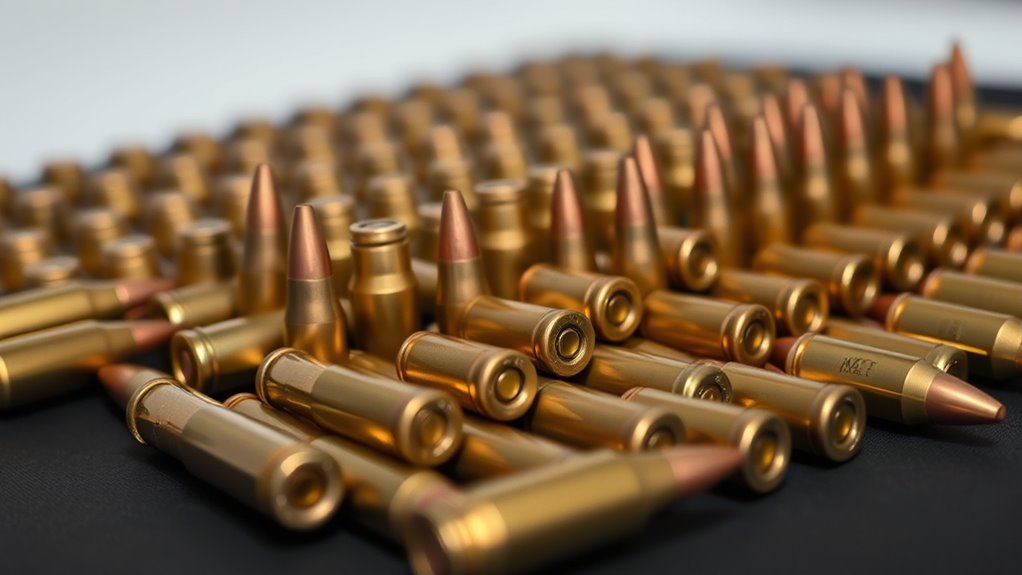
What Does NATO Mean in Ammo?
When you see NATO in ammo, it means the cartridges meet strict standards set by NATO to guarantee they perform reliably and safely across various firearms used by member countries.
NATO ammo standards ensure compatibility, reliability, and safety across different weapons systems. This standardization is crucial for military forces and also informs civilian shooters about quality and performance.
These standards make sure your rounds fit properly, reduce malfunctions, and deliver consistent ballistics even in tough conditions.
Knowing this helps you understand compatibility and quality differences when selecting ammunition. Keep exploring, and you’ll uncover how these standards affect everything from military use to civilian buying choices.
Key Takeaways
- NATO ammo refers to cartridges standardized by NATO for consistent use across member countries.
- It meets strict dimensions, performance, and quality control standards to ensure firearm compatibility.
- NATO standardization guarantees reliable feeding, predictable ballistics, and safety under extreme conditions.
- These rounds facilitate interoperability and streamlined logistics among NATO forces during joint operations.
- NATO ammo differs from civilian rounds by having tighter manufacturing tolerances and uniform powder charges.
NATO Ammo: What It Means and Why It Matters
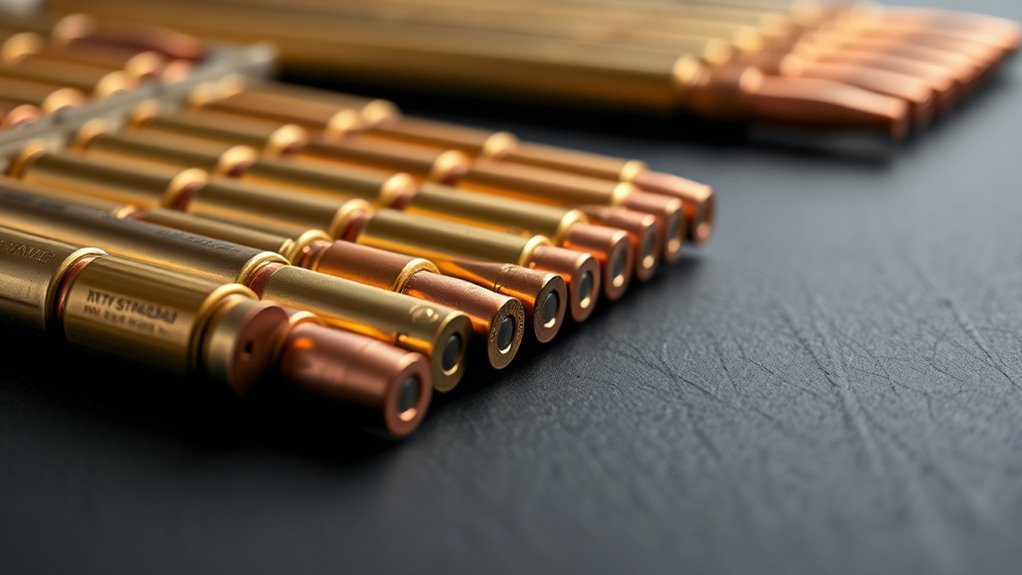
What exactly is NATO ammo, and why should you care about it? NATO ammo refers to cartridges standardized by the North Atlantic Treaty Organization for use across member countries. When you pick up a round labeled as NATO, it means that ammo is designed to meet specific dimensions and performance criteria, ensuring compatibility with firearms chambered for that caliber.
This standardization matters because it allows you to rely on consistent ammunition across various weapons and nations. If you’re a shooter, collector, or involved in defense, understanding NATO ammo helps you identify rounds that fit your firearm without guesswork. It also means that the ammo you use has been tested to meet certain pressure and velocity guidelines, which can influence how your firearm performs.
Why NATO Ammo Standards Are Key for Safety and Reliability
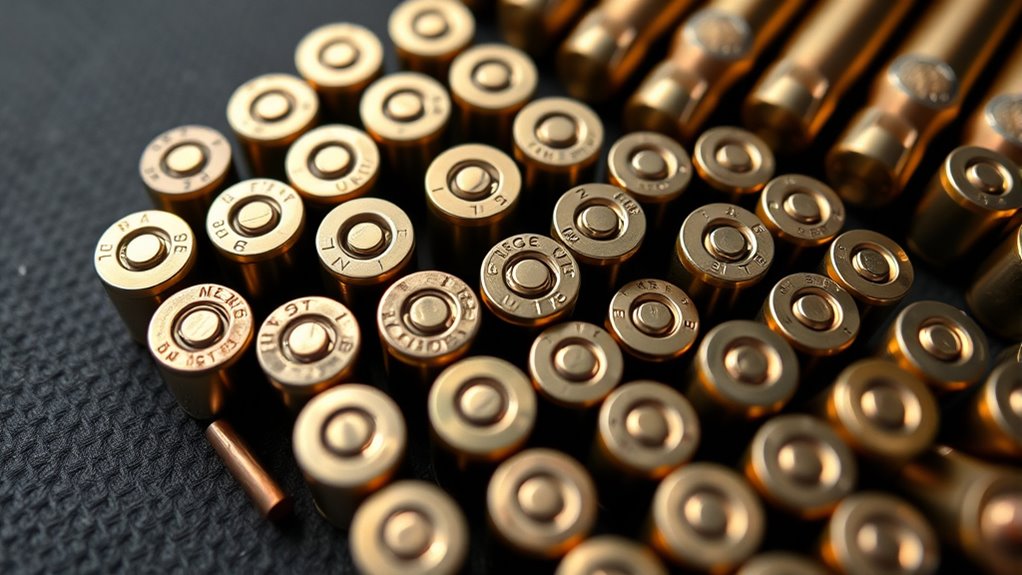
When you rely on NATO ammo standards, you get consistent quality control that guarantees each round performs as expected. This consistency makes it easier for different forces to use the same ammunition without compatibility issues.
Plus, these standards boost overall safety, reducing the risk of malfunctions during critical moments.
Consistent Quality Control
Because you rely on your ammunition in critical moments, consistent quality control in NATO ammo production is essential for guaranteeing safety and reliability. Every round undergoes rigorous testing to meet strict standards, minimizing the risk of misfires or malfunctions that could jeopardize your mission or safety. This quality control ensures that each cartridge performs uniformly, so you can trust your ammo to function as expected, whether in training or combat.
The standardized inspections cover everything from casing integrity to powder consistency, preventing defects that might cause dangerous failures. By adhering to these controls, NATO guarantees you’re supplied with dependable ammunition that won’t let you down when it matters most. This reliability protects both you and your equipment.
Interoperability Among Forces
Although different NATO forces bring unique tactics and equipment to the field, you can count on their ammunition to work seamlessly together thanks to strict NATO standards. These standards ensure that your ammo fits and functions reliably in weapons used by all member nations, eliminating compatibility issues. When you’re in a joint operation, this interoperability means you won’t face delays or malfunctions caused by mismatched ammunition.
It also makes logistics simpler, so resupplying your unit is straightforward no matter which ally provides the rounds. By adhering to these shared specifications, NATO guarantees that you can trust the ammo’s performance and durability under diverse conditions. This helps you focus on the mission instead of worrying about whether your ammunition will do its job.
Enhanced Ammunition Safety
Since your safety depends on every round performing flawlessly, NATO’s strict ammunition standards play a crucial role in preventing accidents and malfunctions. These standards guarantee that every cartridge meets rigorous quality checks, reducing the risk of misfires or catastrophic failures.
When you rely on NATO-approved ammo, you’re trusting in consistent manufacturing processes that prioritize safety above all.
Here’s why NATO’s ammo standards matter to you:
- Consistent Performance: Each round functions predictably, minimizing unexpected behavior.
- Reduced Malfunctions: Strict guidelines lower the chance of jams or misfires, keeping you safe.
- Enhanced Durability: Ammunition withstands harsh conditions without compromising reliability.
Top NATO Calibers and Their Military Roles
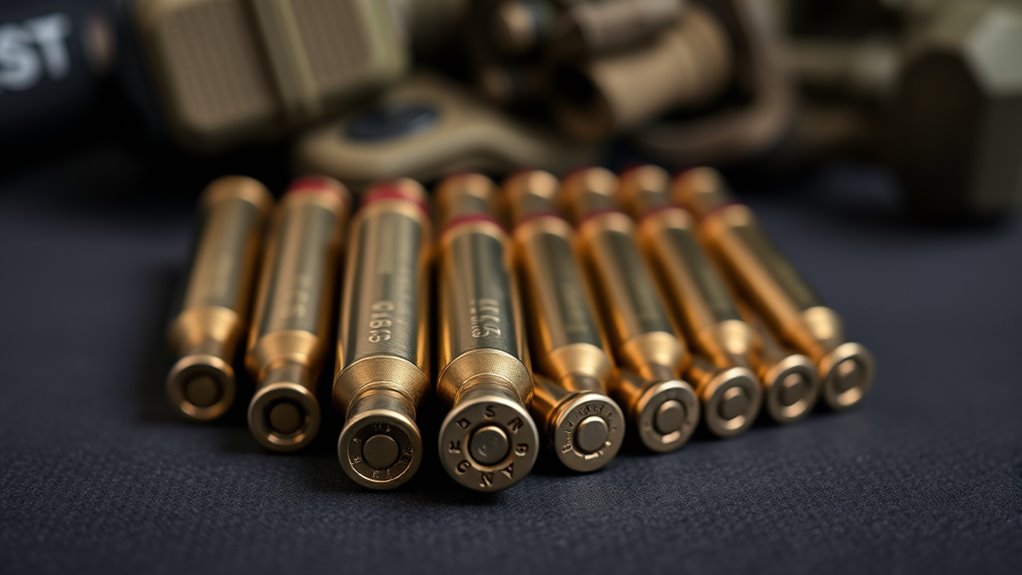
Now that you understand why NATO ammo standards matter, let’s look at the most common calibers used and how each serves a specific role in combat.
You’ll see how standardization not only simplifies logistics but also boosts effectiveness on the battlefield.
Understanding these top calibers helps you grasp their critical place in military operations.
Common NATO Ammunition Types
What makes certain NATO ammunition types stand out on the battlefield? It’s their reliability, versatility, and consistency. When you understand the common NATO ammo types, you grasp why soldiers trust them under pressure.
Here are three key types you need to know:
- 5.56x45mm NATO – Lightweight and effective, this is the standard for infantry rifles, balancing range and recoil for rapid, accurate fire.
- 7.62x51mm NATO – Heavier and more powerful, it’s favored for battle rifles and machine guns, delivering greater stopping power and range.
- 9x19mm Parabellum – The go-to pistol and submachine gun cartridge, prized for its controllability and effectiveness in close quarters.
Understanding these ammo types helps you appreciate their essential roles in NATO’s military operations.
Caliber Roles In Combat
Understanding common NATO ammunition types gives you a clear picture of how different calibers perform on the battlefield. The 5.56x45mm NATO round, for instance, is your go-to for standard infantry rifles—lightweight and effective for close to mid-range engagements.
When you need more stopping power and range, the 7.62x51mm NATO is what comes into play, often used in designated marksman rifles and machine guns. For anti-material and long-range sniper roles, the 12.7x99mm (.50 BMG) is unmatched, capable of disabling vehicles and penetrating armor.
Each caliber serves a distinct combat role, tailored for specific tactical needs. By knowing these roles, you can better appreciate how NATO forces optimize firepower across varying combat scenarios without overlap or inefficiency.
Standardization Benefits In Warfare
Although different calibers address specific battlefield roles, NATO’s standardization of ammunition means you can rely on interoperability and streamlined logistics across allied forces. This commonality isn’t just convenient—it’s a strategic advantage that can save lives and boost mission success. When every ally uses standardized ammo, you won’t face shortages or compatibility issues during critical moments.
Here’s why this matters to you:
- Seamless Resupply: You can count on quick, efficient ammo distribution regardless of which NATO country supports you.
- Simplified Training: Familiar calibers mean you’ll train faster and perform better under pressure.
- Enhanced Cooperation: Sharing resources and firepower becomes second nature, strengthening your unit’s effectiveness in joint operations.
Standardization truly unites you with your allies on the battlefield.
NATO Ammo Compatibility: How It Helps Soldiers on the Battlefield
Why does NATO ammo compatibility matter so much on the battlefield? When you’re in combat, you can’t afford to waste time worrying if your ammo fits your weapon. NATO’s standardized ammunition means you can rely on your rounds working seamlessly with your firearm, even if you’re using gear from different NATO countries.
This compatibility reduces confusion, allowing you to share ammo with allies without compatibility issues, which is essential when supplies run low. Moreover, consistent ammo types simplify logistics, so you’re more likely to get the right ammo when you need it. You won’t have to carry multiple types, lightening your load and improving mobility.
In high-stress situations, knowing your ammo works with your weapon gives you confidence, letting you focus on the mission instead of technical concerns. NATO ammo compatibility directly supports your effectiveness and safety on the battlefield, making it a key aspect of modern military operations.
How NATO Ammo Standards Impact Gun Manufacturers
When you pick up a firearm made for NATO standards, you’re holding a piece of equipment designed to work seamlessly with a wide range of ammunition types. For gun manufacturers, these standards aren’t just guidelines—they’re a vital framework that shapes design, production, and quality control.
Meeting NATO specs means your firearm has to handle ammunition reliably under extreme conditions, ensuring safety and performance.
Here’s how NATO standards impact manufacturers like you:
- Consistency: You must produce firearms with precise tolerances to match standardized ammo dimensions, reducing malfunctions.
- Interoperability: Your products become compatible with ammo from multiple suppliers worldwide, expanding market reach.
- Reputation: Adhering to strict standards boosts trust among military and civilian users, enhancing brand credibility.
NATO Ammo vs. Civilian Ammo: Key Differences
Because NATO ammo is designed to meet strict military standards, it differs from civilian ammo in ways that affect performance, reliability, and compatibility. When you use NATO rounds, you’re getting cartridges that must pass rigorous testing for consistency, pressure, and durability to function under harsh combat conditions. This means NATO ammo often has tighter manufacturing tolerances and more uniform powder charges, resulting in reliable feeding and predictable ballistics.
In contrast, civilian ammo varies more widely depending on the manufacturer and intended use, like target shooting or hunting. Civilian rounds can come in a broader range of bullet types and load specifications, offering more variety but less standardized performance. Also, NATO ammo is built to work specifically with firearms chambered for NATO specifications, so if you’re mixing ammo types, you need to be cautious about compatibility.
Ultimately, understanding these key differences helps you choose the right ammo for your needs without compromising safety or performance.
Buying NATO Ammo for Civilians: What to Know
Although NATO ammo is primarily designed for military use, civilians often seek it for its reliability and performance. If you’re considering buying NATO ammo, there are a few important things you need to know to make a smart choice and stay safe.
First, not all civilian firearms are compatible with NATO rounds, so you should verify your gun can handle the specific caliber and pressure. Second, availability can vary, and you may face restrictions or higher prices due to demand and regulations. Finally, quality control varies by manufacturer, so purchasing from trusted sources ensures consistency and safety.
Here’s what you should keep in mind:
- Confirm firearm compatibility to avoid malfunctions or damage.
- Understand legal regulations in your area before buying.
- Buy from reputable dealers to guarantee quality and authenticity.
NATO Ammo Myths Debunked
Why do so many misconceptions about NATO ammo persist? Often, it’s because people confuse NATO standardization with universal compatibility. Just because ammo is labeled “NATO” doesn’t mean it’s interchangeable with all similar calibers.
For example, 5.56x45mm NATO rounds can differ slightly in pressure and chamber dimensions from civilian .223 Remington, so using them interchangeably without caution can cause issues. Another myth is that NATO ammo is always better quality; while it generally meets strict military specs, quality can vary by manufacturer and lot.
You might also hear that NATO ammo is only for military use, but many civilian shooters legally purchase and use it. Ultimately, some believe NATO ammo is more powerful, but it’s designed for reliability and consistency rather than sheer power. Understanding these points helps you make informed choices and avoid problems when selecting or using NATO ammo.
Frequently Asked Questions
How Did NATO Ammo Standards Originate Historically?
You’ll find NATO ammo standards started during the Cold War to guarantee allied forces could share ammunition easily. They agreed on common calibers and specs, making logistics simpler and boosting interoperability across member countries.
This standardization helped ensure that weapons and ammunition were compatible among members. It reduced supply chain complexities during joint operations.
Ultimately, these standards strengthened collective defense capabilities by streamlining resupply and maintenance.
What Environmental Effects Do NATO Ammo Materials Have?
You might not expect it, but NATO ammo materials can harm the environment through lead contamination and toxic residue.
Yet, efforts are underway to develop greener alternatives, balancing military needs with ecological responsibility.
Are There Any Non-Lethal NATO Ammo Types?
Yes, you can find non-lethal NATO ammo types like rubber bullets and tear gas rounds designed for crowd control. They’re meant to incapacitate without causing fatal injuries, helping you manage situations safely and effectively.
How Does NATO Manage Ammo Supply Chain Security?
NATO manages ammo supply chain security by enforcing strict standards, sharing intelligence, and coordinating logistics among member countries.
You’ll find they use secure communication and regular audits to prevent tampering or counterfeit ammunition entering the supply chain.
Can NATO Ammo Be Used in Civilian Hunting Rifles?
Can you imagine your hunting rifle jamming because of the wrong ammo? NATO ammo often fits civilian rifles, but you’ll want to check compatibility carefully to guarantee safe and reliable performance during your hunting trips.
Conclusion
Understanding NATO ammo is like having a universal charger for your devices—you know it’ll fit and work every time, no matter the brand. Just like soldiers rely on standardized ammo for safety and reliability in critical moments, you benefit from knowing these standards when buying or using ammo.
It’s not just about compatibility; it’s about trust, consistency, and being prepared. Because in both battle and life, you want what you count on to never fail you. NATO ammo ensures that trust and reliability, making it a critical choice for anyone who values safety and performance.