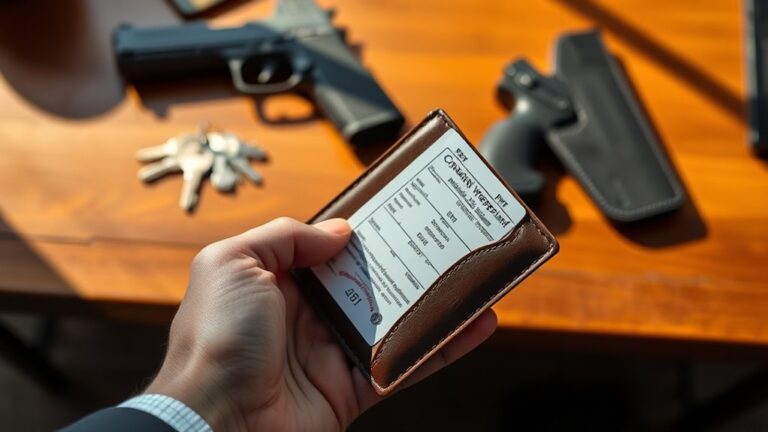
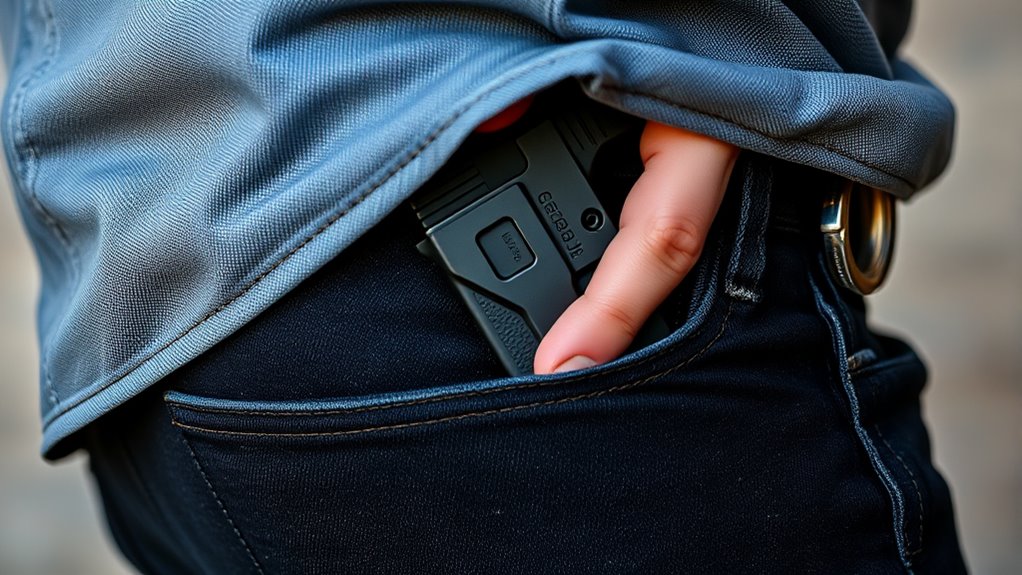
How to Conceal Carry Without a Holster Safely
You can safely conceal carry without a holster by selecting compact, snag-free firearms designed for easy carry. Securing your firearm firmly in your waistband or deep pockets helps maintain stability and concealment.
Wearing loose, layered clothing along with sturdy belts further keeps the gun stable and out of sight.
Always keep your finger off the trigger and ensure the muzzle is pointed in a safe direction while handling your firearm.
Practice drawing and reholstering slowly to maintain control and confidence in your movements.
With the right setup and mindful techniques, you’ll stay comfortable, discreet, and ready.
There’s plenty more to explore for a confident carry experience.
Key Takeaways
- Keep a firm grip on the firearm with your finger off the trigger until ready to fire to ensure safety during carry and draw.
- Choose clothing with loose, layered tops and thicker fabrics to effectively conceal the firearm’s outline and secure it in place.
- Position the firearm securely in deep pockets, waistband tucks, or alternative methods like bra carry, ensuring stability and accessibility.
- Use sturdy belts or clothing layers to add retention and prevent the firearm from shifting or falling out without a holster.
- Regularly practice drawing and reholstering with both hands, focusing on muzzle direction and control to maintain safe handling.
Situations That Require Carrying Without a Holster
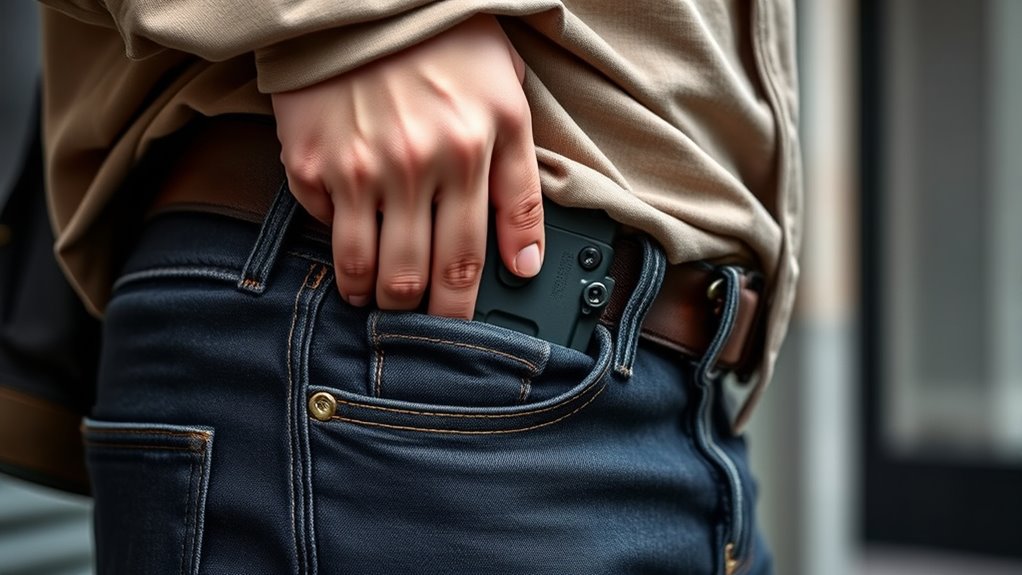
While carrying without a holster isn’t ideal, there are situations where you might have no other choice. Maybe you forgot your holster in a rush or your usual one broke unexpectedly. Sometimes, your clothing or gear just doesn’t accommodate a traditional holster, especially if you’re wearing unconventional attire or limited layers.
You might also find yourself in a scenario where you need to keep your firearm discreet, and a holster would add unwanted bulk or noise. In emergencies, you could be forced to carry your weapon temporarily in your waistband, pocket, or even a bag. Understanding these situations helps you adapt quickly and responsibly.
Safety Tips for Concealed Carry Without a Holster
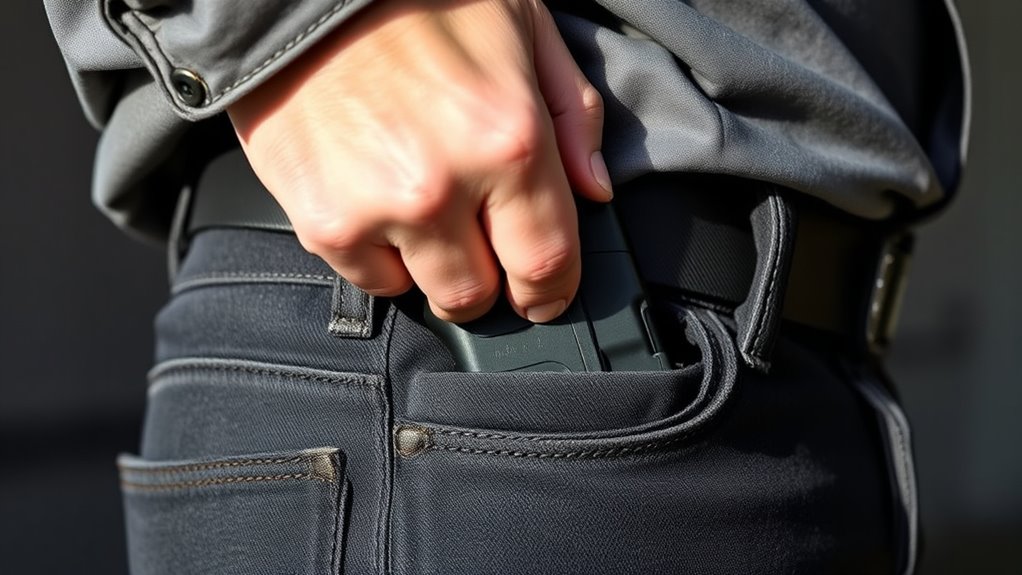
When carrying without a holster, you need to focus on maintaining a secure grip to prevent accidental drops. Choosing the right clothing and positioning will also help keep your firearm both concealed and accessible.
Let’s explore how these factors play a vital role in your safety.
Secure Grip Techniques
Because you won’t have a holster securing your firearm, maintaining a secure grip is essential to prevent accidental drops or misfires. You need to be deliberate and confident in how you hold your weapon at all times. Follow these techniques:
- Firm but Relaxed Hold: Grip your firearm firmly enough to prevent slipping but keep your hand relaxed to avoid fatigue and maintain control.
- Consistent Hand Placement: Always place your fingers in the same position, with your trigger finger along the frame until ready to shoot, ensuring safety.
- Support with Your Off-Hand: Use your non-dominant hand to stabilize the firearm when drawing or holstering, reducing the risk of dropping it.
Mastering these secure grip techniques will help you carry safely without a holster.
Clothing and Positioning
Although carrying without a holster means you have fewer options for securing your firearm, choosing the right clothing and positioning can greatly reduce risks. Opt for thicker, sturdy fabrics that help conceal your weapon and prevent printing. Loose-fitting shirts or jackets can provide necessary coverage without restricting movement.
Position your firearm where you can maintain a secure grip—commonly the strong side hip or appendix area—while ensuring it stays stable during daily activities. Avoid placing it where it might shift or become exposed, like the small of your back. Practice sitting, walking, and bending to confirm your setup stays discreet and comfortable.
Choosing the Right Clothing for Holster-Free Carry
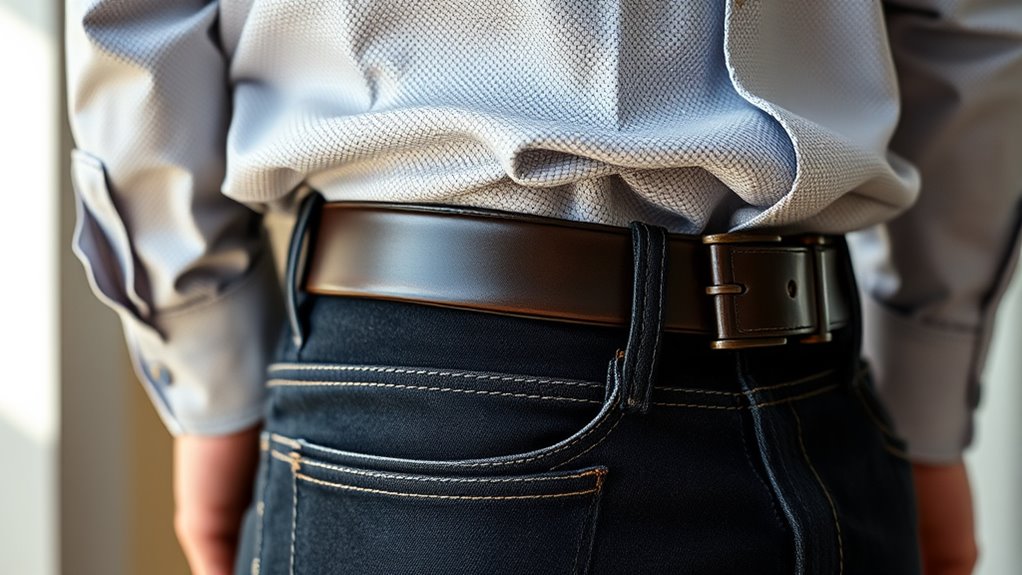
Selecting the right clothing plays a vital role in carrying a firearm without a holster safely and comfortably. You want clothing that not only conceals your weapon but also allows for quick access and keeps the firearm secure.
- Loose, layered tops: Shirts or jackets with some looseness help mask the firearm’s outline, preventing printing while giving you room to move comfortably.
- Thicker fabrics: Denim, canvas, or heavier cotton can better hide your gun’s shape and provide a bit of padding, reducing discomfort and friction against your skin.
- Pants with sturdy waistbands: Opt for pants with firm waistbands or belt loops that can support your firearm’s weight without sagging or shifting, ensuring stability as you move.
Securing Your Firearm on Your Body Without a Holster
To carry your firearm without a holster, you’ll need to explore alternative methods that keep it secure and accessible. Positioning your gun properly on your body is key to preventing movement and maintaining comfort.
Let’s look at some effective techniques to help you carry safely without a traditional holster.
Alternative Carry Methods
When you don’t have a holster, securing your firearm directly on your body requires creativity and care to guarantee quick access and safety. You’ll want to pick methods that keep your gun stable yet easily reachable.
Here are three alternative carry methods to contemplate:
- Pocket Carry: Place your firearm in a deep, sturdy pocket, muzzle down, ensuring it won’t shift or fall out.
- Waistband Tuck: Tuck the grip of your pistol just above your waistband, using tight clothing or a belt to keep it secure.
- Bra Carry (for women): Position the firearm firmly inside the bra, muzzle down, with a retention strap or tight fabric for added security.
Each method demands practice to maintain control and avoid accidental exposure or injury.
Body Positioning Techniques
Although carrying without a holster presents challenges, positioning your firearm correctly on your body can make all the difference in safety and accessibility. Start by choosing spots with natural retention—like inside your waistband near your strong side hip or the small of your back—where the gun stays snug against your body. Avoid loose areas where movement can cause shifting or accidental exposure.
Make certain your grip is accessible for a quick draw but not so obvious it prints through clothing. Use tight, sturdy clothing to help secure the firearm and minimize movement. Regularly practice drawing from your chosen position to build muscle memory and ensure smooth, safe handling.
With thoughtful body positioning, you can carry without a holster confidently while reducing risk.
Using Pockets and Waistbands for Concealed Carry Stability
Even without a holster, you can maintain stability by carefully choosing how you position your firearm in your pockets or waistband. The key is to guarantee your gun stays secure, minimizing movement and allowing for quick access.
Maintaining firearm stability without a holster relies on strategic positioning to ensure security and quick access.
Here’s how you can do it:
- Deep Front Pocket Carry: Place the firearm deep in your front pocket, muzzle down, so it’s snug against your body. This reduces shifting and keeps the grip accessible.
- Rear Waistband Carry: Tuck the gun in your rear waistband, angled slightly forward. Use your body’s natural curve to hold it firmly, but be mindful of comfort and printing.
- Side Waistband Carry: Position the gun on your strong side in the waistband, angled just behind the hip. This spot offers balance between concealment and ease of draw.
Using a Belt or Strap as Alternative Retention
If you don’t have a holster, using a belt or strap can provide the extra retention you need to keep your firearm secure. By positioning the belt or strap tightly over the firearm, you create a firm hold that reduces movement and helps prevent accidental drops.
Choose a sturdy belt or adjustable strap that fits snugly but comfortably around your waist or torso. You can loop the belt over the grip or slide the strap across the firearm’s frame for added security.
Here’s a quick comparison of belt and strap retention:
| Retention Method | Ease of Adjustment | Security Level |
|---|---|---|
| Sturdy Belt | Moderate | High |
| Elastic Strap | High | Medium |
| Leather Strap | Low | High |
| Nylon Strap | High | Medium |
Using these can help keep your firearm stable without a holster, but always check comfort and accessibility.
Practicing Drawing and Reholstering Safely Without a Holster
When you don’t have a holster, practicing your draw and reholster techniques becomes essential for safety and efficiency. Without a secure holster, you must train your muscle memory to handle the firearm carefully to avoid accidental discharge or dropping it.
Start by following these steps:
- Dry Draw Slowly: Practice drawing your firearm with an empty chamber, focusing on a smooth, controlled motion. Avoid rushing to reduce mistakes.
- Secure Grip and Control: Keep a firm grip throughout the draw and reholster process, ensuring the muzzle always points in a safe direction.
- Reholster with Precision: When placing the firearm back, use both hands if possible, guiding it carefully to prevent it from slipping or accidentally pressing the trigger.
Regularly rehearsing these steps helps build confidence and awareness, making your concealed carry safer even without a holster. Always prioritize safety above speed during your practice sessions.
Best Firearms for Holster-Free Concealed Carry
Since carrying without a holster demands extra caution, choosing the right firearm is essential for both safety and comfort. You’ll want a compact, snag-free model with minimal sharp edges to reduce the risk of accidental discharge or discomfort. Lightweight pistols with smooth finishes are ideal because they won’t dig into your body or catch on clothing.
Here’s a quick guide to some excellent choices:
| Firearm Model | Key Features |
|---|---|
| Glock 43X | Slim, lightweight, reliable |
| Smith & Wesson Shield | Compact, smooth grip |
| Ruger LCP II | Ultra-light, easy concealment |
| SIG Sauer P365 | High capacity, compact size |
Each option balances concealability and safe handling, making them suitable for holster-free carry. Always prioritize a model you can comfortably control and securely carry throughout your day.
Avoid These Common Holster-Free Carry Mistakes
Although carrying without a holster might seem convenient, it comes with risks that can compromise your safety and comfort. To carry safely, you need to avoid some common mistakes that people often make.
Carrying without a holster may seem easy but poses safety and comfort risks to consider carefully.
- Not Securing the Trigger: Leaving the trigger exposed increases the risk of accidental discharge. Always make sure your firearm’s trigger is protected by clothing or a trigger guard accessory.
- Ignoring Retention: Without a holster, your gun can shift or fall out easily. Use tight clothing or a dedicated pouch to keep your firearm in place and prevent dangerous movement.
- Choosing the Wrong Carry Position: Carrying in an area that’s uncomfortable or prone to snagging can lead to unsafe draws or accidental drops. Experiment to find a stable, accessible spot that minimizes interference.
Avoiding these mistakes helps you carry without a holster while maintaining control and safety.
Staying Comfortable and Concealed All Day Without a Holster
To stay comfortable and concealed all day without a holster, you’ll want to choose clothing that hides your carry method well and supports easy access. Lightweight fabrics and loose-fitting shirts can make a big difference in comfort and concealment.
You should also explore alternative carry options like pocket or waistband carry to find what works best for you.
Clothing Choices Matter
When you’re carrying without a holster, what you wear can make all the difference in comfort and concealment. Choosing the right clothing helps keep your firearm discreet and prevents discomfort throughout the day. Here are three key points to consider:
- Loose-fitting shirts: Opt for shirts that don’t cling tightly, allowing your gun to sit naturally without printing through fabric.
- Layering: Use a lightweight jacket or an untucked button-up over your shirt to break up the outline of your firearm.
- Sturdy belts with some give: Pick belts that hold your gun’s weight securely but have a bit of flexibility to move comfortably with you.
Alternative Carry Methods
Since carrying without a holster can sometimes feel awkward, exploring alternative methods can help you stay comfortable and concealed throughout the day. You might try using a sturdy pocket carry if your firearm fits securely and won’t shift or print. Another option is a belly band or elastic wrap designed for holster-less carry; these provide retention and comfort without bulk.
If you prefer off-body options, consider a concealed ankle carry or inside-the-waistband tuck with a clip or grip sleeve. Whichever method you choose, make sure your firearm stays stable and accessible while minimizing movement. Testing different techniques during daily activities will reveal what works best for you, keeping you both safe and comfortable without relying on a traditional holster.
Frequently Asked Questions
What Legal Considerations Apply to Concealed Carry Without a Holster?
You need to know your state’s laws on concealed carry, including permits and safe handling. Some places require a holster, so carrying without one might be illegal or risky. Always check local regulations before carrying.
How Do Temperature and Weather Affect Holster-Free Carry?
Imagine sweat trickling down your hand—it can make your grip slippery. Hot, humid weather can cause discomfort and affect retention, while cold temps stiffen your fingers, making quick access harder.
Dress smart to stay secure and ready.
Can Carrying Without a Holster Affect Firearm Maintenance Needs?
Yes, carrying without a holster can increase dirt and sweat exposure, meaning you’ll need to clean and inspect your firearm more often to prevent corrosion and guarantee reliable function.
Regular maintenance becomes even more essential.
Are There Specific Firearms Training Courses for Holster-Free Carry?
If you want to dance without your usual partner, yes, there are specific training courses designed for holster-free carry. These courses teach you how to handle your firearm safely, smoothly, and confidently without that familiar grip.
How Does Holster-Free Carry Impact Firearm Insurance or Liability?
You’ll likely face higher insurance premiums or limited coverage since carriers without holsters increase accidental discharge risks. Always check your policy details and inform your insurer about your carry method to avoid complications in liability claims.
Being transparent with your insurer helps ensure your coverage remains valid. Holster-free carry may be considered a higher risk, impacting your policy terms. Staying informed can prevent unexpected denials in claims.
Conclusion
Carrying without a holster calls for a gentle touch and mindful steps. When you embrace these subtle strategies, you’re not just keeping your firearm close—you’re weaving safety and comfort into every move.
Remember, it’s all about finding that quiet balance between readiness and ease, so you can carry with confidence and grace. With practice and care, you’ll master the art of discreet protection without ever missing a beat.
By following these tips, you can conceal carry without a holster safely and effectively. Prioritizing safety and comfort ensures your peace of mind in every situation. Embrace these techniques to carry responsibly and securely wherever you go.