How to Move a Heavy Gun Safe in 7 Simple Steps
To move a heavy gun safe safely and efficiently, preparation is key. Start by clearing your path to ensure there are no obstacles, and protect your floors with blankets or sliders to prevent damage. Empty the safe completely to avoid injury and reduce weight.
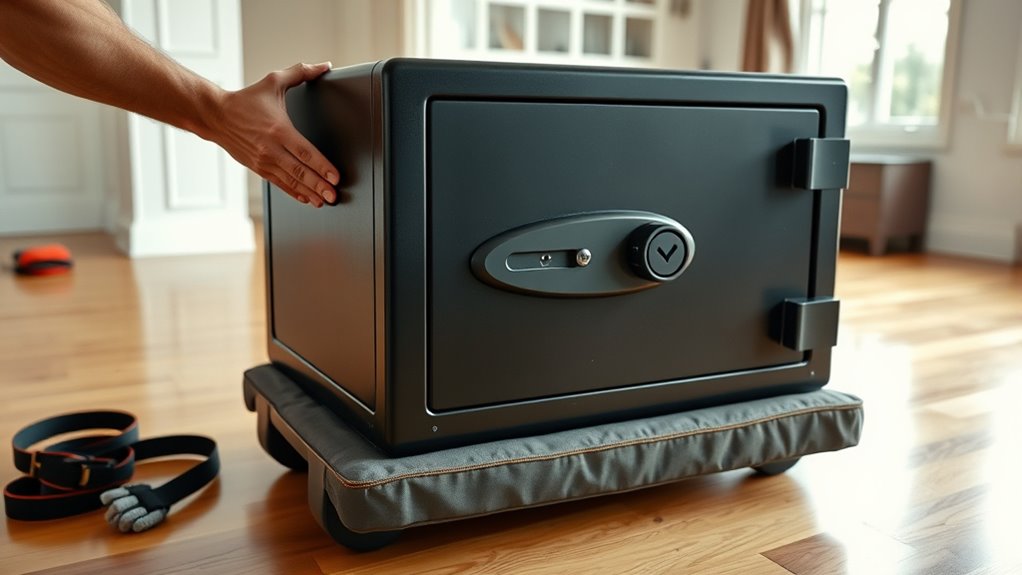
Use proper lifting techniques—bend your knees, keep your back straight—and secure the safe tightly to a dolly with straps or lifting tools. Plan your route carefully and enlist helpers to assist you.
Move the safe slowly and carefully to avoid damage to both the safe and your surroundings. Once the safe is positioned, check that it’s level and stable.
Following these steps guarantees a safe, smooth move. This guide will help you handle each phase confidently and effectively.
Key Takeaways
- Clear the path and protect floors with blankets or plywood to prevent damage during the move.
- Empty the safe completely and secure loose parts before starting the move.
- Use a heavy-duty dolly and secure the safe tightly with straps or moving blankets for stability.
- Employ proper lifting techniques, bend knees, keep back straight, and seek help to avoid injury.
- Position the safe carefully at the new location and use a spirit level to ensure it sits evenly.
Prepare Your Moving Space and Tools
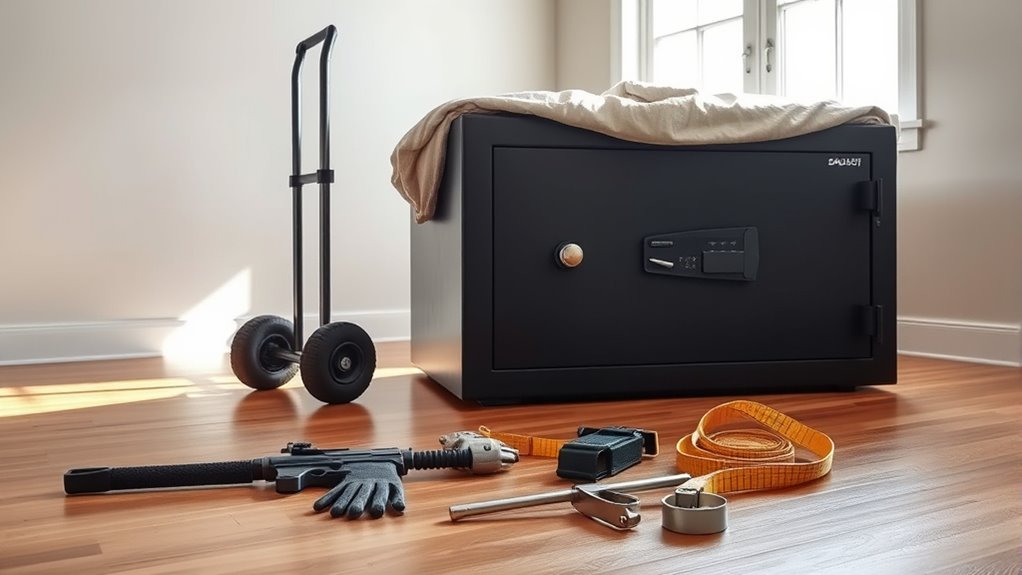
Before you begin moving your heavy gun safe, clear the path from its current location to the destination. Even though you won’t be protecting floors or arranging obstacles just yet, you need to make sure the walkway is free of furniture, cords, or anything that could trip you up.
Next, gather the right tools: a sturdy dolly rated for heavy weights, furniture straps, and moving blankets. You’ll also want gloves with a good grip to protect your hands. If your safe is especially large or tall, consider a stair-climbing dolly or additional straps for extra stability.
Take measurements of doorways, hallways, and staircases to confirm your safe will fit through without issue. Plan where you can rest the safe if the move takes longer than expected. By prepping both your space and tools carefully, you’ll set yourself up for a safer, more efficient move without unexpected snags.
Clear the Path and Protect Your Floors
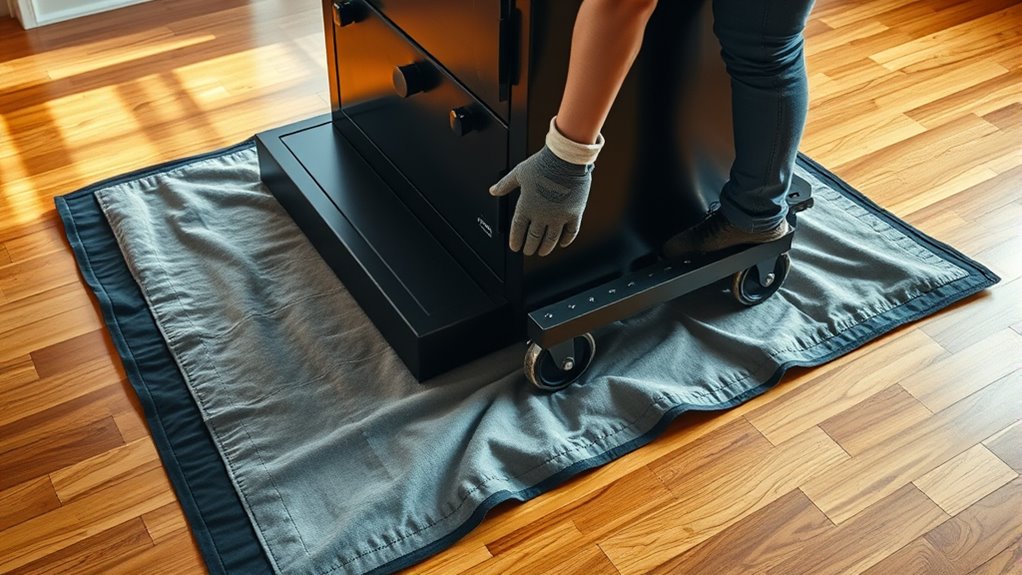
Before you start moving your gun safe, clear the path by removing any obstacles that could trip you up. Lay down floor protection like blankets or plywood to prevent scratches and damage. Taking these steps will make the move safer and keep your floors intact.
Remove Obstacles Early
Where will your gun safe go, and what stands in the way? Before moving, clear the entire path to avoid tripping or damaging walls and furniture. Removing obstacles early makes the move smoother and safer for you and your safe.
Check doorways, hallways, and corners for anything that could hinder progress. Even small items like rugs or toys can cause slips or bumps. Plan the route carefully to minimize turns and tight spots.
| Common Obstacles | Removal Tips |
|---|---|
| Loose rugs or mats | Roll or remove them |
| Furniture in the way | Temporarily relocate |
| Decorative items | Take them down or move aside |
A clear path lets you focus on lifting and maneuvering without unexpected hazards.
Use Floor Protection
How can you safeguard your floors while moving a heavy gun safe? Start by laying down protective materials like plywood sheets, moving blankets, or thick cardboard along the path you’ll take. These barriers prevent scratches, dents, and scuffs from the safe’s weight and movement.
If you’re on hardwood or tile, consider using furniture sliders or rubber mats beneath the safe to reduce friction and avoid damage. Clear the path completely before placing any floor protection to ensure a smooth move. Remember, protecting your floors isn’t just about avoiding unsightly marks—it also helps prevent slips or sudden stops that could cause injury or harm to the safe.
Taking these simple steps will keep your floors safe and your move efficient.
Empty Your Gun Safe Before Moving
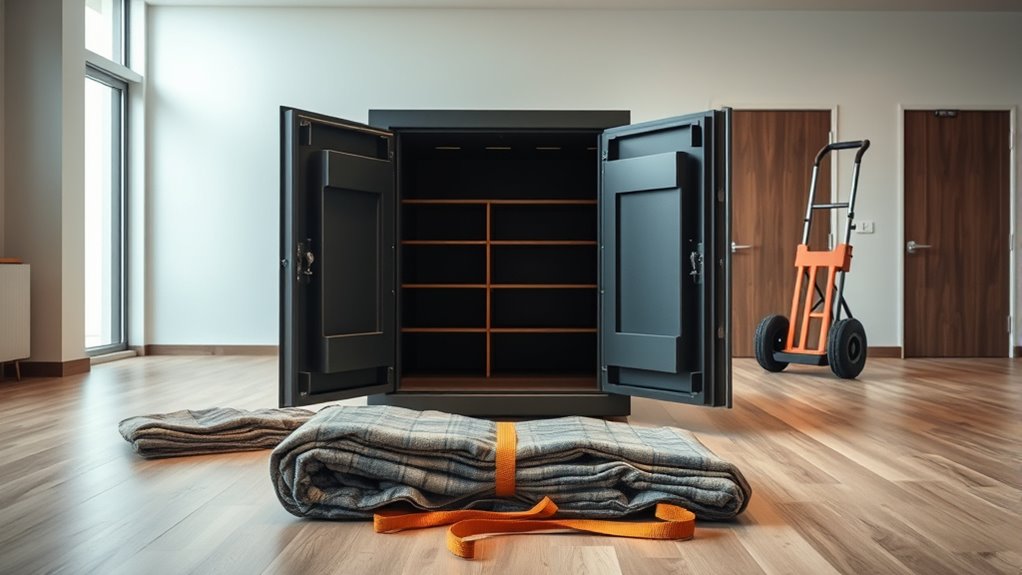
Before you start moving, make sure to remove all ammunition from your gun safe for safety.
Next, organize your firearms securely to prevent damage during the move.
Taking these steps will make the process smoother and safer for you.
Remove All Ammunition
Why should you remove all ammunition before moving your gun safe? First, it’s a vital safety step. Ammunition can be sensitive to shocks or impacts during transport, which increases the risk of accidental discharge or damage.
Removing it also lightens the load, making the safe easier and safer to move. Additionally, many moving companies and insurance policies require ammunition to be stored separately for liability reasons.
Before you start moving, gather all your ammo and place it in a secure, separate container designed for ammunition storage. This prevents any accidental mixing with firearms during transit and guarantees you comply with legal and safety regulations.
Taking this simple step protects you, your movers, and your property from avoidable hazards.
Organize Firearms Securely
Where should you start when organizing your firearms for the move? First, empty your gun safe completely. Removing all firearms will make the safe lighter and easier to handle.
Next, inspect each firearm to verify it’s unloaded and clean. Then, wrap each gun individually in soft cloth or bubble wrap to prevent scratches or damage during transport. Use sturdy cases or boxes designed for firearms to keep them secure and stable.
Label each container clearly for quick identification. Store ammunition separately, away from the firearms, to comply with safety regulations. Finally, plan how you’ll transport the firearms safely, whether in a locked case or secured compartment of your vehicle.
Taking these steps ensures your firearms stay protected and your move goes smoothly.
Use Proper Lifting Techniques and Equipment
Because moving a heavy gun safe puts significant strain on your body, using proper lifting techniques and the right equipment is vital to avoid injury and damage. Always bend at your knees, not your waist, to protect your back. Keep your back straight and engage your core muscles as you lift.
Avoid twisting your torso while carrying the safe; instead, pivot your feet to turn. Use equipment designed for heavy loads, like a sturdy dolly or hand truck with straps. Secure the safe tightly to prevent shifting during movement.
If the safe is exceptionally heavy, consider using lifting straps that distribute weight evenly across your shoulders and arms. Don’t hesitate to ask for help—having at least one other person makes the job safer and more manageable. Taking these precautions ensures you mitigate the risk of injury and safeguard your safe from scratches or dents during the move.
Secure Your Gun Safe for Transport
Once you’ve safely lifted and prepared your gun safe, the next step is making certain it’s securely fastened for transport. Properly securing the safe prevents damage to both the safe and your property, and keeps everyone safe during the move.
Here’s what you need to do:
- Use Heavy-Duty Straps: Wrap ratchet straps or moving straps tightly around the safe. Secure them to your moving dolly or the vehicle to prevent any shifting.
- Protect the Safe’s Exterior: Place moving blankets or padding around the safe before strapping it down. This helps avoid scratches and dents during transit.
- Lock and Seal the Safe: Double-check that the safe door is locked and, if possible, seal it with tape or a cable tie for extra security to prevent accidental opening.
Following these steps assures your gun safe remains stable and protected throughout the move.
Plan the Move and Coordinate Your Helpers
Although moving a heavy gun safe can be challenging, careful planning and coordinating your helpers will make the process much smoother and safer. First, assess the route you’ll take from the current location to the moving vehicle, noting any tight corners, stairs, or obstacles. Share this plan with everyone involved so they know what to expect.
Make sure you have enough strong helpers—at least two or three people depending on the safe’s weight. Assign clear roles, like who will lift, who will guide, and who will manage doors or ramps. Communication is key, so agree on simple commands or signals to avoid confusion during the move.
Double-check that everyone wears proper footwear and gloves for grip and protection. By planning the route and coordinating your team ahead of time, you’ll reduce risks and make the move quicker and safer for everyone involved.
Position and Set Up Your Gun Safe Safely
Before you settle your gun safe in its new spot, make sure the floor can support its weight and that the location is both secure and accessible. You want to avoid any structural damage or difficulty accessing your safe when needed.
Ensure your floor supports the safe’s weight and choose a secure, accessible location to prevent damage or access issues.
Once you’ve confirmed this, follow these steps to position and set up your gun safe safely:
- Level the Safe: Use a spirit level to ensure the safe sits flat. An uneven safe can strain the locking mechanism or door over time.
- Secure the Safe: If possible, bolt the safe to the floor or wall to prevent tipping or theft. Use appropriate anchors based on your floor type.
- Clear the Surrounding Area: Keep the area around the safe free of clutter to allow easy access and to avoid accidents when opening the door.
Frequently Asked Questions
How Do I Reset the Lock Combination After Moving?
You’ll need to locate the reset button inside the safe, usually behind the lock panel. Press and hold it while entering your new combination.
Make sure you follow the manufacturer’s instructions carefully to avoid locking yourself out.
Can I Move a Gun Safe Alone Without Professional Help?
You probably shouldn’t move a heavy gun safe alone since it’s extremely heavy and awkward. Without help, you risk injury or damaging the safe.
It’s safer to get professional movers or at least a few strong friends to assist.
What Insurance Covers Damage During a Gun Safe Move?
You’ll want to check your homeowner’s or renter’s insurance, as they sometimes cover damage during moves. If not, consider purchasing moving insurance or a specialized policy for valuable items like a gun safe to protect yourself fully.
How Often Should I Service My Gun Safe?
Like clockwork, you should service your gun safe at least once a year to keep it running smoothly. Regular checks prevent rust and mechanical issues, ensuring your valuables stay secure without any unexpected hiccups.
This routine maintenance helps extend the life of your safe. It also ensures the locking mechanism works reliably every time you need it. Don’t wait for problems to appear before servicing your safe.
Are There Legal Requirements for Transporting Firearms in a Gun Safe?
Yes, you’ve got to follow federal and state laws when transporting firearms in a safe. Make sure the safe is locked, unloaded, and not accessible during transit.
Check local rules—they can vary quite a bit.
Conclusion
Moving a heavy gun safe might seem intimidating, but with the right prep and teamwork, you’ll handle it like a pro. Imagine the safe sliding smoothly across protected floors, your helpers lifting carefully, every step planned.
By emptying it, using proper gear, and securing it well, you’ll avoid damage and injury. Follow these simple steps, and you’ll not only move your safe—you’ll master the art of moving heavy, valuable things with confidence.
Using the right tools and techniques is essential for the safe relocation of your gun safe. With careful planning and the right support, moving a heavy gun safe becomes manageable and safe. Trust these steps to guide you through the process smoothly.