10 Steps to Get Your Concealed Carry License
To get your concealed carry license, start by checking your state’s eligibility requirements and training rules. Understanding these guidelines is crucial for a smooth application process. Make sure you meet all criteria before moving forward.
Gather valid identification and proof of residency, then complete a certified firearms safety course. This training is often mandatory and ensures you handle your weapon responsibly.
Next, fill out the application accurately and schedule your background check, including fingerprinting.
Pay the required fees and familiarize yourself with where you can legally carry your firearm.
After submitting your application, be patient while it is processed. Stay ahead by learning about renewal steps and ongoing legal restrictions.
You’ll find all the details to guide you through the process successfully.
Key Takeaways
- Verify eligibility criteria including age, residency, and disqualifying factors on official state websites or through law enforcement.
- Complete a certified firearms safety course with classroom and live-fire training, and pass the written test.
- Gather required documents like a valid government-issued photo ID and recent proof of residency for your application.
- Submit a truthful application, schedule and complete a background check and fingerprinting with proper identification.
- Pay all applicable fees, abide by legal restrictions, and await approval before carrying concealed; renew license timely.
Check Your State’s Eligibility and Training Requirements

Before you apply for a concealed carry license, you’ll need to check your state’s eligibility criteria and training requirements. Each state has specific rules about who can carry concealed weapons, so you should start by visiting your state’s official website or contacting the local law enforcement office. You’ll want to confirm your age, residency status, and any disqualifying factors such as criminal history or restraining orders.
Some states also require you to complete a firearms safety course or training program before applying. These courses often cover safe handling, storage laws, and local regulations. Knowing these requirements upfront saves you time and prevents application denial.
Keep in mind that some states have different rules for military veterans or law enforcement officers. Once you’re clear on eligibility and training specifics, you can confidently move forward with the application process. Don’t skip this step—understanding your state’s rules is vital for a successful concealed carry license application.
Gather Necessary Identification and Documents

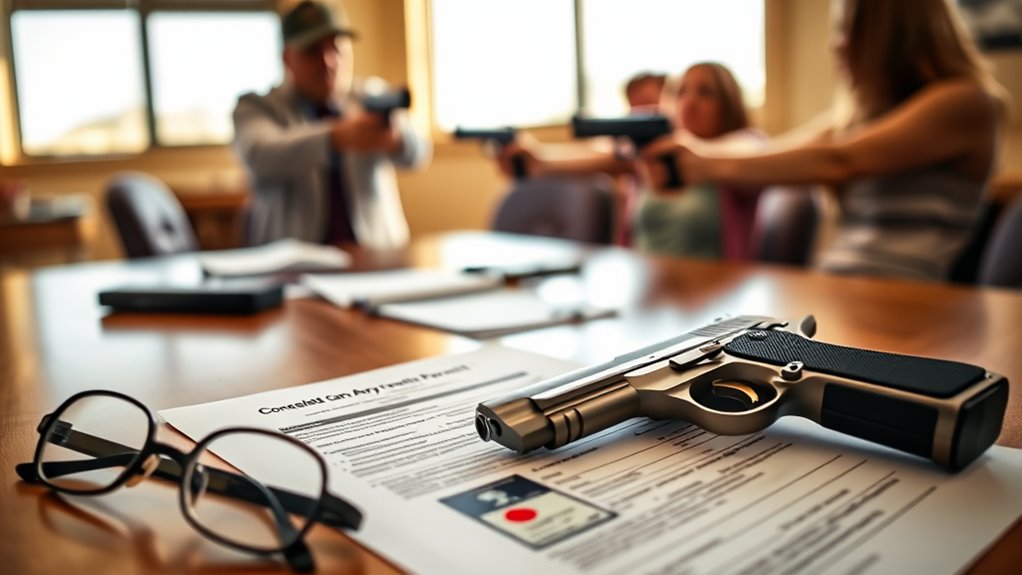
Before applying, make sure you have your valid forms of ID ready, such as your driver’s license or passport. You’ll also need to provide proof of residency, like a utility bill or lease agreement.
Having these documents on hand will help your application process go smoothly.
Valid Forms Of ID
What types of ID do you need to apply for a concealed carry license? Typically, you’ll need a government-issued photo ID to prove your identity. This often includes a valid driver’s license or a state-issued identification card.
Some states may accept a passport or military ID as well. Make sure your ID is current and not expired. It should clearly show your full name, date of birth, and a recent photograph.
Keep in mind, the ID you provide must match the name on your application exactly. Double-check state-specific requirements since some places have stricter rules about acceptable forms of identification. Having the correct, valid ID ready will help your application process go smoothly and avoid delays.
Proof Of Residency
Once you’ve secured a valid form of ID, the next step is proving your residency. Most states require documents that confirm your current address to guarantee you meet local regulations.
You’ll want to gather official papers that clearly show your name and address. These documents should be recent—usually within the last three months.
Common examples include:
| Document Type | Description |
|---|---|
| Utility Bill | Electric, water, or gas statement |
| Lease Agreement | Signed rental or lease contract |
| Bank Statement | Recent statement with your address |
| Government Mail | Tax bill or official correspondence |
Having these ready will smooth the application process and avoid delays when submitting your concealed carry license application.
Complete a Certified Firearms Safety Course Approved in Your State
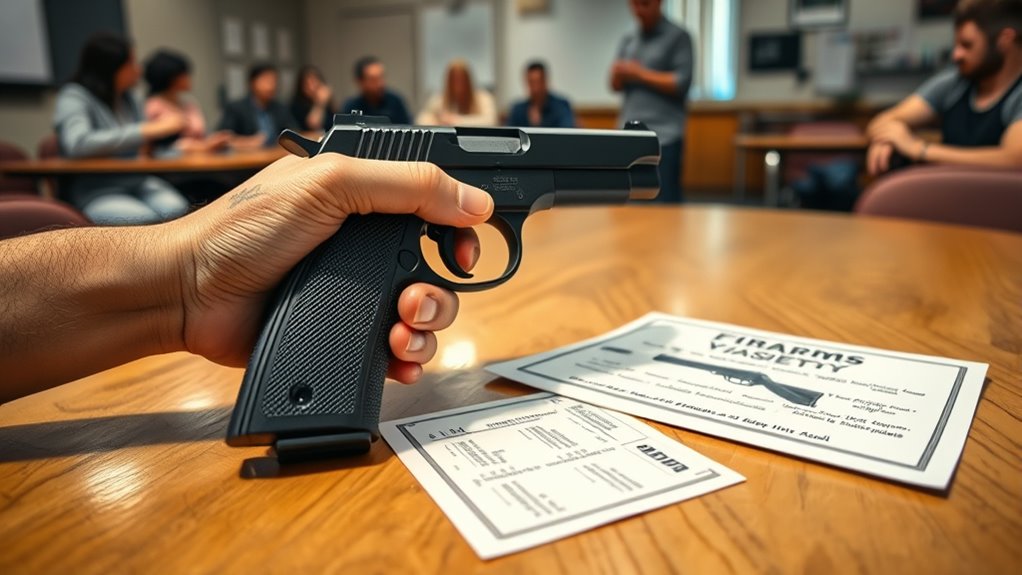
Before you can get your concealed carry license, you’ll need to complete a firearms safety course approved by your state. These courses cover essential safety rules and handling practices to guarantee you’re prepared.
You can find certified instructors through your state’s official website or local shooting ranges.
Course Requirements Overview
Although requirements vary by state, completing a certified firearms safety course is a crucial step in obtaining your concealed carry license. This course guarantees you understand firearm laws, safe handling, and proper usage.
Typically, it covers both classroom instruction and live-fire exercises, equipping you with the skills and knowledge needed to carry responsibly.
Here’s a quick overview of common course components:
| Component | Description | Typical Duration |
|---|---|---|
| Legal Education | State laws and regulations | 2-4 hours |
| Safety Training | Handling and storage techniques | 2-3 hours |
| Live-Fire Practice | Shooting accuracy and control | 1-2 hours |
| Written Test | Evaluating knowledge retention | 30-60 minutes |
Completing these requirements confidently prepares you for the next steps.
Finding Approved Instructors
To complete your certified firearms safety course, you’ll need to find an instructor approved by your state’s regulatory agency. This guarantees the training meets legal standards for your concealed carry license.
Start by checking your state’s official website or firearms regulatory body for a list of certified instructors. Many states require instructors to have specific credentials, so verify their certification carefully.
Here’s how to find a qualified instructor:
- Visit your state’s firearms safety or licensing website.
- Search for certified firearms safety courses or instructors.
- Contact local shooting ranges or firearm clubs for recommendations.
- Confirm the instructor’s certification and course approval status.
Following these steps helps you complete your course efficiently and legally.
How to Fill Out Your Concealed Carry Application
When you start filling out your concealed carry application, make sure you have all necessary documents on hand to avoid delays. These typically include your identification, proof of residency, and any certificates from approved firearm safety courses. Carefully read each question and answer truthfully—any misinformation can result in denial or legal issues.
Pay close attention to sections asking about your criminal history, mental health, and any restraining orders. If you’re unsure about a question, consult official guidelines or contact the issuing agency for clarification. Use clear, legible handwriting if submitting a paper form, or double-check your entries on online forms before submitting.
Make copies of your completed application and supporting documents for your records. Once finished, review everything thoroughly to verify accuracy. Properly filling out your application is an essential step toward obtaining your concealed carry license smoothly and efficiently.
Schedule and Pass Your Background Check for Concealed Carry
Before you can receive your concealed carry license, you’ll need to schedule and pass a thorough background check. This step guarantees you meet all legal requirements and have no disqualifying history. Here’s how to prepare:
- Find the correct agency – Contact your local sheriff’s office or state police to learn where and how to schedule your background check.
- Gather required documents – Have your application, government-issued ID, and any other requested paperwork ready.
- Schedule an appointment – Many agencies offer online booking; pick a convenient date and time.
- Attend the background check – During the check, they’ll review your criminal history, mental health records, and other relevant databases.
Passing this background check is critical. If any issues arise, you’ll be notified and given a chance to clarify.
Passing the background check is essential; any concerns will be communicated with an opportunity for explanation.
Once you clear this step, you’re closer to obtaining your concealed carry license.
Submit Fingerprints for Your Concealed Carry License
Although submitting your fingerprints might seem like a simple step, it’s essential for verifying your identity and completing the background check process for your concealed carry license. You’ll usually visit a local law enforcement agency or an authorized fingerprinting service. They’ll use ink or a digital scanner to capture your prints.
Make sure to bring a valid photo ID and any required forms.
Here’s what to expect during fingerprint submission:
| Step | What Happens |
|---|---|
| Arrival | Check in and present your ID |
| Fingerprinting Method | Ink pads or digital scanner used |
| Print Capture | All ten fingerprints recorded |
| Confirmation | Prints reviewed for clarity |
Once submitted, your prints are sent to the FBI and state agencies for verification. This step helps guarantee you meet all legal requirements before your license is approved.
Pay the Required Concealed Carry Fees
Now that you’ve submitted your fingerprints, it’s time to pay the required concealed carry fees. You’ll want to understand the fee breakdown, know which payment methods are accepted, and check if any refund policies apply.
This step guarantees your application moves forward smoothly.
Understanding Fee Breakdown
While applying for your concealed carry license, you’ll need to pay several fees that cover processing, background checks, and sometimes training courses. Knowing the fee breakdown helps you budget and avoid surprises.
Here’s a typical fee structure:
- Application Fee: This covers administrative costs to process your application.
- Fingerprinting Fee: Required for background checks to verify your criminal record.
- Background Check Fee: Paid to the agency conducting thorough screenings on your history.
- Training Course Fee: If your state requires a safety or firearms training, this fee covers the cost.
Each fee varies by state, so check local requirements. Being prepared for these costs ensures a smoother application process and helps you focus on meeting other requirements.
Payment Methods Available
Since paying the required fees is a crucial step in your concealed carry license application, you’ll want to know which payment methods are accepted. Most state agencies accept several payment options, including credit and debit cards, which offer convenience and immediate processing. Some also allow you to pay by check or money order if you prefer mailing your payment.
Cash payments are less commonly accepted, so it’s best to confirm in advance. Online applications typically require electronic payments, while in-person submissions might offer more flexibility. Always check the specific instructions on your state’s official concealed carry website to avoid delays.
Having the correct payment ready ensures your application moves forward smoothly without unnecessary hold-ups.
Fee Refund Policies
After you’ve handled the payment for your concealed carry license, it’s important to understand the fee refund policies that may apply. These policies can vary, so knowing them upfront helps you avoid surprises. Here are key points to weigh:
- Non-Refundable Fees: Most application and processing fees are non-refundable, even if your application is denied.
- Partial Refunds: Some states offer partial refunds if you withdraw your application before processing begins.
- Renewal Fees: Renewal fees typically aren’t refundable once submitted, regardless of changes in your status.
- Additional Costs: Fees for fingerprinting or background checks may be separate and non-refundable.
Check your state’s specific refund policies before paying to ascertain you know where you stand if your plans change.
Know Legal Places and Restrictions for Concealed Carry
Where exactly can you carry a concealed weapon legally? Knowing where you can and cannot carry is essential to avoid legal trouble. Generally, you’re allowed to carry in public places, but many locations have specific restrictions.
For example, schools, government buildings, and private properties may prohibit firearms even if you have a license. Some states also restrict carrying in bars or places serving alcohol.
To help you understand, here’s a clear overview:
| Legal Places | Restrictions/Prohibited Areas |
|---|---|
| Public streets and parks | Schools and school zones |
| Licensed private properties | Government buildings |
| Certain businesses with permission | Bars and establishments serving alcohol |
Always check state and local laws as they vary widely. You must respect posted signs and property owner rules. Understanding these boundaries helps you carry responsibly and legally without risking penalties.
Wait for Application Processing and Approval
Once you’ve submitted your concealed carry application, you’ll need to wait for it to be processed and approved. This period can vary depending on your state and local authorities, so patience is key.
After submitting your concealed carry application, expect varying wait times as your approval is processed by local authorities.
Here’s what typically happens during this time:
- Background Check – Authorities will thoroughly review your criminal, mental health, and other relevant records.
- Application Review – Your submitted forms and documents are examined for completeness and accuracy.
- Possible Interview or Fingerprinting – Some jurisdictions may require you to attend an interview or provide fingerprints.
- Final Decision – After all checks, the issuing agency will approve or deny your application and notify you accordingly.
Keep in mind that processing times can range from a few weeks to several months. Stay alert for any communication from the agency, and be ready to respond promptly if additional information is needed.
This guarantees your application moves smoothly toward approval.
Renew Your Concealed Carry License Before It Expires
Before your concealed carry license expires, you’ll want to start the renewal process to avoid any lapse in your legal ability to carry. Most states allow you to renew your license several months before the expiration date, so check your state’s specific guidelines. You’ll typically need to submit a renewal application, pay a fee, and sometimes complete a refresher training course or provide updated fingerprints.
Staying ahead of deadlines is essential; missing your renewal window can mean reapplying from scratch, which involves repeating the entire application and training process. Keep track of your license’s expiration date and set reminders well in advance. If your state offers online renewal, take advantage of it for a quicker, more convenient process.
Frequently Asked Questions
Can I Carry Concealed While Traveling to Another State?
You can carry concealed while traveling to another state only if your license is recognized there. Laws vary, so you’ll want to check each state’s reciprocity and regulations to avoid legal trouble on the road.
What Types of Firearms Are Allowed for Concealed Carry?
You can usually carry handguns like pistols and revolvers for concealed carry, but some states allow certain small rifles or shotguns.
Always check local laws, as restrictions on firearm types vary widely across states.
How Long Is My Concealed Carry License Valid?
Your concealed carry license is usually valid for 5 years.
Curiously, about 90% of holders renew on time, showing how seriously most people take their responsibility to stay legally armed and prepared.
Can I Carry Concealed in a Vehicle?
Yes, you can carry concealed in a vehicle if your license allows it. Just make sure you follow your state’s specific laws about how the firearm must be stored or carried while driving to avoid any legal trouble.
Are There Penalties for Carrying Without a License?
You might think carrying without a license is harmless, but it isn’t. If you do, you’ll face serious penalties like fines, possible jail time, and losing your right to carry.
Always get licensed first.
Conclusion
Remember, “an ounce of prevention is worth a pound of cure.” Taking these 10 steps seriously guarantees you’re prepared and legal when carrying concealed. By checking your state’s rules, completing training, submitting your application properly, and staying aware of laws, you protect yourself and others.
Don’t rush—follow each step carefully, renew on time, and carry responsibly. Your safety and peace of mind are worth every effort you put in. Following these essential steps ensures you meet all requirements to get your concealed carry license confidently and legally.