Is a Gun Safe Necessary for Securing Firearms?
Yes, a gun safe is necessary for securing your firearms safely and responsibly. It plays a crucial role in preventing accidents, unauthorized access, and theft. Especially important is keeping guns away from children or uninvited guests to ensure household safety.
Gun safes use strong locks and heavy steel construction to protect your weapons effectively. They also help you meet legal requirements, which can protect you from liability.
By choosing the right safe and organizing your firearms properly, you greatly increase safety and control.
Discover what features and practices make gun safes truly effective and reliable. Investing in a quality gun safe is an essential step for every responsible firearm owner.
Key Takeaways
- A gun safe prevents unauthorized access, reducing risks of accidents, theft, and misuse by children, guests, or intruders. Proper gun storage complies with legal requirements and child access prevention laws, lowering liability and legal consequences.
- Gun safes offer robust security with steel construction and advanced locks, unlike less secure alternatives like trigger locks or lockboxes. They protect firearms from damage and theft, ensuring safe, organized storage with quick access options like biometric locks.
- Using a gun safe significantly decreases the chance of accidental discharges and impulsive misuse, enhancing overall household safety.
Why Gun Safe Storage Is Key to Firearm Safety
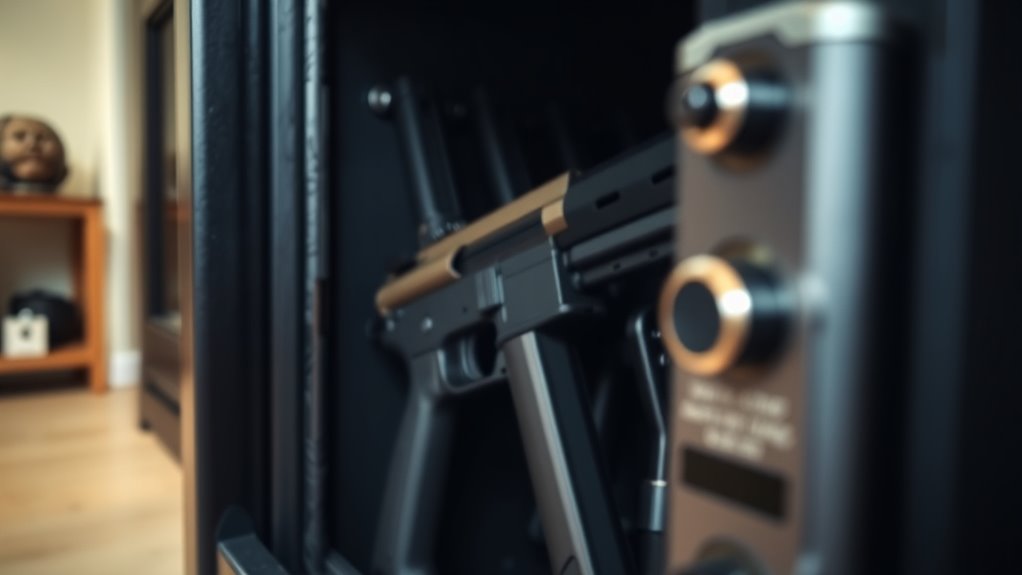
Although owning a firearm comes with serious responsibility, storing it properly is the key to ensuring safety for everyone in your home. When you use a gun safe, you control who can access your firearms, reducing the chance of accidents or misuse. A secure safe keeps your guns out of reach of children, guests, or anyone unfamiliar with handling firearms.
It also protects your firearms from theft and damage, preserving their function and value. By locking your guns away, you create a safer environment that helps prevent unintentional discharge or impulsive actions. Additionally, a gun safe often includes features like biometric locks or combination codes, making access quick for you but impossible for unauthorized users.
Ultimately, choosing safe storage isn’t just about protecting your guns—it’s about protecting your family and peace of mind. You’re taking an essential step toward responsible firearm ownership that benefits everyone under your roof.
The Risks of Not Using a Gun Safe at Home
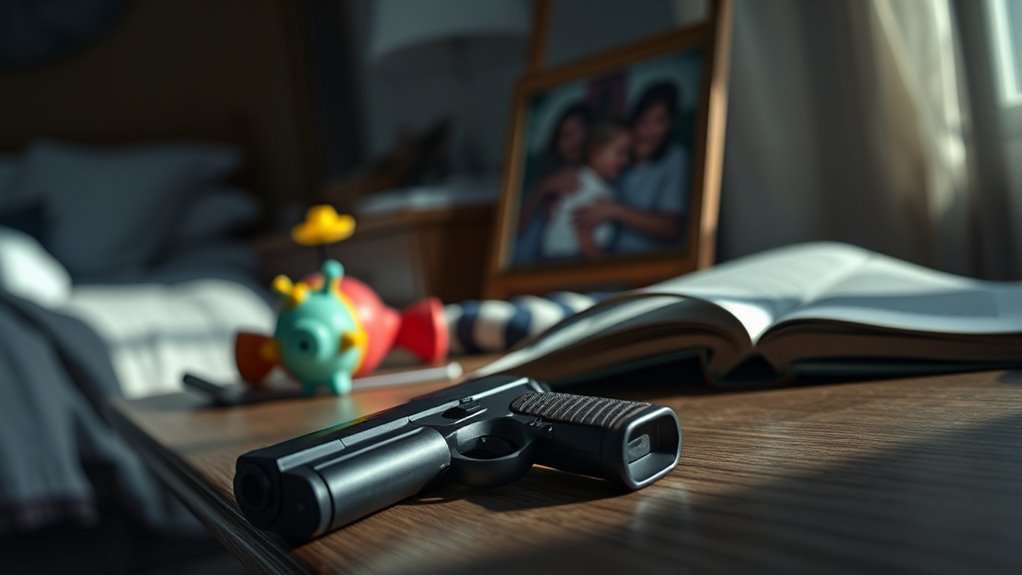
If you don’t use a gun safe at home, you risk accidental discharges that could cause serious injury or worse. You also leave your firearms vulnerable to unauthorized access by children, visitors, or intruders. Understanding these dangers is essential to keeping everyone safe.
Accidental Discharge Hazards
When you don’t secure your firearms in a gun safe, you increase the chances of accidental discharge incidents at home. Firearms left out in the open can be easily mishandled, especially if someone unfamiliar with gun safety picks them up. Even if you’re careful, distractions or simple mistakes can cause a trigger to be pulled unintentionally.
Accidental discharges can result in serious injury or worse, making it critical to reduce these risks. A gun safe keeps firearms locked away, preventing them from being jostled or accessed carelessly. It also helps ensure that guns are stored unloaded and with safety mechanisms engaged.
Unauthorized Access Dangers
Since firearms are powerful tools that require responsible handling, leaving them unsecured at home puts you at risk of unauthorized access. Without a gun safe, children, guests, or even burglars can easily find and mishandle your firearms, leading to accidents or theft. Kids might not understand the danger and could unintentionally discharge a weapon, while a burglar could use the firearm for criminal activity.
You might think it won’t happen to you, but statistics show that many incidents involve guns taken from unsecured homes. Securing your firearms in a gun safe drastically reduces these risks, ensuring only authorized users can access them. By taking this precaution, you protect your family, prevent misuse, and contribute to overall safety in your household.
How a Gun Safe Blocks Unauthorized Access
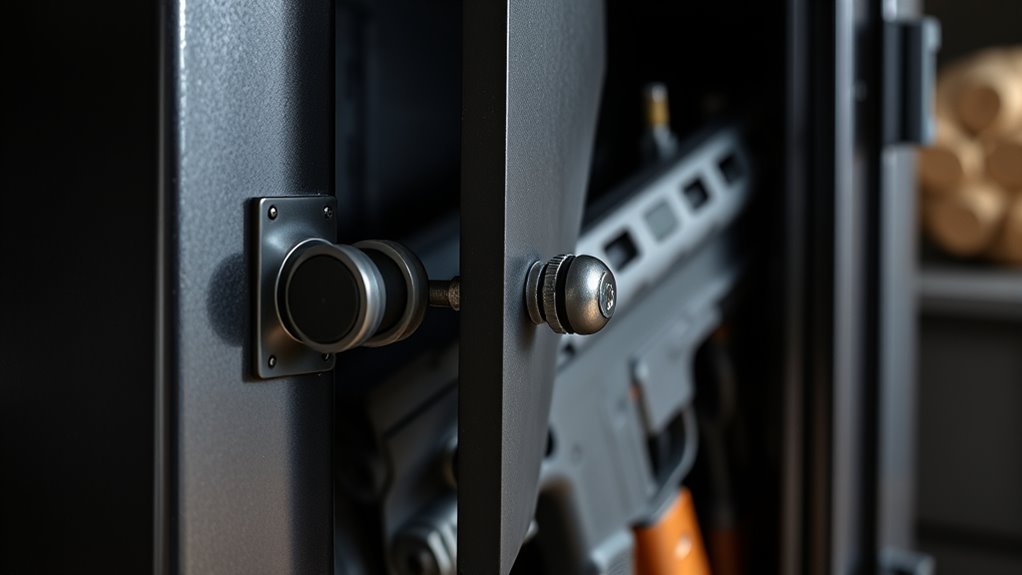
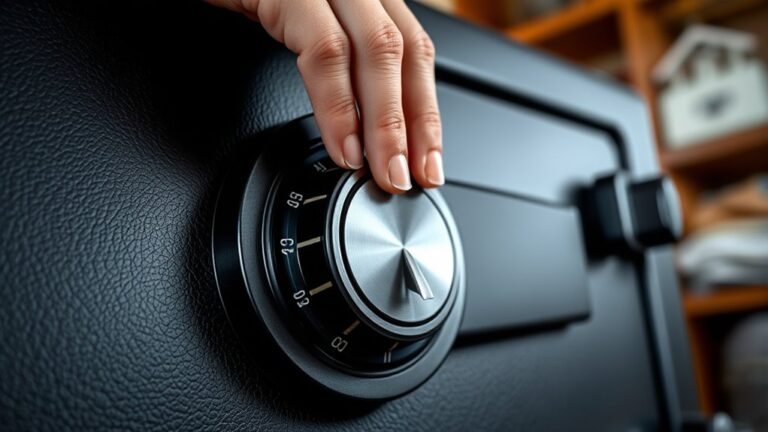
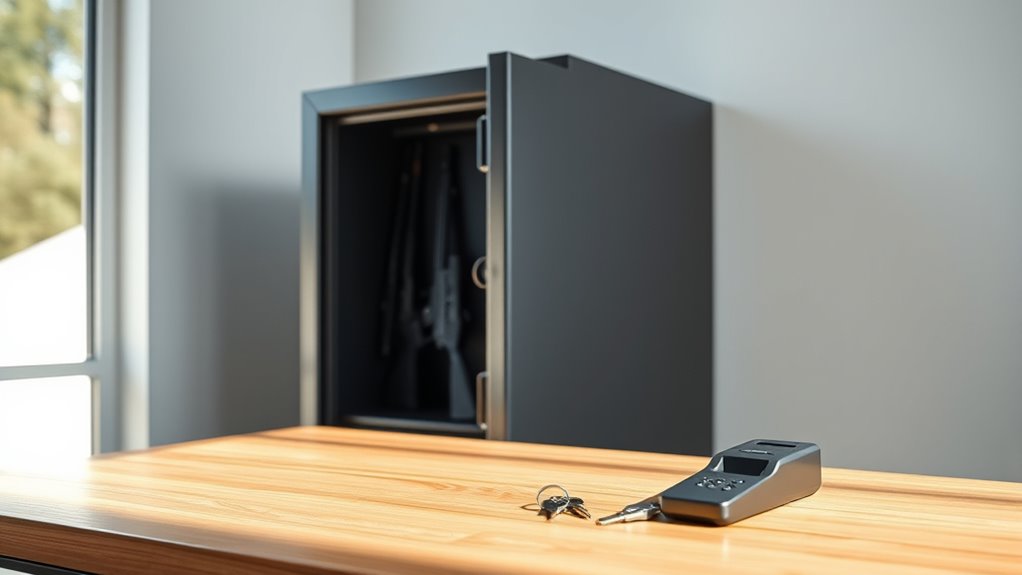
Though you might think a gun safe is just a sturdy box, its design goes far beyond that to prevent unauthorized access. These safes use advanced locking mechanisms—like combination locks, biometric scanners, or electronic keypads—that only you can operate. The heavy steel construction resists prying, drilling, and tampering, making it incredibly difficult for intruders to break in.
Inside, reinforced locking bolts secure the door firmly in place, blocking any forced entry attempts.
Here’s a quick look at common features and how they work to keep your firearms safe:
| Feature | Purpose | Benefit |
|---|---|---|
| Biometric Lock | Fingerprint recognition | Quick, personalized access |
| Steel Construction | Resistant to physical attacks | Prevents break-ins |
| Locking Bolts | Secure door firmly | Blocks forced entry |
| Electronic Keypad | Code entry for access | Easy to change codes |
| Backup Key | Manual override | Access during power failure |
Each element layers protection, ensuring only you control access.
Legal Requirements for Gun Safe Storage
You need to understand the federal laws that govern gun storage to guarantee compliance and safety. Additionally, many states have their own specific requirements for how you must secure your firearms. Knowing these rules helps you avoid legal trouble and protects those around you.
Federal Gun Storage Laws
While federal law doesn’t universally require gun owners to use safes, you’re still held responsible for storing firearms securely to prevent unauthorized access. The Gun Control Act and other federal regulations focus mainly on who can possess firearms but don’t mandate specific storage methods like safes. However, if you’re a licensed dealer or manufacturer, federal rules require you to take reasonable precautions to prevent theft, which often means secure storage.
Additionally, if a minor gains access to your firearm and causes harm, you could face legal consequences under federal child access prevention laws. Using a gun safe, while not always legally required federally, is a practical way to comply with your duty to store guns safely and avoid liability.
State-Specific Safe Mandates
Because gun laws vary widely across states, the requirements for safe storage can differ markedly depending on where you live. Some states, like California and Massachusetts, have strict laws mandating that firearms be stored in locked containers or secured with trigger locks, especially when children are present. Others may require safe storage only under specific conditions, such as when guns aren’t in use or are left unattended.
If you don’t comply with these rules, you could face fines or criminal charges. It’s essential to check your state’s specific regulations to guarantee you’re following the law. Using a gun safe often helps you meet these mandates, providing peace of mind and legal protection.
Staying informed about your state’s laws keeps your firearms secure and your family safe.
Comparing Gun Safes and Alternative Storage Options
Although gun safes are widely regarded as the most secure storage option, it’s important to understand how they compare to alternatives like lockboxes, biometric cases, and trigger locks. Each option offers varying levels of security, convenience, and cost, so your choice depends on your specific needs.
Here’s a quick comparison:
- Gun Safes – Provide robust protection against theft and unauthorized access but can be bulky and expensive.
- Lockboxes – More portable and affordable but offer less security and space.
- Biometric Cases – Allow quick access via fingerprint recognition but can be pricey and may have technical limitations.
- Trigger Locks – Inexpensive and simple but don’t prevent theft and only restrict firing.
Features to Look for in a Reliable Gun Safe
When choosing a gun safe, you’ll want to focus on features that guarantee both security and ease of use. First, look for solid steel construction with a thick door and body to resist break-ins. A reliable locking mechanism is essential—consider safes with biometric locks or combination dials that are quick to access but difficult to tamper with.
Fire resistance is another key feature; a safe with a good fire rating can protect your firearms and valuables during emergencies. Inside, adjustable shelving and padded interiors help keep your guns organized and prevent scratches. Don’t forget about anchoring options—your safe should come with pre-drilled holes and hardware to secure it to the floor or wall, deterring theft.
Finally, consider the safe’s size and weight; it should be large enough to store your collection but manageable enough for your space. Prioritizing these features guarantees your firearms stay both secure and accessible.
How to Choose the Right Gun Safe for Your Needs
Selecting the right gun safe starts with understanding your specific needs and priorities. You want a safe that fits your firearm collection, offers adequate security, and suits your budget. Begin by evaluating what you need to store and where you’ll place the safe.
Consider these four key factors:
- Size and Capacity – Choose a safe that accommodates your current firearms and leaves room for future additions.
- Security Features – Look for solid steel construction, reliable locking mechanisms, and fire resistance.
- Access Speed – Decide if you need quick access, like biometric locks, or if slower, more secure options work better.
- Location and Installation – ensure the safe fits in your chosen spot and can be securely anchored.
How to Organize and Store Firearms Safely Inside a Gun Safe
Before you start placing your firearms inside the safe, it’s important to have a clear plan for organizing them to maximize space and guarantee safety. Begin by grouping your firearms by size and type—handguns, rifles, and shotguns—and assign each group a designated area within the safe. Use racks or foam inserts to prevent guns from touching and scratching each other.
Secure handguns in individual holsters or slots, and position long guns vertically or horizontally depending on your safe’s layout. Make sure every firearm is unloaded before storage. Store ammunition separately if possible, in locked containers within the safe or elsewhere for added safety.
Keep accessories like magazines, cleaning kits, and scopes organized in compartments or bins to avoid clutter. Labeling sections can help you quickly locate what you need. Following these steps will keep your firearms accessible, protected from damage, and stored securely, making responsible gun ownership simpler and safer.
Maintaining and Upgrading Your Gun Safe’s Security
How often do you check your gun safe to guarantee it’s still providing excellent security? Regular maintenance is key to ensuring your firearms stay protected. Start by inspecting the locking mechanism for wear or damage, and test the keypad or combination lock to confirm it functions smoothly.
Don’t forget to clean and lubricate hinges and bolts to prevent rust and jamming. Upgrading your safe can also enhance security, especially if your model is older.
Here’s a quick checklist to maintain and upgrade your gun safe’s security:
- Test and reset your lock combination or change the electronic keypad code regularly.
- Lubricate moving parts with appropriate products every six months.
- Check for any gaps or damage to the safe’s body and seal them promptly.
- Consider adding a secondary security feature like an alarm or biometric lock.
Stay proactive to keep your firearms safe and secure.
Frequently Asked Questions
Can a Gun Safe Protect Firearms From Fire Damage?
Yes, a gun safe can protect firearms from fire damage if it’s specifically fire-rated. You’ll want to check the safe’s fire rating to make certain it can withstand high temperatures and protect your guns during a fire.
Are Biometric Locks More Secure Than Traditional Key Locks?
You can’t judge a book by its cover, but biometric locks are generally more secure than traditional key locks since they use unique fingerprints, making unauthorized access much harder.
Keys can be lost, copied, or stolen easily.
How Heavy Should a Gun Safe Be to Prevent Theft?
You’ll want a gun safe weighing at least 200 to 300 pounds to effectively deter theft. Heavier safes are tougher to move or steal, so choose one that’s solid and can be bolted down for extra security.
Can Gun Safes Be Bolted to the Floor or Wall?
Yes, you can bolt gun safes to the floor or wall, increasing security. In fact, 60% of thefts are from unsecured safes, so anchoring yours can seriously reduce the risk of burglars easily snatching your firearms.
Do Gun Safes Require Regular Maintenance or Servicing?
Yes, gun safes do require regular maintenance. You’ll want to lubricate locks, check electronic components, and inspect for rust or damage.
Keeping it in good shape guarantees your firearms stay secure and the safe functions properly.
Conclusion
So, you might think leaving your guns out in the open is perfectly safe—after all, who would want to mess with your firearms, right? But ironically, neglecting a gun safe invites exactly the risks you want to avoid.
By choosing a secure, reliable gun safe, you’re not just protecting your guns—you’re protecting your home, loved ones, and peace of mind.
Sometimes, the safest choice is the one you didn’t think you needed. Investing in a quality gun safe is essential for responsible firearm storage and ensures safety, security, and peace of mind for you and your family.