What Are the 7 Most Secure Features for Gun Safes?
You’ll want a gun safe built with solid steel construction for durability and resistance.
Plus, advanced locking mechanisms like biometric or electronic keypad locks can help control access.
Certified security ratings ensure it meets strict break-in standards, while fire and water resistance protect your firearms from damage.
Smart security features offer convenient, secure access.
Organized interior compartments keep guns stable.
Choosing the right size lets you store everything safely.
Keep exploring to discover how these features work together.
Key Takeaways
- Solid steel construction with thick, reinforced doors resists prying, drilling, and hammering for maximum durability and security.
- Biometric and electronic keypad locks provide personalized, quick, and nearly unbreakable access control.
- UL RSC, TL-15, TL-30, and DOJ certifications validate high resistance to break-in attempts and meet stringent security standards.
- Fireproof and water-resistant features protect firearms from high temperatures, smoke damage, flooding, and moisture intrusion.
- Interior organization with adjustable racks, foam-lined compartments, and moisture control maintains firearm integrity and prevents damage.
Solid Steel Construction for Gun Safe Security
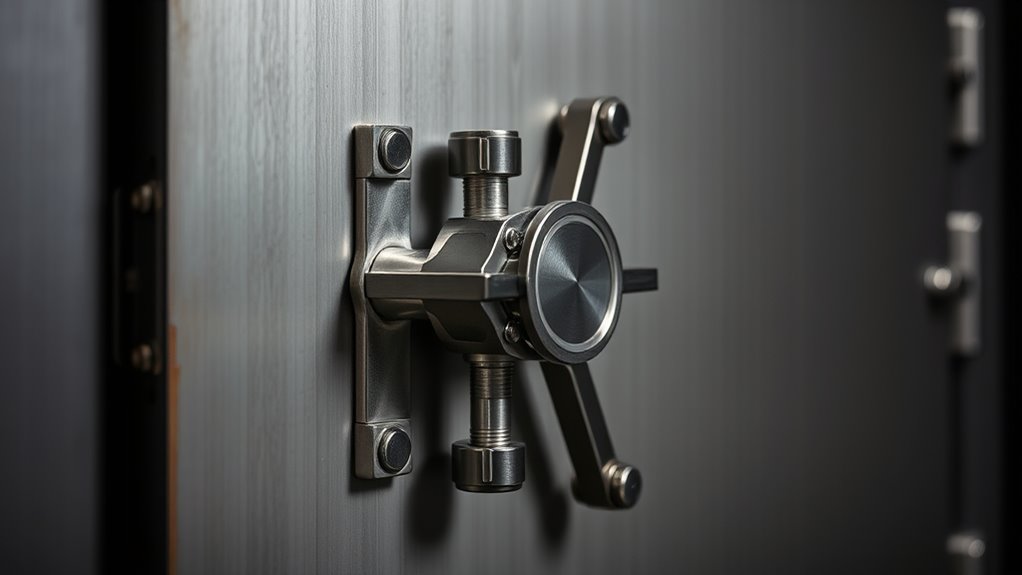
Because your gun safe needs to protect valuable firearms from theft and damage, solid steel construction is essential. When you choose a safe built from thick, high-quality steel, you’re ensuring it can withstand physical attacks like prying, drilling, or hammering. Thin or poorly constructed materials won’t stand up to determined burglars, leaving your firearms vulnerable.
Steel not only offers strength but also durability, resisting warping and corrosion over time. You’ll want to pay attention to the steel thickness—typically measured in gauge—with lower numbers indicating thicker steel. For effective protection, look for safes with at least 10 to 12-gauge steel in the walls and door.
The door itself should be reinforced and heavy-duty, as it’s the most targeted point. By prioritizing solid steel construction, you’re investing in a gun safe that provides a reliable physical barrier, ensuring your firearms stay secure and intact against forced entry attempts.
Advanced Locking Mechanisms for Gun Safes
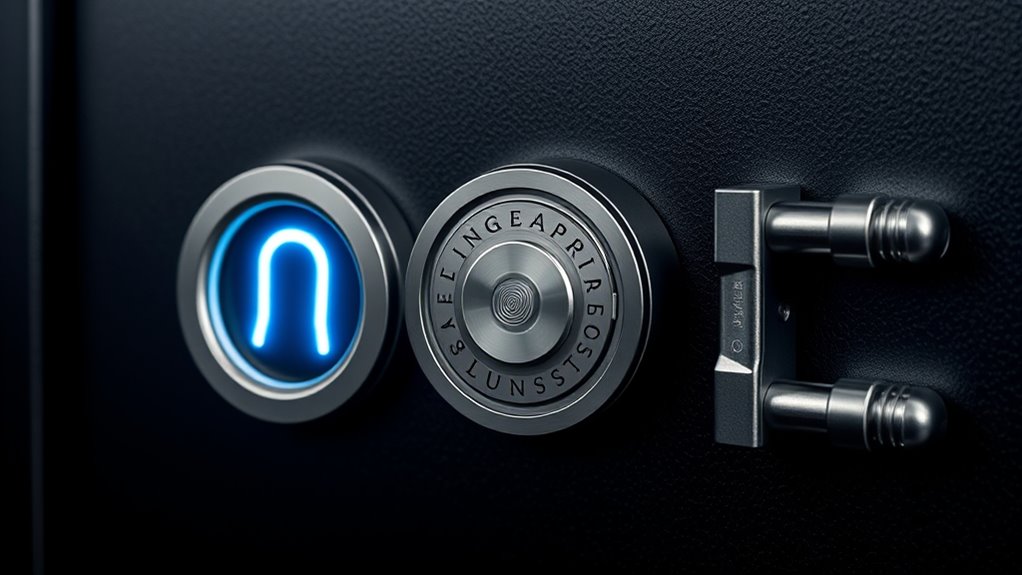
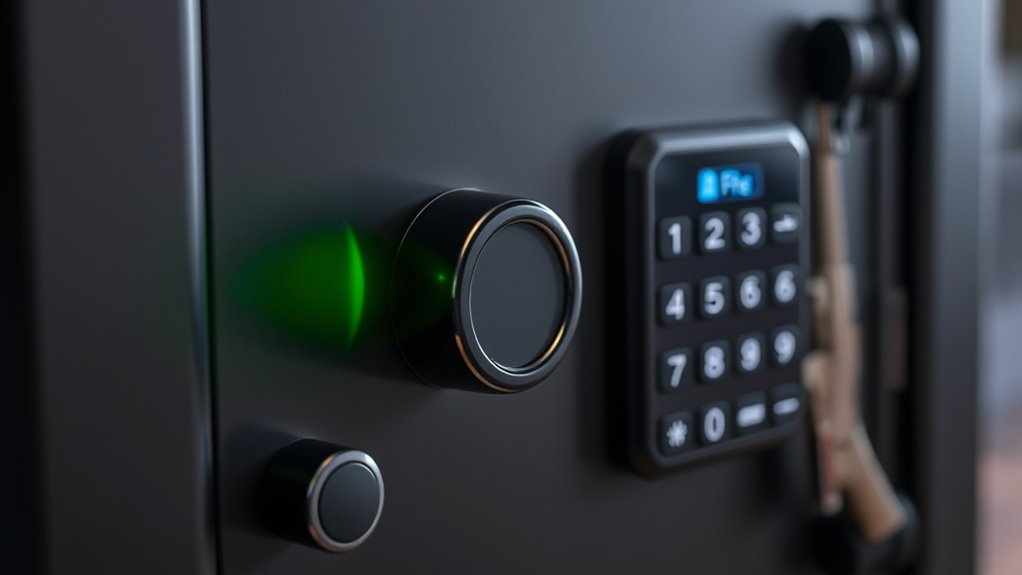
When choosing a gun safe, you’ll want to take into account advanced locking mechanisms like biometric locks and electronic keypads. These options offer quicker access while maintaining strong security.
Let’s explore how each one can protect your firearms effectively.
Biometric Lock Advantages
Although traditional locks have served well, biometric locks offer a level of security and convenience that’s hard to match. With biometric locks, you use your unique fingerprints or other biological traits, making unauthorized access nearly impossible. You won’t have to worry about lost keys or forgotten combinations.
Plus, these locks respond quickly, giving you fast access when it matters most.
Here’s why biometric locks stand out:
- Personalized access with fingerprint recognition
- No need to carry or remember keys or codes
- Quick and reliable unlocking in seconds
- Difficult to bypass or hack compared to traditional locks
- Audit trails in some models to track access history
Using biometric locks, you guarantee your gun safe is both secure and effortlessly accessible.
Electronic Keypad Security
If you want quick and secure access without the hassle of keys, electronic keypad locks are a smart choice for your gun safe. These locks let you enter a personalized code, eliminating the risk of lost or stolen keys. Many keypad systems offer features like lockout periods after multiple incorrect attempts, enhancing security against tampering.
Plus, some models allow you to change the code easily whenever you want, giving you full control. You’ll appreciate the balance of speed and protection, especially in emergencies. However, it’s important to choose a keypad lock with a reliable power source, like long-lasting batteries and low-battery alerts, so you’re never locked out.
Certified Security Ratings That Matter for Gun Safes
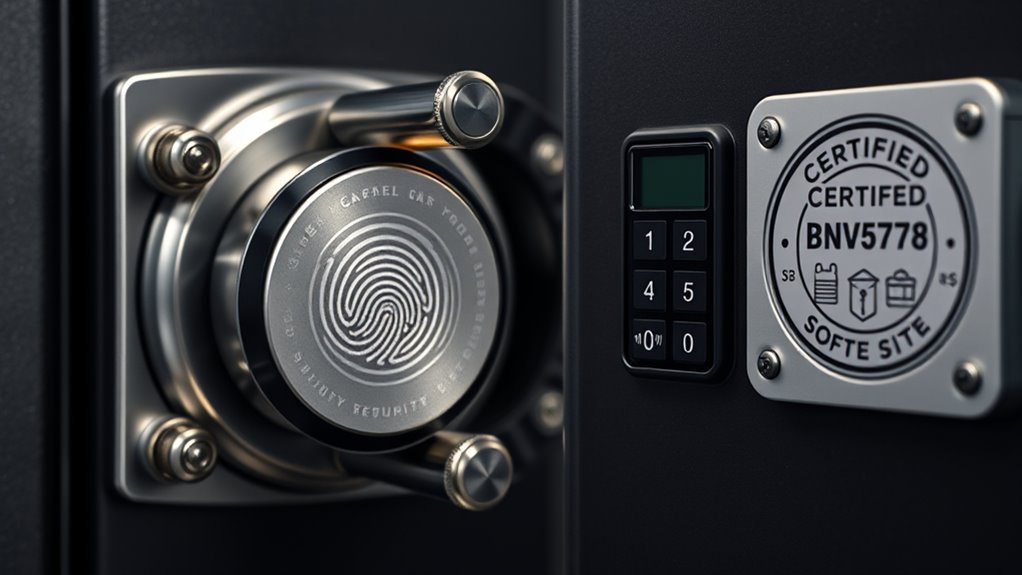
Since choosing the right gun safe is essential for protecting your firearms, it’s important to understand the certified security ratings that measure their effectiveness. These ratings help you compare safes based on standardized testing, guaranteeing you pick one that truly keeps your guns secure.
Here are the key certifications to look for:
- UL Residential Security Container (RSC): Indicates resistance to common break-in tools.
- UL TL-15 and TL-30: Measures safe’s ability to withstand attacks for 15 or 30 minutes, respectively.
- Federal Specification FF-L-2740: Ensures secure locking mechanisms and construction.
- California DOJ (Department of Justice) Certification: Required for safes sold in California, focusing on burglary resistance.
- ETL Verified Security Rating: Third-party validation of safe’s security features.
Checking these certifications means you’re investing in a safe that meets rigorous industry standards, giving you peace of mind that your firearms are well protected.
Fire and Water Resistance in Gun Safes
You’ll want to understand fireproof ratings to know how well a gun safe can protect your firearms from heat damage. Water resistance is also essential to keep your guns safe from flooding or spills.
Choosing a safe made from durable materials ensures long-lasting protection against both fire and water.
Fireproof Ratings Explained
Though gun safes are primarily designed to protect your firearms from theft, their ability to withstand fire and water damage is equally important. Fireproof ratings help you understand how well a safe can protect its contents under extreme heat. These ratings are usually certified by independent labs and indicate how long and at what temperature a safe can endure fire exposure.
When choosing a fireproof gun safe, consider these key factors:
- Fire rating duration: Typically ranges from 30 minutes to 3 hours
- Maximum temperature resistance: Often between 1,200°F to 1,800°F
- Internal temperature limit: Should stay below 350°F to protect gun finishes and ammo
- Certification standards: Look for UL (Underwriters Laboratories) or ETL listings
- Fireproof insulation material: Quality affects heat resistance and safety
Knowing these will help you pick a safe that truly protects your firearms during a fire.
Water Resistance Benefits
How well can your gun safe protect your firearms from water damage? Water resistance is essential, especially if you live in flood-prone areas or want to safeguard your guns from accidental spills. A water-resistant safe prevents moisture from seeping in, which can cause rust and degrade your firearms over time.
Look for safes with tight seals and elevated bases to keep water out. Here’s a quick comparison:
| Feature | Benefit | Ideal For |
|---|---|---|
| Water-resistant seal | Prevents moisture entry | Flood-prone homes |
| Elevated base | Keeps safe above water level | Basement storage |
| Corrosion-resistant lining | Protects gun finish | Humid environments |
| Drainage system | Removes trapped water | Areas with heavy rain |
Choosing these features helps guarantee your firearms remain in top condition, no matter what.
Durable Material Choices
When selecting a gun safe, the materials used play an essential role in guaranteeing both fire and water resistance. You want a safe that can withstand extreme conditions to protect your firearms and valuables. The right materials not only offer durability but also peace of mind during emergencies.
Here are some durable material choices to consider:
- Steel construction: Provides strong impact resistance and durability.
- Concrete composite: Adds fireproofing and structural strength.
- Intumescent fire seal: Expands to block heat and smoke during fires.
- Waterproof gaskets: Prevent moisture entry and protect against flooding.
- Powder-coated finish: Resists rust and corrosion for longevity.
Choosing these materials guarantees your gun safe stands up to fire and water threats, keeping your contents secure no matter what.
Interior Features That Secure and Stabilize Firearms
While choosing the right gun safe is important, the interior features play a crucial role in keeping your firearms secure and stable. You’ll want to look for adjustable racks or foam-lined compartments that prevent your guns from shifting during movement. These features not only protect the finish on your firearms but also reduce the risk of damage from impacts inside the safe.
Additionally, cushioned or padded doors and walls help absorb shocks, further stabilizing your weapons. Consider safes with customizable shelving options, so you can organize different types and sizes of firearms efficiently. Some interiors include barrel rests or specialized slots to hold long guns upright, which keeps them from leaning or falling.
You might also find moisture-absorbing materials or ventilation systems inside, which protect your firearms from rust and corrosion. By focusing on these interior details, you guarantee your firearms stay both secure and in prime condition every time you open your safe.
Smart Security Technology for Gun Safe Access
Beyond the interior design, the way you access your gun safe plays a big role in keeping your firearms protected. Smart security technology offers you quick, secure entry while preventing unauthorized access. These systems combine convenience with advanced safety measures, ensuring your guns stay out of the wrong hands.
When choosing smart access features, consider:
- Biometric fingerprint scanners for fast, personalized entry
- RFID key fobs that open your safe with a simple tap
- Bluetooth connectivity allowing you to control access via smartphone apps
- Time-delay locks which add extra security by requiring a wait period before opening
- Audit trail logging to track who accessed the safe and when
These technologies not only speed up your access but also provide peace of mind. By integrating smart security, you’re enhancing your safe’s protection beyond traditional mechanical locks.
Picking the Right Size and Capacity for Your Gun Safe
Since your gun safe needs to accommodate your current collection and any future additions, choosing the right size and capacity is essential. You don’t want to outgrow your safe quickly or waste space with one that’s too large. Start by inventorying your firearms and accessories, including ammunition and any valuables you want to store securely.
Consider the types of guns you have—long rifles and shotguns require more vertical space, while handguns need smaller compartments. Also, think about additional storage for items like scopes, cleaning kits, or documents. Remember, a slightly larger safe than you currently need offers flexibility for future purchases.
However, avoid oversized models that are cumbersome to move or fit poorly in your space. Finally, check the interior layout options, such as adjustable shelves or door organizers, which can optimize space without increasing size. Picking the right size and capacity ensures your firearms remain secure and organized for years to come.
Frequently Asked Questions
How Often Should I Service My Gun Safe?
You should service your gun safe at least once a year to guarantee locks, hinges, and electronic components work properly. If you notice any issues or after heavy use, don’t wait—service it sooner for safety.
Can Gun Safes Be Bolted to the Floor?
You can definitely bolt gun safes to the floor. For example, a hunter secured his safe this way to prevent theft during a break-in. This adds stability and extra security, making it much harder for thieves to move or steal it.
What Is the Average Lifespan of a Gun Safe?
You can expect a gun safe to last 20 to 30 years or more with proper care. Its lifespan depends on build quality, materials, and maintenance, so regular inspections and keeping it dry will help it serve you longer.
Are Biometric Locks Safe From Hacking?
Biometric locks are generally safe from hacking, but no system is completely foolproof. You should combine them with other security measures, like mechanical locks, to reduce risks and guarantee your gun safe stays secure against unauthorized access.
How Do Temperature Changes Affect Gun Safe Materials?
You’ll notice temperature changes cause metal to expand and contract, wood to warp and crack, and seals to degrade.
Conclusion
When choosing a gun safe, remember solid steel construction and advanced locking mechanisms are essential for top security. Did you know that safes with certified ratings reduce theft risk by over 70%? Fire and water resistance, smart tech, and the right size keep your firearms safe and accessible.
With these seven features, you’re not just storing guns—you’re protecting your peace of mind every day. Make the smart choice for your safety by selecting gun safes with these most secure features. Prioritize security, durability, and convenience to ensure your firearms remain protected at all times.